

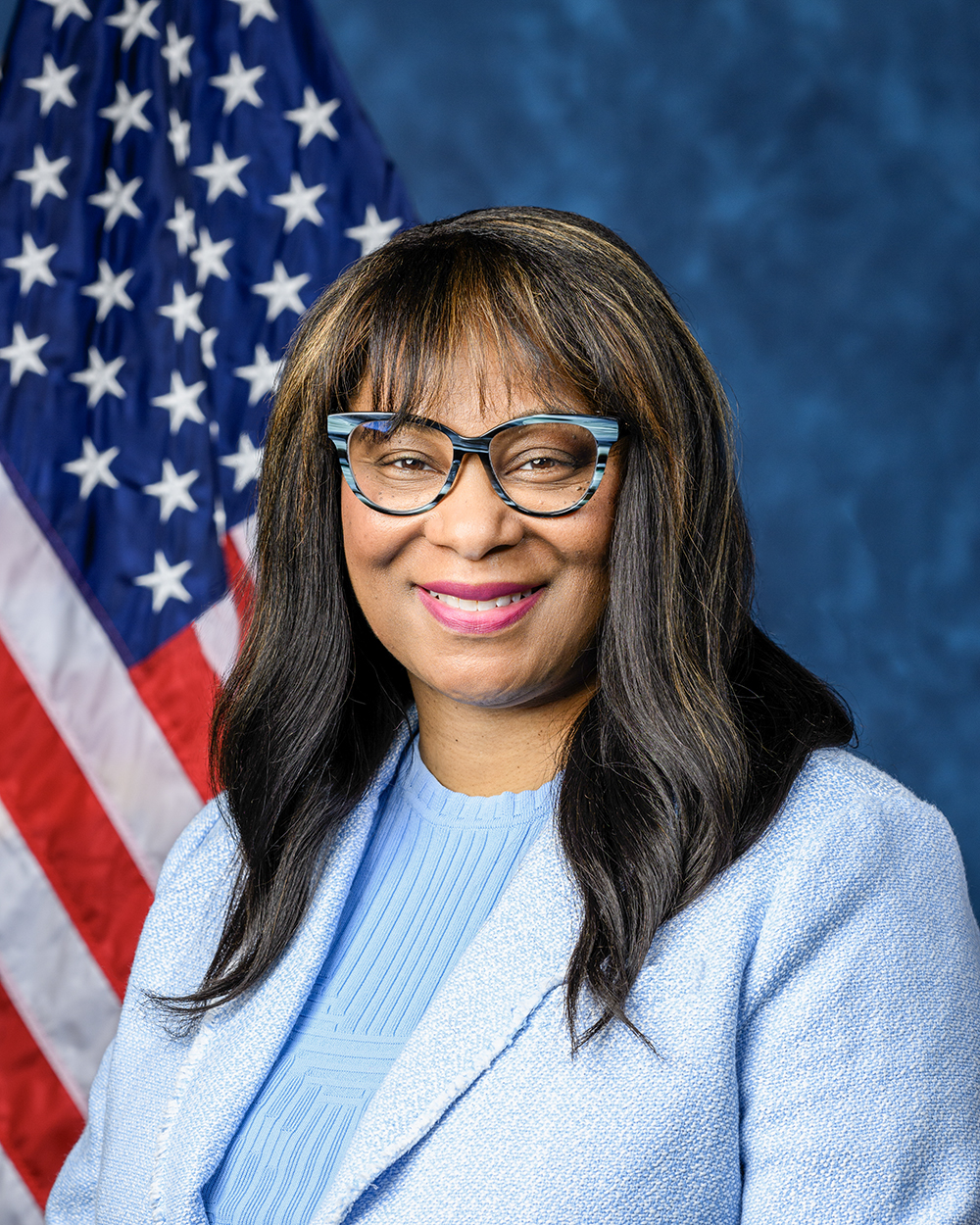
Photo of Janelle S. Bynum
D United States House · District 5 · Oregon On the 2026 ballot

Rep. Janelle S. Bynum

Compare
Total votes
669
all sessions
Attendance
100%
2 missed
Higher than 89% of chamber peers
With party
96%
of cast votes
Near the chamber average
Bipartisan score
2%
crosses aisle rarely
Near the chamber average
Sponsored
411
bills & resolutions
Near the chamber average
Committees
3
assignments
411 bills and resolutions

Sponsored bills

Total
411
Primary
24
Co-sponsor
387
This page
411
matching current filters
Co-sponsor HR 6403
In committee · United States House · Co-sponsor
Homeless Children and Youth Act of 2025

Maddy summaryHR 6403 expands eligibility for homeless children and youth services to include those verified as homeless through other federal programs (like Head Start, domestic violence assistance, or youth services), with verification timelines extended from 14 to 30 days. The bill requires annual public reporting of detailed homeless data - including age, disability status, and length of homelessness - to HUD, and prohibits service providers from prioritizing specific subpopulations without local data justification. It directly affects homeless youth under 24, unaccompanied youth, and families with children, ensuring consistent access to education, housing, and support services across federal programs.

In committee Dec 3, 2025 1 co-sponsor
Co-sponsor HRES 920
In committee · United States House · Co-sponsor
Celebrating the 50th anniversary of the Individuals with Disabilities Education Act on November 29, 2025, and recognizing its transformative impact on the education of children with disabilities.

Maddy summaryHRES 920 is a ceremonial resolution celebrating the 50th anniversary of the Individuals with Disabilities Education Act (IDEA) on November 29, 2025. It recognizes IDEA’s historical impact - establishing the right to free, appropriate public education in the least restrictive environment for children with disabilities - and notes how it transformed access to education after over 1 million children were previously excluded from schools. The resolution does not create new policy or funding; it solely commemorates IDEA’s legacy, honors the students and families it has served, and acknowledges educators and advocates who advanced its implementation. This is a symbolic gesture with no direct effect on current law or services.

In committee Dec 2, 2025 1 co-sponsor
Co-sponsor HR 6350
In committee · United States House · Co-sponsor
College Athletics Reform Act

Maddy summaryThis bill establishes comprehensive name, image, and likeness (NIL) rights for college athletes, prohibiting institutions from restricting athletes' ability to earn compensation for their personal branding or taking adverse action against them for doing so. It requires transparent NIL agreements for compensation over $600, including specific details about services, compensation amounts, and termination terms. The bill also amends immigration laws to better accommodate international student athletes participating in college sports and updates regulations governing sports agents. Additionally, it establishes a Commission to study college athletics governance, focusing on collective bargaining, revenue sharing, and Title IX compliance, while expanding disclosure requirements for colleges regarding athletics revenue and expenses.

In committee Dec 2, 2025 1 co-sponsor
Co-sponsor HR 5541
In committee · United States House · Co-sponsor
Every Kid Outdoors Reauthorization Act

Maddy summaryHR 5541, the Every Kid Outdoors Reauthorization Act, expands eligibility for the program to include fifth graders (ages 10-11) and home-schooled learners in that age range, replacing the previous requirement for 10-year-olds. The bill authorizes $25 million annually for the National Park Service to support program operations, promote the initiative to schools and families, provide transportation assistance to financially needy schools and organizations, and conduct targeted outreach to underserved communities and children with disabilities. This reauthorization directly affects fifth-grade students and home-schooled learners aged 10-11, as well as schools and youth organizations participating in the program. The key change is broadening the age group served while maintaining the program's funding structure for operational support and equitable access.

In committee Dec 2, 2025 1 co-sponsor
Co-sponsor HR 1262
Passed · United States House · Co-sponsor
Mikaela Naylon Give Kids a Chance Act

Give Kids a Chance Act of 2025 This bill expands the Food and Drug Administration’s (FDA’s) authority with respect to research on rare pediatric diseases, including by permitting the FDA to take enforcement action against drug sponsors that fail to satisfy pediatric study requirements and by reauthorizing programs that support pediatric research.  Specifically, the bill modifies requirements relating to molecularly targeted pediatric cancer investigations to permit research on new drugs in combination with active ingredients that have already been approved, provided certain conditions are met; permits the FDA to take enforcement action against drug sponsors that fail to comply with pediatric study requirements, if such sponsors demonstrated a lack of due diligence in satisfying the requirement; renews the FDA’s authority to award priority review vouchers to sponsors of new products intended to treat rare pediatric diseases through September 30, 2029; and reauthorizes through FY2027 certain funding for the National Institutes of Health to support priority pediatric research.  The bill also provides statutory authority for the FDA’s interpretation of the orphan drug exclusivity period. The bill specifies, consistent with FDA regulations, that the seven-year market exclusivity period for drugs for rare diseases or conditions (i.e., orphan drugs) prohibits the approval of the same drug for the same approved use or indication with respect to the disease or condition. (In Catalyst Pharmaceuticals, Inc. v. Becerra , a court rejected the FDA’s interpretation and held that orphan drug exclusivity extends to all uses or indications for the disease or condition.)

Passed Dec 2, 2025 1 co-sponsor
Co-sponsor HR 4312
In committee · United States House · Co-sponsor
SCORE Act

Student Compensation and Opportunity through Rights and Endorsements Act or the SCORE Act This bill provides a framework for the compensation of student athletes for the use of their name, image, or likeness (NIL). This includes addressing certain elements of the court approved agreement to settle the In re College Athlete NIL Litigation (i.e., House settlement ). Specifically, the bill statutorily prohibits institutions, conferences, or interstate intercollegiate athletic associations (e.g., the National Collegiate Athletic Association (NCAA)) from restricting the ability of a student athlete to enter an NIL agreement. The bill also requires institutions of higher education that generate $20 million or more in annual revenue from the institution's intercollegiate athletics activities to (1) provide counseling and medical benefits to student athletes, and (2) establish and maintain at least 16 varsity sports teams. Further, the bill authorizes interstate intercollegiate athletic associations to establish rules with respect to athletic eligibility, transfers, recruitment, and the disclosure of NIL agreements. Under the bill, student athletes may not be considered employees of an institution, conference, or interstate intercollegiate athletic association. The bill also preempts state laws with respect to compensation, payments, benefits, employment status, eligibility, and academic standards applicable to student athletes. Compliance with the provisions of this bill is considered lawful under federal and state antitrust laws.

In committee Dec 1, 2025 1 co-sponsor
Co-sponsor HR 1013
In committee · United States House · Co-sponsor
Retirement Fairness for Charities and Educational Institutions Act of 2025

Maddy summaryThis bill updates securities laws to expand exemptions for retirement plans used by charities and educational institutions. It specifically modifies definitions in the Investment Company Act, Securities Act, and Securities Exchange Act to include 403(b) plans meeting certain conditions - such as being subject to ERISA, having employer fiduciary oversight, or being governmental plans. These changes reduce regulatory hurdles for organizations offering these plans, making it easier to administer retirement benefits for their employees. The bill directly affects charities, schools, and other non-profits that sponsor 403(b) retirement plans.

In committee Nov 28, 2025 1 co-sponsor
Co-sponsor HR 6280
In committee · United States House · Co-sponsor
Access to Genetic Counselor Services Act of 2025

Maddy summaryThis bill expands Medicare coverage to include genetic counseling services provided by licensed or certified genetic counselors, effective January 1, 2027. It defines "covered genetic counseling services" as those furnished by qualified counselors under state law or certification, with payments set at 80% of the lesser of the actual charge or 85% of the physician fee schedule. Medicare beneficiaries seeking genetic counseling will gain access to these services through covered providers, while preventing balance billing for these specific services. The bill does not restrict physicians from billing for similar services under existing Medicare rules.

In committee Nov 21, 2025 1 co-sponsor
Co-sponsor HR 6256
In committee · United States House · Co-sponsor
Floodplain Enhancement and Recovery Act

Maddy summaryHR 6256, the Floodplain Enhancement and Recovery Act, simplifies regulatory processes for communities and landowners undertaking projects to restore natural floodplain functions. It exempts such projects from standard flood insurance map change fees and allows limited increases in flood levels (up to 1 foot) in designated floodways, provided projects don’t harm critical infrastructure and communities submit post-completion analysis within 180 days. The bill amends existing flood insurance law to prioritize ecosystem restoration by adjusting fee and approval requirements, directly affecting local governments managing floodplains and developers working on restoration projects.

In committee Nov 21, 2025 1 co-sponsor
Co-sponsor HR 6197
In committee · United States House · Co-sponsor
Health Tech Investment Act

Maddy summaryHR 6197, the Health Tech Investment Act, establishes a new payment category under Medicare for algorithm-based healthcare services (like AI tools used in diagnosis or treatment) starting January 1, 2026. It requires Medicare to pay based on manufacturer-provided costs (including software, staff, and overhead) for these services and prohibits removing them from the special payment category for at least five years after initial payment. This directly affects Medicare beneficiaries (through coverage), healthcare providers (who deliver these services), and AI/algorithm service manufacturers (who receive reimbursement). The bill ensures these new technologies get fair payment while gathering sufficient claims data before potentially moving them to standard payment categories.

In committee Nov 20, 2025 1 co-sponsor
Showing 141 to 150 of 411 bills
Previous 1 … 14 15 16 … 42 Next