

Living Donor Protection Act of 2021 This bill prohibits certain insurance carriers from discriminating against, and provides other protections for, living organ donors. Specifically, carriers may not deny, cancel, or otherwise impose conditions on policies for life insurance, disability insurance, or long-term care insurance based on an individual's status as a living organ donor. The bill also expressly specifies that recovery from organ-donation surgery constitutes a serious health condition that entitles eligible employees to job-protected medical leave. In addition, the Department of Health and Human Services must update educational materials on live organ donation to include information about the benefits of live organ donation and about access to insurance for living organ donors.
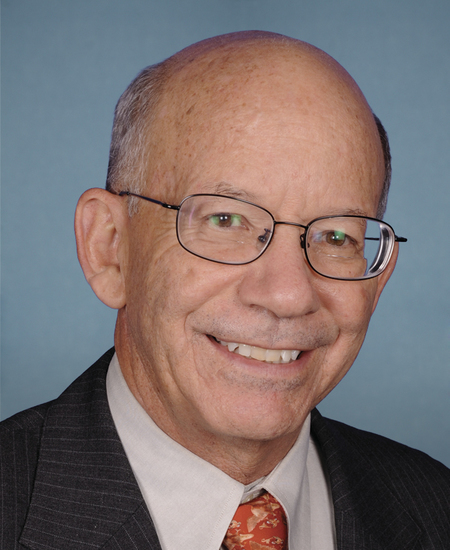
Rep. Peter A. DeFazio
Sponsored bills
ABLE Age Adjustment Act This bill increases from 26 to 46 the age threshold for tax-favored ABLE (Achieving a Better Life Experience) accounts. (ABLE accounts are designed to enable individuals with disabilities to save for and pay for disability-related expenses. To establish an account, an individual must have a qualifying impairment that began before the individual attained the age threshold.)
Confederate Monument Removal Act This bill prohibits a state from providing for display in National Statuary Hall a statue of a person who voluntarily served with the Confederate States of America, and it provides for the removal, return, and replacement of any statue currently on display that depicts such a person.
Full-Service Community School Expansion Act of 2021 This bill reauthorizes through FY2025 and expands the Full-Service Community Schools program. The program provides support for full-service community schools that serve children and their families, particularly for children who attend high-poverty elementary and secondary schools. Specifically, the bill directs the Department of Education (ED) to award grants to eligible entities to plan, implement, expand, and support full-service community schools. An eligible entity is a consortium of (1) one or more local educational agencies or the Bureau of Indian Education; and (2) one or more community-based organizations, nonprofit organizations, Indian tribes, tribal organizations, or other entities. A community school refers to a public elementary or secondary school that incorporates the four pillars of community schools. These four pillars are defined by the bill as (1) integrated student supports that address out-of-school barriers to learning (e.g., medical care and assistance with housing, transportation, or nutrition); (2) expanded and enriched learning time and opportunities (e.g., before- and after-school programs); (3) family and community engagement (e.g., adult education); and (4) collaborative leadership and practices, which must include a school-based leadership team, a community school coordinator, and a community-wide leadership team. Further, the bill directs ED to award grants to states to plan, implement, and expand community schools. A state educational agency that receives a grant must meet certain requirements, such as providing subgrants to local educational agencies, establishing a state-level steering committee, and establishing goals for the implementation and expansion of community schools throughout the state.
West Coast Ocean Protection Act of 2021 This bill prohibits the Department of the Interior from issuing a lease for the exploration, development, or production of oil or natural gas in any area of the Outer Continental Shelf off the coast of California, Oregon, or Washington.
This resolution supports the designation of Public Schools Week.
Stop Arctic Ocean Drilling Act of 2021 This bill prohibits the Department of the Interior from issuing or renewing a lease or any other authorization for the exploration, development, or production of oil, natural gas, or any other mineral in the Arctic Ocean, including the Beaufort Sea and Chukchi Sea Planning Areas.
IRS Enhancement and Tax Gap Reduction Act of 2021 This bill appropriates additional amounts to the Internal Revenue Service (IRS) in FY2022-FY2031 for tax enforcement, improving IRS technology infrastructure, and taxpayer services.
Shark Sales Elimination Act of 2021 This bill makes it illegal to possess, buy, or sell shark parts or any product containing shark parts.A person may possess a shark part that was lawfully taken consistent with a license or permit under certain circumstances. Penalties are imposed for violations under the Magnuson-Stevens Fishery Conservation and Management Act.
Carried Interest Fairness Act of 2021 This bill modifies the tax treatment of carried interest, which is compensation that is typically received by a partner of a private equity or hedge fund and is based on a share of the fund's profits. (Under current law, carried interest is taxed as investment income rather than at ordinary income tax rates.) This bill includes provisions that set forth a special rule for the inclusion in gross income of partnership interests transferred in connection with the performance of services, treat as ordinary income the net capital gain with respect to an investment services partnership interest except to the extent such gain is attributable to a partner's qualified capital interest, exempt income from investment services partnership interests from treatment as qualifying income of a publicly traded partnership, exempt certain family partnerships from the application of this bill, increase the penalty for underpayments of tax resulting from failure to treat income from an investment services partnership interest as ordinary income, and include income and loss from an investment services partnership interest for purposes of determining net earnings from self-employment and applicable self-employment taxes. The bill defines investment services partnership interest as any interest in a partnership held by a person who provides services to a partnership by (1) advising the partnership about investing in, purchasing, or selling specified assets; (2) managing, acquiring, or disposing of specified assets; or (3) arranging financing with respect to acquiring specified assets.