

This resolution expresses support for implementing a Transgender Bill of Rights that guarantees certain rights for transgender and nonbinary people with respect to public services and accommodations, employment, housing, health care, and other specified areas.
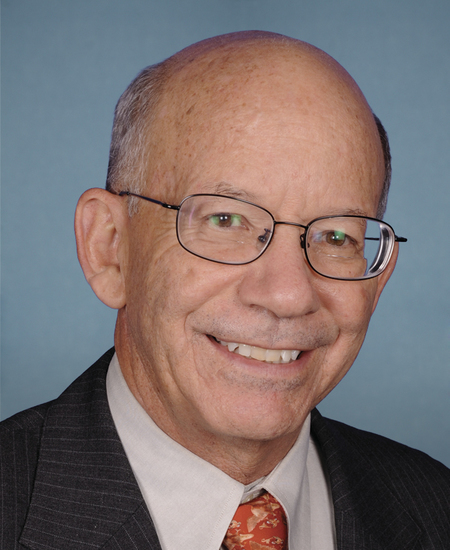
Rep. Peter A. DeFazio
Sponsored bills
This resolution expresses the sense of the House of Representatives that (1) lesbian, gay, bisexual, transgender, queer, intersex, and asexual (LGBTQIA+) rights are human rights and protected by the U.S. Constitution; (2) LGBTQIA+ Pride Month should be celebrated; and (3) all Americans should be treated equally regardless of sexual orientation or gender identity.
This resolution expresses the sense of the House of Representatives that the proposed constitutional amendment known as the Equal Rights Amendment has been duly proposed by Congress and ratified by the states and is therefore valid as the Twenty-Eighth Amendment to the Constitution. (The proposed amendment prohibits the United States or any state from denying or abridging equal rights under the law on account of sex.)
This resolution expresses support for (1) equal rights and protections for all people, regardless of actual or perceived sexual orientation or gender identity; and (2) the designation of LGBTQ Equality Day on June 26 to commemorate Supreme Court decisions handed down on that day in 2003, 2013, and 2015. The resolution also acknowledges the need for further legislation to ensure that people in the United States are free from all forms of discrimination on the basis of actual or perceived sexual orientation or gender identity.
This resolution expresses the sense of the House of Representatives that (1) lesbian, gay, bisexual, transgender, queer, intersex, and asexual (LGBTQIA+) rights are human rights and protected by the U.S. Constitution; (2) LGBTQIA+ Pride Month should be celebrated; and (3) all Americans should be treated equally regardless of sexual orientation or gender identity.
Student Borrower Bankruptcy Relief Act of 2022 This bill allows student loans to be discharged in bankruptcy. Under current law, these loans are only dischargeable if such debt imposes an undue hardship on the debtor.
Maddy summaryThe Supreme Court Tenure Establishment and Retirement Modernization Act of 2022 would require the President to nominate one Supreme Court justice every other year (during the first and third years after a Presidential election), with Senate confirmation. New justices would serve an 18-year term before automatically retiring, while current justices would be deemed retired in order of their service duration (starting with the longest-serving) as new appointments occur. If the Court's membership falls below the required number due to vacancies, the most recently retired justice under this system would serve as an associate justice until the full complement is restored. This bill directly affects the appointment process, term lengths, and retirement mechanics for all Supreme Court justices.
Open App Markets Act This bill establishes rules related to the operation of an app store by a covered company (i.e., the owner or controller of an app store with more than 50 million U.S. users). An app is a software application or electronic service that may be run or directed by a user on a computer or mobile device. An app store is a publicly available website, software application, or other electronic service that distributes apps from third-party developers to users. The bill prohibits a covered company from (1) requiring developers to use an in-app payment system owned or controlled by the company as a condition of distribution or accessibility, (2) requiring that pricing or conditions of sale be equal to or more favorable on its app store than another app store, or (3) taking punitive action against a developer for using or offering different pricing terms or conditions of sale through another in-app payment system or on another app store. A covered company may not interfere with legitimate business communications between developers and users, use non-public business information from a third-party app to compete with the app, or unreasonably prefer or rank its own apps (or those of its business partners) over other apps. The bill provides for enforcement of its provisions by the Federal Trade Commission and the Department of Justice, as well as through suits brought by developers that are injured by reason of anything prohibited by this bill.
Stopping Harmful Image Exploitation and Limiting Distribution Act of 2022 or the SHIELD Act of 2022 This bill establishes a new criminal offense related to the distribution of intimate visual depictions. Specifically, it makes it a crime to knowingly distribute (or intentionally threaten to distribute) an intimate visual depiction of an individual (1) with knowledge of or reckless disregard for the individual's lack of consent and reasonable expectation of privacy, and (2) without a reasonable belief that distributing the depiction touches a matter of public concern. A violator is subject to criminal penalties—a fine, a prison term of up to two years for each individual victim depicted, or both.
Latonya Reeves Freedom Act of 2022 This bill prohibits government entities and insurance providers from denying community-based services to individuals with disabilities that require long-term service or support that would enable such individuals to live in the community and lead an independent life. Specifically, these entities may not discriminate against such individuals in the provision of community-based services by such actions as imposing prohibited eligibility criteria, cost caps, or waiting lists or failing to provide a specific community-based service. Additionally, community-based services must be offered to individuals with such disabilities prior to institutionalization. Institutionalized individuals must be notified regularly of community-based alternatives. The bill requires the Department of Justice to issue regulations requiring government entities and insurance providers to offer community-based long-term services to individuals with such disabilities who would otherwise qualify for institutional placement. Government entities must ensure sufficient availability of affordable, accessible, and integrated housing that is not a disability-specific residential setting or a setting where services are tied to tenancy. Regulations shall also (1) require government entities and insurance providers to perform self-evaluation on current services, policies, and practices and concerning compliance with requirements of this bill; and (2) require government entities to submit a transition plan. The bill provides funds for FY2022 for the Department of Health and Human Services to provide technical assistance with respect to transition plans. The bill allows civil actions by individuals subjected to, or about to be subjected to, a violation of its requirements.