

George Floyd Justice in Policing Act of 2021 This bill addresses a wide range of policies and issues regarding policing practices and law enforcement accountability. It increases accountability for law enforcement misconduct, restricts the use of certain policing practices, enhances transparency and data collection, and establishes best practices and training requirements. The bill enhances existing enforcement mechanisms to remedy violations by law enforcement. Among other things, it does the following: lowers the criminal intent standard—from willful to knowing or reckless—to convict a law enforcement officer for misconduct in a federal prosecution, limits qualified immunity as a defense to liability in a private civil action against a law enforcement officer, and grants administrative subpoena power to the Department of Justice (DOJ) in pattern-or-practice investigations. It establishes a framework to prevent and remedy racial profiling by law enforcement at the federal, state, and local levels. It also limits the unnecessary use of force and restricts the use of no-knock warrants, chokeholds, and carotid holds. The bill creates a national registry—the National Police Misconduct Registry—to compile data on complaints and records of police misconduct. It also establishes new reporting requirements, including on the use of force, officer misconduct, and routine policing practices (e.g., stops and searches). Finally, it directs DOJ to create uniform accreditation standards for law enforcement agencies and requires law enforcement officers to complete training on racial profiling, implicit bias, and the duty to intervene when another officer uses excessive force.
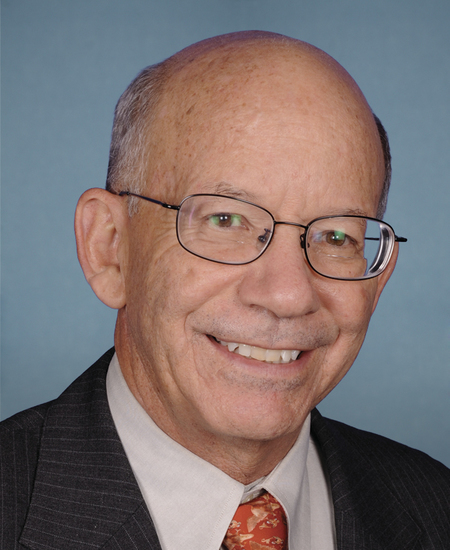
Rep. Peter A. DeFazio
Sponsored bills
War Powers Amendments of 2021 This joint resolution revises the War Powers Resolution, a law that limits the President's power to introduce Armed Forces into hostilities. Changes include shortening the time that Armed Forces may be involved in hostilities without congressional action and providing for judicial enforcement. The President shall remove any Armed Forces introduced into hostilities without congressional approval within 30 days unless Congress (1) declares war, (2) enacts a joint resolution specifically authorizing such use of the Armed Forces, or (3) is unable to meet because of an attack on the United States. This 30-day period may be extended by up to 15 days under specified circumstances. Current law allows such use of the Armed Forces for 60 days from when the President first reports to Congress about the engagement and allows for a 60-day extension. If Congress takes no such actions, funds may not be used to continue Armed Forces involvement in the hostilities, except to withdraw. The bill removes a provision requiring the removal of such engaged Armed Forces if Congress passes a concurrent resolution requiring such removal. A member of Congress may sue in district court for an order directing the President to comply with this bill. A judgment in such an action shall be directly appealable to the Supreme Court. The bill also revises various provisions relating to (1) the President reporting to and consulting with Congress regarding the use of the Armed Forces without congressional authorization, and (2) procedures for the expedited handling of joint resolutions related to such use of force.
Give Our Athletes Level Salaries Act or the GOALS Act This bill prohibits the use of funds for the 2026 World Cup until the U.S. Soccer Federation agrees to provide equitable pay to the members of the U.S. Women's National Team and the U.S. Men's National Team.
Postal Vehicle Modernization Act This bill establishes requirements for U.S. Postal Service (USPS) vehicle purchases and charging stations. The bill's provisions only apply if specified funding is appropriated. Specifically, the bill requires the USPS to ensure that at least 75% of the total number of next generation delivery vehicles purchased using such funds are electric or zero-emission vehicles. The bill provides for a phase-out of medium- and heavy-duty vehicles that are not electric or zero-emission vehicles. The USPS must provide by January 1, 2026, at each postal facility accessible to the public, at least one electric vehicle charging station for use by the public or USPS officers and employees.
This concurrent resolution censures President Donald J. Trump for actions described in this resolution, including attempting to overturn the 2020 presidential election and inciting insurrection at the U.S. Capitol on January 6, 2021. The resolution calls upon President Trump to acknowledge that President-elect Joseph R. Biden was the victor of the election and that President-elect Biden will be the lawful President on January 20, 2021; call on his supporters not to engage in violence; disavow the actions of the insurrectionists who attacked the U.S. Capitol; and denounce any further acts of violence, including any planned to occur surrounding the 58th Presidential Inauguration. Finally, it finds that, in engaging in the above cited actions, President Trump "as an officer of the United States ... engaged in insurrection or rebellion against the [United States], or [gave] aid or comfort to the enemies thereof," as described in Section 3 of the Fourteenth Amendment, making him ineligible for future office, unless Congress, in the future, removes such disability by a two-thirds vote of each chamber.
This joint resolution proposes a constitutional amendment requiring the President and Vice President to be elected directly by the people of the states and the District of Columbia.
This joint resolution proposes a constitutional amendment authorizing Congress and the states to set reasonable limits on the raising and spending of money by candidates and others to influence elections. The amendment grants Congress and the states the power to implement and enforce this amendment by legislation. They are allowed to distinguish between natural persons and corporations or other artificial entities created by law, including by prohibiting such entities from spending money to influence elections.
Treat and Reduce Obesity Act of 2021 This bill expands Medicare coverage of intensive behavioral therapy for obesity. Specifically, the bill allows coverage for therapy that is provided by (1) a physician who is not a primary care physician; or (2) other health care providers (e.g., physician assistants and nurse practitioners) and approved counseling programs, if provided upon a referral from, and in coordination with, a physician or primary care practitioner. Currently, such therapy is covered only if provided by a primary care practitioner. The bill also allows coverage under Medicare's prescription drug benefit of drugs used for the treatment of obesity or for weight loss management for individuals who are overweight.
Preventing Future Pandemics Act of 2021 This bill establishes measures to address global public health risks posed by wildlife markets, which are commercial markets that sell or slaughter wildlife for human consumption as food or medicine in communities where alternative nutritional or protein sources are available. Specifically, the bill prohibits importing, exporting, purchasing, or selling live wild animals in the United States for human consumption as food or medicine. The Department of the Interior must hire, train, and deploy at least 50 new U.S. Fish and Wildlife Service law enforcement attachés around the world, and the U.S. Agency for International Development must increase specified activities to address the threats and causes of zoonotic (animal-to-human transmission) disease outbreaks. Additionally, the United States must work with other United Nations member states to urge a global ban on commercial wildlife markets and enforcement of laws to end wildlife trafficking. Further, the President may impose sanctions against a foreign country or foreign nationals that the Department of State has determined are taking certain actions that enable or facilitate commercial wildlife markets. Among other reports required by the bill, the National Academies of Sciences, Engineering, and Medicine must conduct a study and submit a report that includes an evaluation of (1) the impact that consumption of terrestrial wildlife as food or medicine has on the transmission of novel viral and other pathogens, (2) the role of consuming terrestrial wildlife as food or medicine in the transmission of microbes from animals to humans, and (3) the conditions at live wildlife markets that lead to this transmission.
Build America's Libraries Act This bill establishes and provides funds through FY2024 for the Build America's Libraries Fund, from which the Institute of Museum and Library Services (IMLS) must allocate funding to states and, through them, need-based grants to libraries to make long-term improvements to library facilities. The IMLS must also award grants to Indian tribes and organizations that primarily serve and represent Native Hawaiians. Specifically, the bill requires each state that receives an allocation, and each library that receives a grant, to carry out certain activities to improve library facilities. These activities include constructing and renovating library facilities, investing in infrastructure projects to improve internet access and connectivity, improving indoor air quality, and making facilities accessible to individuals with disabilities. The bill also outlines administrative and oversight provisions, including by requiring library projects to use iron and steel products that are produced in the United States.