

Accessible, Affordable Internet for All Act This bill reauthorizes through FY2026, revises, and establishes grants and activities to promote access to broadband internet and other telecommunication services. The bill addresses digital equity and inclusion through grants and by requiring studies on barriers to adoption of broadband services and related matters. The bill addresses broadband affordability and access. It (1) reauthorizes and expands various programs that subsidize or otherwise support broadband services for eligible households, schools and libraries, and tribal lands and populations; and (2) establishes a program for expanding broadband service for underserved areas and community support organizations (e.g., schools and religious organizations). Additionally, the Federal Communications Commission (FCC) must award grants and take other actions to expand programs that verify an individual's eligibility for subsidized services. The bill addresses broadband data collection, disclosure, and sharing. The FCC must (1) issue rules regarding the collection of pricing data and labels that disclose information about broadband plans to consumers, and (2) collaborate and share data with federal agencies and other stakeholders. The bill makes financing (e.g., low-interest loans) available to communities and public-private partnerships for broadband infrastructure investments. Additionally, the Department of Transportation must require states to install conduits for broadband cables as part of certain highway projects. The bill also sets up a task force on nationwide dig once requirements (i.e., policies or practices to minimize excavations of highway rights-of-way when installing telecommunications infrastructure). Further, the bill preempts state laws that prohibit certain telecommunications service providers (e.g., public providers) from providing high-speed broadband services.
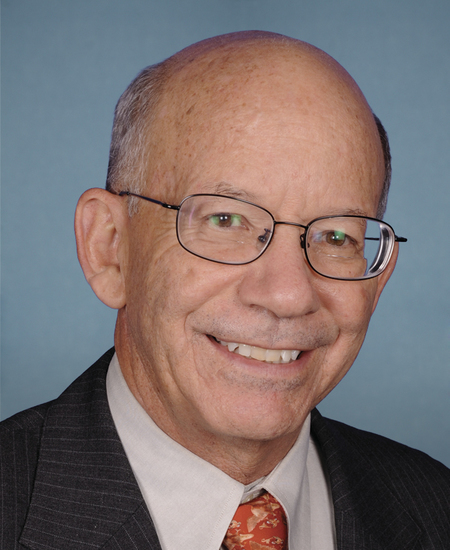
Rep. Peter A. DeFazio
Sponsored bills
Saudi Arabia Accountability for Gross Violations of Human Rights Act This bill imposes visa-blocking sanctions on specified foreign persons determined to have played a role in the killing of Jamal Khashoggi, and it requires the Department of State to report on incidents of arbitrary detention, violence, and state-sanctioned harassment by Saudi Arabia against U.S. citizens and their family members. The bill also requires the State Department to make publicly available a report that describes whether and how a concurrence with Saudi Arabia for U.S. security assistance will avoid identifying the United States with governments that deny human rights and fundamental freedoms to their people.
Do No Harm Act This bill prohibits the application of the Religious Freedom Restoration Act of 1993 (RFRA) to specified federal laws or the implementation of such laws. Currently, RFRA prohibits the government from substantially burdening a person's exercise of religion even if the burden results from a rule of general applicability, except in furtherance of a compelling governmental interest when using the least restrictive means. Under the bill, RFRA is inapplicable to laws or the implementation of laws that protect against discrimination or the promotion of equal opportunity (e.g., the Civil Rights Act of 1964); require employers to provide wages, other compensation, or benefits, including leave; protect collective activity in the workplace; protect against child labor, abuse, or exploitation; or provide for access to, information about, referrals for, provision of, or coverage for, any health care item or service. The bill prevents RFRA from being used to deny (1) goods or services the government has contracted, granted, or made an agreement to provide to a beneficiary of or participant in a program or activity funded by such government contract, grant, agreement, or other award; or (2) a person's full and equal enjoyment of a government-provided good, service, benefit, facility, privilege, advantage, or accommodation. In order for a person to assert a RFRA claim or defense in a judicial proceeding, the government must be a party to the proceeding.
Democracy Is Strengthened by Casting Light On Spending in Elections Act of 2021 or the DISCLOSE Act of 2021 This bill addresses campaign finance, including by expanding the prohibition on campaign spending by foreign nationals, requiring additional disclosures of campaign expenditures, and requiring additional disclosures regarding certain political advertisements. First, the bill prohibits foreign nationals from participating in the decision-making process regarding an election expenditure. Additionally, the bill expands existing foreign money prohibitions to include disbursements for paid web-based or digital communications and federal judicial nomination communications. It also prohibits foreign nationals from contributing to campaigns related to ballot initiatives and referenda. The Federal Election Commission (FEC) must conduct an audit after each federal election cycle to determine the incidence of illicit foreign money. Next, the bill makes it unlawful to establish or use a corporation, company, or other entity with the intent to conceal an election contribution or donation by a foreign national. A violator is subject to criminal penalties—a fine, a prison term of up to five years, or both. Covered organizations (e.g., corporations, labor organizations, and political organizations) must, within 24 hours, file reports with the FEC to disclose campaign expenditures of more than $10,000 during an election cycle. Finally, the bill requires organizations to provide additional disclosures regarding political advertisements, including the donors who contributed the most money to that organization in the last year.
Mainstreaming Addiction Treatment Act of 2021 This bill removes the requirement that a health care practitioner apply for a separate waiver through the Drug Enforcement Administration (DEA) to dispense certain narcotic drugs (e.g., buprenorphine) for maintenance or detoxification treatment (i.e., substance use disorder treatment). Further, a community health aide or community health practitioner may dispense certain narcotic drugs for maintenance or detoxification treatment without registering with the DEA if the drug is prescribed by a health care practitioner through telemedicine. It preempts state laws related to licensure for this activity. The bill also directs the Substance Abuse and Mental Health Services Administration to conduct a national campaign to educate health care practitioners and encourage them to integrate substance use disorder treatment into their practices.
Juror Non-Discrimination Act of 2021 This bill prohibits the exclusion of individuals from jury service on the basis of their sexual orientation or gender identity.
This resolution urges (1) the President to issue a proclamation recognizing Earth Day; and (2) governments and people to continue building upon the Paris Agreement and other efforts to ensure that future generations inherit a livable, sustainable, and ecologically rich planet. The resolution reaffirms that immediate action is needed to reduce greenhouse gas emissions and ameliorate environmental injustices in order to protect our planet, public health, and overall well-being of all people and wildlife. In addition, it encourages the American people to mark Earth Day by working to address environmental challenges, educate others about the need for year-round action, and honor the stewardship ethic for which Senator Gaylord Nelson stood.
Healthy Flights Act of 202 1 This bill provides authority for the Federal Aviation Administration (FAA) to impose requirements on passenger and cargo air travel to protect the health and safety of air carrier crewmembers and passengers and to reduce the spread of infectious diseases through the aviation system during public health emergencies. For example, the bill (1) sets forth requirements relating to the use of masks and other protective equipment for airline passengers and certain airline employees; (2) requires the FAA to provide certain employees, including any air traffic controller and airway transportation systems specialists, with masks and other protective equipment; and (3) mandates the development of a national aviation preparedness plan to ensure the aviation system is prepared to respond to epidemics and pandemics of infectious diseases. Additionally, the bill directs each air carrier operating an aircraft with a seating capacity of 20 or more to implement appropriate measures on a flight to reduce the likelihood of any passenger or crewmember contracting an infectious disease. The FAA must enter into an agreement with the National Academies to conduct a study on the transmission of infectious diseases, such as respiratory diseases, in the cabins of passenger airplanes. Further, the bill (1) establishes a Center of Excellence for Infectious Disease Response and Prevention in Aviation within the FAA; and (2) directs the FAA to revise airline passenger briefing requirements, including briefings during a national emergency pertaining to a respiratory disease.
Kangaroo Protection Act of 2021 This bill establishes new federal crimes related to commercial activities involving kangaroos and kangaroo products. Specifically, the bill prohibits the import for commercial purposes, possession with intent to sell, or sale of a kangaroo; and the introduction into interstate commerce; manufacture for introduction into interstate commerce; sale, trade, or advertisement in interstate commerce; or offer to sell, or transport or distribute in interstate commerce, any kangaroo product. A violator is subject to civil and criminal penalties. Additionally, a kangaroo or kangaroo product used in a violation is subject to forfeiture.
Child Care for Working Families Act This bill provides funds and otherwise revises certain child care and early learning programs for low- to moderate-income families. Specifically, the bill provides funds for the Child Care and Development Block Grant program and reestablishes it as a child care and development assistance program. The bill also allocates program funds for states to provide services and supports to infants, toddlers, and children with disabilities. Further, the bill revises the program to require each state to create a tiered and transparent system for measuring the quality of child care providers, which must include evidence-based standards and payment rates that are based on a certain cost estimation model; ensure that copayments are based on a sliding scale and that no family receiving assistance pays more than 7% of its household income on child care; and use quality child care amounts for certain activities, such as increasing the supply of child care providers. The bill also provides funds and establishes grants for states to create preschool programs for low- to moderate-income children between the ages of three and five years. The Department of Health and Human Services (HHS) must make grants to Head Start agencies to provide children with access to full-school-year and full-school-day services, provide access to additional service hours for migrant and seasonal agencies, or enhance the quality of existing services. Finally, the bill requires, and provides funds for, HHS to assist Head Start agencies with ensuring their teachers and staff are paid a living wage.