

Albatross and Petrel Conservation Act This bill authorizes the United States Fish and Wildlife Service (USFWS) and the National Marine Fisheries Service (NMFS) to issue regulations to implement and enforce the Agreement on the Conservation of Albatrosses and Petrels, done at Cape Town, South Africa, on February 2, 2001. Specifically, the USFWS and the NMFS may take action to protect albatrosses and petrels and their habitats. The bill prohibits the taking of an albatross or petrel without a permit, authorization, or exemption. The FWS, in consultation with the NMFS, may authorize the taking of an albatross or petrel under exceptional circumstances or incidental to otherwise lawful activities. The bill gives the USFWS, the NMFS, and the Coast Guard authority to enforce this bill. Finally, the bill authorizes cooperation with other countries to achieve and maintain a favorable conservation status of albatrosses and petrels.
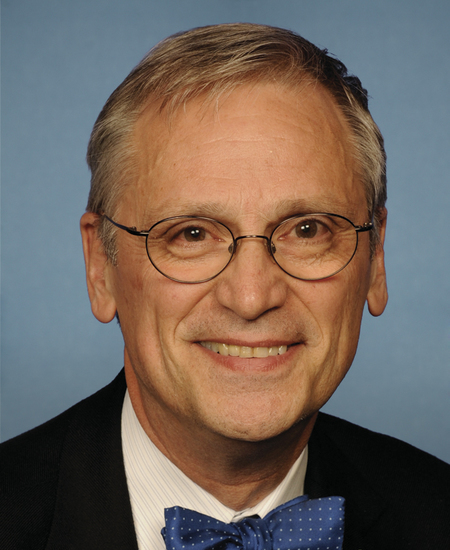
Rep. Earl Blumenauer
Sponsored bills
Import Security and Fairness Act This bill excludes imported articles from nonmarket economy countries or countries on the priority watch list from receiving de minimis treatment. De minimis treatment allows imported articles valued under $800 to enter the United States without paying duties, fees, taxes, or interest. The bill also directs U.S. Customs and Border Protection to collect additional information on merchandise that may qualify for de minimis treatment.
Climate Risk and Emergency Support In Livable Inclusive and Equitable Neighborhoods and Communities Everywhere Act or the Climate RESILIENCE Act This bill makes changes to the Robert T. Stafford Disaster Relief and Emergency Assistance Act to take into account climate change. The bill includes extreme temperature events, such as heat waves or freezes, within the scope of the act and defines resilience for purposes of disaster assistance and mitigation efforts. Federal and state preparedness and mitigation assistance may be used for reducing the impacts of extreme temperatures and improving air quality and mitigating against wildfire smoke.. The bill authorizes implementing predisaster hazard mitigation measures that will be cost-effective and equitable long-term and provide enhanced protection to the community. The Federal Emergency Management Agency (FEMA) must (1) provide technical assistance to underserved and disadvantaged communities for such measures; and (2) provide guidance to implement the latest published editions of relevant consensus-based codes, specifications, and standards that incorporate the latest hazard-resistant designs. The bill includes within the hazard mitigation program requirements the abatement of lead, mold, mildew, radon, asthma, and allergen triggers, or other pollutants and hazardous materials directly caused by a major disaster or emergency. FEMA must report to Congress regarding challenges posed by FEMA requirements for determining the cost-effectiveness of mitigation activities and how such requirements may disproportionately burden underserved or disadvantaged communities.
Federal Adjustment of Income Rates Act or the FAIR Act This bill modifies pay rates for federal employees in 2023. Specifically, the bill increases rates under the statutory pay systems and for prevailing rate employees by 4.1% and increases locality pay by 1%.
Free At-Home Tests for All Act This bill requires the Department of Health and Human Services (HHS) to provide free antigen diagnostic tests for COVID-19 (i.e., rapid tests) to U.S. residents. The bill also automatically grants emergency use authorization for rapid tests approved by certain foreign regulators. Specifically, HHS must purchase a sufficient quantity of rapid tests to provide two tests per week at no cost to each resident for the 12 months following the bill's enactment. The President may use authorities available under the Defense Production Act of 1950 to obtain the tests. That act confers upon the President a broad set of authorities to influence domestic industry in order to provide essential materials and goods needed for the national defense. In addition, HHS must conduct outreach about the availability of free rapid tests to Medicare and Medicaid participants and make the tests available through those programs. The bill also automatically grants emergency use authorization during the public health emergency for rapid tests that are listed for emergency use by (1) the World Health Organization (WHO), or (2) a foreign regulator that is a stringent regulatory authority as defined by the WHO for purposes of medicine procurement. The Food and Drug Administration (FDA) may rescind authority for, or otherwise regulate, a rapid test that was automatically authorized. Additionally, the FDA must establish a permanent advisory committee focused on diagnostic and serological testing for public health needs.
Maddy summaryThis bill (H.J.Res. 68) is a symbolic, procedural measure that would require the President to issue an annual proclamation designating a day as "Democracy Day." It directs the President to call on state/local governments and citizens to observe the day through programs and activities, with January 6 referenced as a potential date. The bill does not create new government programs or change existing laws - it only establishes a recurring presidential proclamation. It directly affects federal, state, and local governments by encouraging them to participate in annual observances. The bill has no budgetary impact and remains focused on promoting civic engagement through a designated day.
PrEP Access and Coverage Act This bill requires private health insurance plans to cover prescription drugs that prevent HIV, including related screenings, diagnostic procedures, administrative fees, and clinical follow-ups, without any cost-sharing obligation for the plan holder. Further, insurance plans must not impose any preauthorization requirement for this coverage. These coverage requirements also apply to public health insurance programs, including Medicare, Medicaid, and the Children's Health Insurance Program. Additionally, the bill prohibits denying, limiting, or qualifying coverage or increasing premiums for disability insurance, long-term care insurance, or life insurance policies based on an individual taking medication for HIV prevention. The bill further requires the Department of Health and Human Services to award grants to states, or directly to eligible local organizations, to provide uninsured individuals and underinsured individuals access to prescription drugs and related services that prevent HIV. The Centers for Disease Control and Prevention also must develop a public awareness campaign that focuses efforts in communities with a high need for HIV prevention treatment.
College Student Hunger Act of 20 21 This bill modifies the eligibility requirements for the Supplemental Nutrition Assistance Program (SNAP) to make additional students at institutions of higher education eligible for benefits.
Protecting America's Meatpacking Workers Act of 2021 This bill addresses workplace conditions and safety with a particular focus on meat and poultry processing establishments and makes other changes to agricultural programs and activities. Generally, the bill provides funding through FY2027 for hiring additional Occupational Safety and Health Administration (OSHA) inspectors and related activities. It also restricts an employer's use of certain attendance policies under which a worker is assessed points for absences with progressive discipline imposed as points accumulate. Additionally, the bill expands protections for workers who exercise their rights under occupational safety and health laws and regulations. This includes specific protections and procedures for workers of meat and poultry processing establishments. The bill expands workplace safety and health requirements that apply to meat and poultry processing establishments, including by prohibiting waivers (subject to limited exceptions) related to line speeds and inspections. Additionally, OSHA must issue standards for these establishments that address, for example, ergonomic program management and preventing occupational exposure to COVID-19. OSHA must also (1) establish, within seven days, a process for establishments to report COVID-19 information; and (2) publish certain regulations regarding a workers' representative accompanying an OSHA inspector during inspections of an establishment. The bill provides funding through FY2031 for, and imposes additional conditions on recipients of, grants to improve meat and poultry processing facilities. Further, the bill increases funding for a program that supports regional and local food systems. It also requires country-of-origin labeling of beef, pork, and dairy products.
This bill revises enforcement provisions under the Animal Welfare Act (AWA), including by directing inspectors to confiscate or destroy in a humane manner animals found to be suffering physical or psychological harm as a result of failure to comply with the AWA.