Elizabeth Dole Home and Community Based Services for Veterans and Caregivers Act of 2022 or the Elizabeth Dole Home Care Act This bill addresses home care and caregiver programs for veterans.
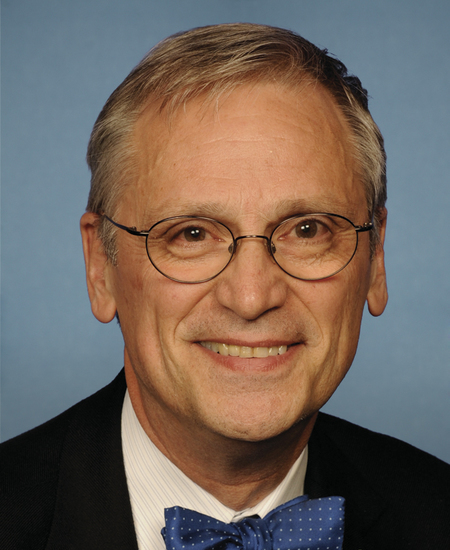
Rep. Earl Blumenauer
Sponsored bills
Serving Our LGBTQ Veterans Act This bill establishes a Center for Lesbian, Gay, Bisexual, Transgender, and Queer (LGBTQ) Veterans within the Department of Veterans Affairs (VA). Among other functions, the center must serve as principal adviser to the VA on the adoption and implementation of policies and programs affecting veterans who are LGBTQ.
Return Home to Housing Act This bill increases the maximum rate of per diem payments provided by the Department of Veterans Affairs to entities (i.e., grant recipients or authorized entities) that furnish services and transitional housing to homeless veterans.
Department of Veterans Affairs Continuing Professional Education Modernization Act or the VA CPE Modernization Act This bill modifies the program under which the Department of Veterans Affairs (VA) reimburses specified full-time health care professionals for continuing professional education expenses. Under current law, only board-certified physicians and dentists are eligible for such reimbursement. The bill expands the program to require reimbursement for various specified full-time health care professionals (e.g., registered nurses) and increases the amount available for a physician or dentist. Additionally, the bill removes the requirement that an individual be board-certified to receive reimbursement. The VA may adjust the amounts available based on inflation.
Ensuring Women's Right to Reproductive Freedom Act This bill prohibits anyone acting under state law from interfering with a person's ability to access out-of-state abortion services. ( Abortion services includes the use of any drugs that are approved to terminate pregnancies and any health care services related to an abortion, whether or not provided at the same time or on the same day.) Specifically, the bill prohibits any person acting under state law from preventing, restricting, impeding, or retaliating against health care providers who provide legal abortion services to out-of-state residents, any person or entity who helps health care providers to provide such services, any person who travels to another state to obtain such services, any person or entity who helps another person travel to another state to obtain such services, or the movement in interstate commerce of drugs that are approved to terminate pregnancies. The Department of Justice may enforce this bill through civil actions; the bill also establishes a private right of action for violations.
EPA Regulatory Authority Act of 2022 This bill provides that in identifying the best system of emission reduction for purposes of a standard performance under the Clean Air Act, the Environmental Protection Agency may include measures that apply beyond an individual stationary source or category of stationary sources. Additionally, the bill provides that each determination in the Clean Power Plan (i.e., the final rule titled Carbon Pollution Emission Guidelines for Existing Stationary Sources: Electric Utility Generating Units published in the Federal Register on October 23, 2015) with respect to a best system of emission reduction is deemed as authorized.
This resolution calls on the government of Rwanda to immediately release Paul Rusesabagina on humanitarian grounds and permit him to return safely to the United States. The resolution calls on the government of Rwanda to ensure Paul Rusesabagina receives access to appropriate, qualified medical professionals and all medical care necessary to guarantee his physical integrity and psychological well-being. The resolution also urges the U.S. government in all interactions with the government of Rwanda to raise the case of Paul Rusesabagina and to press for his immediate release on humanitarian grounds. Finally, the resolution expresses support to the family of Paul Rusesabagina and their commitment to bringing him home.
Promoting a Resolution to the Tibet-China Conflict Act This bill addresses issues relating to Tibet, including by establishing a statutory definition of Tibet that includes areas in Chinese provinces outside the Tibet Autonomous Region (TAR). For the purposes of U.S. policies and activities relating to Tibet, this bill defines Tibet to include the TAR and the Tibetan areas of the Qinghai, Sichuan, Gansu, and Yunnan provinces. (Generally, when China's government refers to Tibet, it means only the TAR, while Tibetan exile groups consider historical Tibet to include the TAR as well as areas in the provinces included in this bill's definition. China's government formally established the TAR in 1965.) Furthermore, the objectives of the Office of the U.S. Special Coordinator for Tibetan Issues shall include working to ensure that U.S. government statements and documents counter disinformation about Tibet by China's government and the Chinese Communist Party, including disinformation about Tibet's history and institutions. The bill also authorizes the office to take other actions to counter such disinformation. This bill also states that it is U.S. policy that the conflict between Tibet and China is unresolved and that Tibet's legal status remains to be determined in accordance with international law.

Housing Oversight and Mitigating Exploitation Act of 2022 or the HOME Act of 2022 This bill directs the Department of Housing and Urban Development to carry out investigations and other activities to address market manipulation and the role of institutional investors in the pricing of rental units and single-family homes. It also makes it unlawful to rent or sell a dwelling unit or single-family home at an unconscionably excessive and exploitative price during a housing emergency declared by the President.
Public Health Air Quality Act of 2022 This bill requires the Environmental Protection Agency to take specified actions related to monitoring and improving air quality, including by implementing a program to administer or conduct emissions measurement and quantification, promulgating regulations related to specified source categories, and deploying not fewer than 1,000 air quality sensors.