

Orphaned Well Cleanup and Jobs Act of 2021 This bill establishes incentives and requirements to permanently plug orphaned (i.e., abandoned) oil and gas wells and clean up pollution leaking from such wells. Specifically, the bill directs the Department of the Interior to establish grant programs to plug and clean up orphaned wells located on federal, state, tribal, and private land. Interior must also issue regulations that require each operator of an idled well on federal land to pay an annual, nonrefundable fee for each well. If the operator fails to pay the fee, then Interior may assess a civil penalty. Revenues generated from such fees must be used for activities related to cleaning up orphaned wells. Additionally, the bill requires the review of the adequacy of bonds or other financial arrangements for oil and gas development on public land leased from the federal government. Such bonds or financial arrangements are currently required to ensure developers have adequate financial resources to remediate and reclaim public land, water, or other resources after wells are abandoned or oil and gas development ceases.
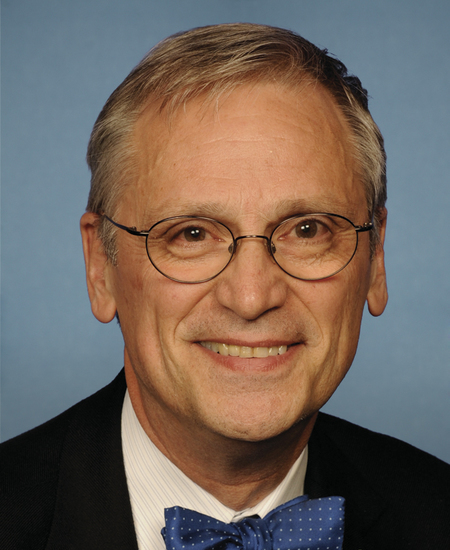
Rep. Earl Blumenauer
Sponsored bills
VA Employee Fairness Act of 2021 This bill repeals provisions excluding any matter or question concerning professional conduct or competence; peer review; or the establishment, determination, or adjustment of employee compensation from the applicability of collective bargaining rights for Veterans Health Administration employees.
Maddy summaryHRES 1522 is a symbolic resolution condemning the November 19, 2022, mass shooting at Club Q, an LGBTQ+ nightclub in Colorado Springs that killed five people and injured 22. It honors the victims, offers condolences to their families, and expresses support for those impacted by the attack. The resolution also highlights the broader context of anti-LGBTQ+ violence and hate, including the Pulse nightclub tragedy, and calls for an end to anti-LGBTQ+ hate and violence. As a ceremonial resolution, it contains no new laws or funding but serves as a formal statement of solidarity with the LGBTQ+ community.
Zero-Emission Vehicles Act of 2022 or the ZEVs Act of 2022 This bill requires the Environmental Protection Agency (EPA) to establish a zero-emission passenger vehicle standard. Specifically, the bill sets a schedule for increasing the percentage of zero-emission vehicles a vehicle manufacturer delivers for sale, culminating in a requirement to sell only zero-emission vehicles from 2035 on. The bill also requires the EPA to establish a zero-emission vehicle credit program that approves one zero-emission vehicle credit for each zero-emission vehicle delivered for sale in the United States and partial credits for qualified electric vehicles based on the estimated proportion of the mileage driven on the battery. Manufacturers that fail to meet the minimum required percentage of zero-emission vehicle sales must submit to the EPA a quantity of zero-emission vehicle credits sufficient to offset the excess. Credits may also be sold, transferred, exchanged, or retired in certain circumstances. The bill imposes civil penalties for the failure to comply with zero-emission vehicle credit standards, with collected penalties being deposited into the Highway Trust Fund. After 2035, the EPA must issue injunctions on the manufacture of passenger vehicles other than zero-emission vehicles.
Boundary Waters Wilderness Protection and Pollution Prevention Act This bill withdraws certain federal lands and waters in Minnesota from mining and related activities. Specifically, the bill withdraws approximately 234,328 acres of federal land and waters in a specified area in the Rainy River Watershed of Superior National Forest from entry, appropriation, and disposal under the public land laws; location, entry, and patent under the mining laws; and operation of the mineral leasing, mineral materials, and geothermal leasing laws. The area is adjacent to the Boundary Waters Canoe Area Wilderness and the Boundary Waters Canoe Area Wilderness Mining Protection Area. Land or interest in land within such area that is acquired by the United States shall be immediately withdrawn in accordance with this bill. The Forest Service is authorized to permit the removal of sand, granite, iron ore, and taconite from national forest system lands within such area if the removal is not detrimental to the water quality, air quality, and health of forest habitat within the Rainy River Watershed.
Transparency in Energy Production Act of 2021 This bill requires certain disclosures by entities seeking a lease or holding a lease to develop renewable energy operations or fossil fuel operations on public lands or Indian lands or any operation using any right-of-way or special use permit that would cross public lands, Indian lands, or national forests that would facilitate fossil fuel development. The disclosures are those described in the Sustainability Accounting Standard for the Renewable Resources and Alternative Energy Sector or the Extractives and Mineral Processing Sector. Every two years, the Department of the Interior and the Department of Agriculture must report to Congress on such operations, including greenhouse gas emissions, air quality, water management, biodiversity impacts, production, and the number of sites. For renewable energy operations on public lands or Indian lands, the report must include greenhouse gas emissions that would result from the production of the same amount of energy using fossil fuels.
Bonding Reform and Taxpayer Protection Act of 2021 This bill revises bonding requirements for oil and gas development on public land leased from the federal government. Such bonds are required to ensure oil and gas developers have adequate financial resources for implementing reclamation plans to restore public land after oil and gas development (e.g., drilling operations) ceases. Specifically, the bill increases the bond amounts that oil and gas developers must provide prior to conducting surface-disturbing activities and requires such amounts to adjust at least once every three years for inflation. In addition, the bill sets fees to cover the cost for inspection and enforcement with respect to such leases. The bill also requires the Bureau of Land Management (BLM) and the U.S. Forest Service (USFS) to establish uniform standards for all interim and final reclamation plans. BLM and USFS may not release any bond amounts until the standards have been met by oil and gas developers and the inspection fees have been paid. Finally, the bill gives the U.S. Fish and Wildlife Service the authority to obtain and retain adequate financial assurances (e.g., bonds) from nonfederal entities to repair potential damages to resources of the National Wildlife Refuge System prior to the commencement of activities related to mineral development, such as oil and gas operations.
Restoring Community Input and Public Protections in Oil and Gas Leasing Act of 2021 This bill modifies several provisions related to oil and gas leasing on public lands. Among other requirements, the bill replaces the competitive auction process with a competitive-sealed bidding process. It also eliminates non-competitive bidding. Additionally, the bill increases royalty rates, rental rates, and the minimum bid amount. Further, the bill creates a fee for nominating lands for leasing. Lease sales must be held in each state no more than three times per year instead of quarterly. The bill also decreases lease term durations from 10 to 5 years. Certain lease information must be made available on public websites, including the names of all current and former lessees and operators. The bill also adds a number of new provisions related to protection of private surface estate owners. Finally, the bill establishes requirements to protect water resources, including by requiring oil or gas operators to replace certain water supplies affected by drilling, hydraulic fracturing (i.e., fracking), or production operations. In addition, the Bureau of Land Management must issue regulations governing the use of fracking under oil and gas leases for federal lands. The regulations must require (1) baseline water testing, and (2) public disclosure of each chemical used for fracking.
Respect for Marriage Act This act provides statutory authority for same-sex and interracial marriages. Specifically, the act replaces provisions that define, for purposes of federal law, marriage as between a man and a woman and spouse as a person of the opposite sex with provisions that recognize any marriage between two individuals that is valid under state law. (The Supreme Court held that the current provisions were unconstitutional in United States v. Windsor in 2013.) The act also replaces provisions that do not require states to recognize same-sex marriages from other states with provisions that prohibit the denial of full faith and credit or any right or claim relating to out-of-state marriages on the basis of sex, race, ethnicity, or national origin. (The Supreme Court held that state laws barring same-sex marriages were unconstitutional in Obergefell v. Hodges in 2015; the Court held that state laws barring interracial marriages were unconstitutional in Loving v. Virginia in 1967.) The act allows the Department of Justice to bring a civil action and establishes a private right of action for violations. The act does not (1) affect religious liberties or conscience protections that are available under the Constitution or federal law, (2) require religious organizations to provide goods or services to formally recognize or celebrate a marriage, (3) affect any benefits or rights that do not arise from a marriage, or (4) recognize under federal law any marriage between more than two individuals.
This resolution congratulates the Portland Thorns Football Club on winning the 2022 National Women's Soccer League championship and completing a successful 2022 season.