

Maddy summaryHR 715, the Bipartisan Background Checks Act of 2023, requires background checks for all firearm transfers between private individuals, not just those through licensed dealers. It mandates that unlicensed sellers must involve a licensed dealer to conduct a background check before transferring a firearm, with exceptions for family transfers (like spouses or parents/children), law enforcement, temporary safety transfers, and certain hunting or range activities. The bill also requires licensed dealers to provide a notice and certification form in both English and Spanish to buyers. It explicitly states it won't create a national gun registry or override state laws on the same topic. The law would take effect 180 days after enactment.
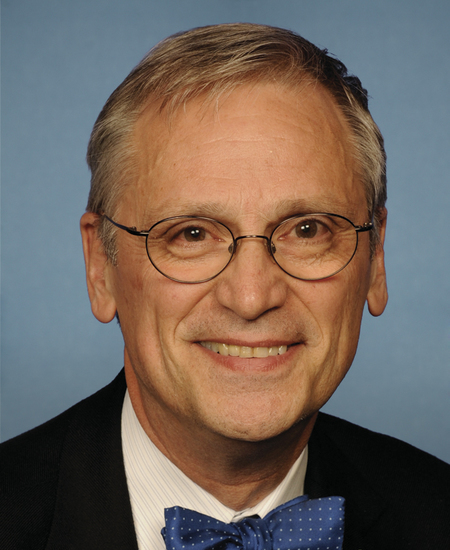
Rep. Earl Blumenauer
Sponsored bills
Maddy summaryThis bill helps new car dealers affected by pandemic-era supply chain disruptions by changing tax rules for inventory sales. It allows dealers using LIFO accounting to treat certain sales of unsold vehicles (liquidations) between March 2020 and December 2021 as "qualified" for tax purposes. Dealers can defer recognizing income from these sales and have until 2026 to replace the sold vehicles before potential tax adjustments apply. The provision specifically targets dealers who couldn't replenish inventory during the supply chain crisis.
Repatriate Our Patriots Act This bill protects certain veterans of the Armed Forces from removal from the United States and provides such veterans with an expedited procedure for naturalization. The bill applies to special veterans , defined as persons who served in the active Armed Forces who were (1) honorably discharged or released; (2) not convicted of various crimes, including voluntary manslaughter, murder, rape, or terrorism; and (3) not a child abuser or pedophile. Special veterans may not be removed from the United States, and the Department of Homeland Security (DHS) must cancel any pending removal proceedings or orders against any such veterans. DHS must also establish a program to permit such veterans who were already removed from the United States to return to as lawful permanent residents. Special veterans shall be naturalized upon filing an application, paying the relevant fees, and taking an oath of allegiance. DHS must take steps to ensure such naturalization applications are pending for no longer than 90 days.
Equal Voices Act This bill sets out a formula to calculate the number of Members in the House of Representatives, which has been capped at 435 since 1929. Under the formula, the number of Members is equivalent to the total population of the United States divided by the population of the state with the smallest population (rounded to the nearest whole odd number) and is calculated following each census. If the formula increases or decreases the size of the House by 15% or more, a temporary congressional commission must convene to make recommendations on the optimal size of the House and the apportionment of Members among the states. The commission must submit its recommendations within six months of the census, and it terminates 30 days after that submission.
Restoring Equal and Accountable Legislators in the House Act or the REAL House Act This bill increases the number of voting Members serving in the House of Representatives, which has been capped at 435 since 1929. Following the 2030 census, the bill increases the number of voting Members to 585. For subsequent censuses, the bill sets out a method for determining the number of Members. The bill also requires the Architect of the Capitol to study and make recommendations to Congress about the facility needs of and other logistical issues related to an increased number of Members.
Wildfire Recovery Act This bill makes changes with respect to the federal cost share for Fire Management Assistance Grants and provides that the federal share shall be not less than 75% of the eligible cost. Specifically, the bill directs the Federal Emergency Management Agency (FEMA) to conduct and complete a rulemaking to provide criteria for the circumstances under which FEMA may recommend that the President increase the federal cost share. Such criteria shall include a threshold metric that assesses the financial impact to a state or local government from responding to a fire for which fire management assistance is being provided.
Wildfire Smoke Relief Act This bill provides for assistance for the purchase of smoke inhalation prevention equipment to specified individuals at risk of wildfire smoke-related illness. The President, in carrying out the Transitional Sheltering Assistance Program of the Federal Emergency Management Agency (FEMA), shall provide (1) assistance to a state or local government, local public health authority, or a coordinated care organization to purchase and provide such equipment to at-risk individuals; and (2) cost-efficient transitional shelter assistance to at-risk individuals in any case in which such equipment is insufficient to mitigate the risk of illness.
This joint resolution proposes a constitutional amendment to (1) add 12 Senators at-large to the Senate, who shall be elected nationwide through ranked choice voting (a system in which voters rank candidates in order of preference); and (2) provide for 12 Electors at-large, who shall cast their ballots for the presidential and vice-presidential candidates having receiving the greatest number of votes cast by U.S. citizens.
Maddy summaryHRES 77 is a non-binding House resolution expressing support for the Treaty on the Prohibition of Nuclear Weapons. It calls on the President to make nuclear disarmament central to U.S. national security policy and urges specific actions: pursuing new arms control talks with Russia and China, renouncing first-use of nuclear weapons, ending the president’s sole authority to launch nukes, removing weapons from hair-trigger alert, and canceling plans to modernize the U.S. nuclear arsenal. The resolution directly addresses the President, Secretary of State, Secretary of Defense, and other federal leaders, urging them to lead global efforts to reduce nuclear risks. It does not create new laws or policies but formally endorses the treaty’s goals and outlines concrete steps for U.S. nuclear policy reform.
Choosing Our Own Lives Over Fast Firearms Act or the COOL OFF Act This bill establishes a three-day waiting period for certain handgun transfers. Specifically, the bill makes it unlawful for a licensed importer, manufacturer, or dealer to sell or transfer a handgun to an unlicensed individual unless three business days have elapsed since the licensee initiated a background check. A violator is subject to criminal penalties—a fine, up to one year in prison, or both. Additionally, the bill makes it unlawful for an unlicensed individual to receive a handgun from another unlicensed individual unless at least three business days have elapsed since the recipient most recently offered to take possession of the handgun. A violator is subject to criminal penalties—a fine, up to five years in prison, or both. The three-day waiting period does not apply to certain handgun transfers, such as for a loan between spouses for a lawful purpose.