

Maddy summaryThis bill prohibits children under 18 from having direct contact with tobacco plants or dried tobacco leaves on farms. It amends the Fair Labor Standards Act to explicitly add "tobacco-related agriculture" to the list of occupations where minors cannot work, alongside manufacturing and mining. The law directly affects young workers in tobacco farming by banning their hands-on involvement with crops and processed tobacco. This change updates existing labor protections to specifically cover tobacco farming operations. The policy would require farms to adjust employment practices to exclude minors from these tasks.
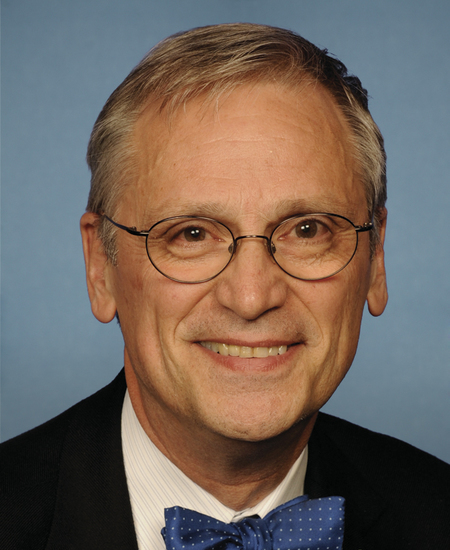
Rep. Earl Blumenauer
Sponsored bills
Maddy summaryHRES 486 is a symbolic House resolution recognizing June 8 as World Oceans Day. It affirms the U.S. duty to protect, conserve, and rebuild ocean resources, highlights ocean health as critical to climate, food security, and coastal economies, and cites specific threats like plastic pollution, ocean acidification, and climate impacts. The resolution commits the House to increasing federal investment in ocean science research and monitoring to address these challenges. As a procedural resolution, it does not create new laws or allocate funds but serves to raise awareness and encourage coordinated action on ocean conservation.
Maddy summaryThis resolution designates May 5, 2023, as the "National Day of Awareness for Missing and Murdered Indigenous Women and Girls" to honor victims and support families. It asks the public to commemorate affected individuals and demonstrates solidarity with impacted communities. The bill also recommends the Justice Department commission a new study to update statistics on violence against Indigenous women, referencing the 2016 DOJ study that found 84.3% experienced violence in their lifetime. This symbolic measure aims to raise awareness and encourage federal action, without changing laws or allocating new funding.
Maddy summaryHR 3953, the Debt Ceiling Reform Act, changes how Congress can block the Treasury from borrowing more money. It requires the Treasury to notify Congress when debt approaches a $1 trillion increment, giving Congress 30 days to pass a resolution disapproving further borrowing. The bill mandates strict timelines: the House must act within 6 days of introduction (with committees required to report bills within 5 days), and the Senate must consider the resolution within 6 days with limited debate. This process directly affects the Treasury’s ability to issue debt and Congress’s procedural control over debt ceiling decisions. The bill does not eliminate the debt ceiling but streamlines the disapproval process.
Maddy summaryHR 3973, the Judicial Ethics and Anti-Corruption Act of 2023, establishes new ethics rules for federal judges and justices. The bill prohibits judges from owning stocks, commercial real estate, business interests, and certain trusts, while creating a Federal Employee Investment Account for permitted investments. It requires judges to disclose potential conflicts of interest, restricts privately funded judicial education events, and creates a Supreme Court Complaints Review Committee to handle complaints against justices. The bill aims to increase transparency and reduce conflicts of interest for federal judges and justices.
Pets Belong With Families Act This bill prohibits public housing agencies from imposing breed restrictions on pets owned by residents of public housing units. The bill continues to allow public housing agencies to prohibit ownership of dangerous animals in public housing, but prohibits classification as dangerous by breed and requires that any such classification be based on specific behaviors or actions of the animal.
Maddy summaryHR 3850, the Pride In Mental Health Act of 2023, establishes a federal grant program to improve mental health and substance abuse services for LGBTQ+ youth (including nonbinary, intersex, and Two Spirit individuals). The bill directs the Health and Human Services Secretary to fund eligible organizations to provide trauma-informed care, cultural competency training for caregivers, school bullying prevention guidelines, and family support resources. It explicitly prohibits grant funds from being used for conversion therapy or advertising related to such therapy. The bill also requires data collection on LGBTQ+ youth mental health and a federal survey to measure psychological distress.
Bob von Schwedler Permanent Health Coverage Tax Credit Expansion Act This bill permanently reauthorizes and expands the Health Coverage Tax Credit. As previously enacted, the Health Coverage Tax Credit covered 72.5% of health insurance costs for certain Trade Adjustment Assistance (TAA) recipients, alternative TAA recipients, and Pension Benefit Guaranty Corporation pension recipients. The credit expired in December 2021. The bill permanently reauthorizes the credit and expands the credit to cover 80% of health insurance costs.
Maddy summaryThe American Family Act establishes a monthly child tax credit of $250 per month for each child under age 6 and $300 per month for each child aged 6-18, with income limits of $150,000 for joint filers and $112,500 for other filers. The credit is refundable, meaning it can be paid even if the taxpayer owes no income tax, and will be adjusted annually for inflation. The bill includes detailed rules for determining eligibility, including requirements that the child resides with the taxpayer for more than half the month and provisions to prevent fraud through recapture of improperly received payments. The credit will be paid monthly in advance rather than as a single annual payment, with specific mechanisms for calculating and distributing the payments.
Maddy summaryHR 3861, the Filing Relief for Natural Disasters Act, extends federal tax filing deadlines for taxpayers affected by disasters. It allows state governors (or the D.C. mayor) to request postponement of tax deadlines when a disaster is declared under *state* law, not just federal declarations. The bill increases the maximum extension period from 60 to 120 days for affected taxpayers in all U.S. states, territories (including Puerto Rico, Guam, and the U.S. Virgin Islands), and the District of Columbia. This change directly impacts individuals and businesses needing more time to file taxes after qualifying natural disasters.