

Maddy summaryThis bill establishes a federal system to coordinate efforts across agencies to address health risks from extreme heat. It creates a National Integrated Heat Health Information System (NIHHIS) and an interagency committee to develop a strategic plan for heat health planning and response. The bill authorizes funding for community resilience projects that prioritize historically disadvantaged communities and those with environmental justice concerns. It mandates a study to identify gaps in heat information and response systems across the country. The legislation aims to reduce health impacts of extreme heat, particularly for vulnerable populations including the elderly, low-income communities, and communities of color.
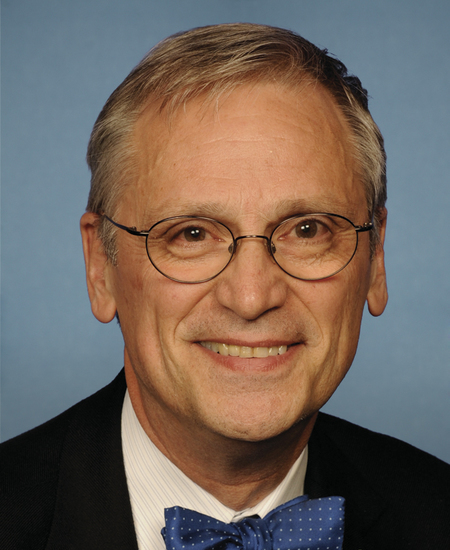
Rep. Earl Blumenauer
Sponsored bills
Maddy summaryThis bill requires phone calls, texts, and chats to 9-8-8 (the national suicide prevention and mental health crisis hotline) to be routed to the nearest participating crisis center within 90 days of enactment, while protecting caller privacy by not revealing precise location. It mandates all phone carriers to transmit every 9-8-8 call or text - including those from prepaid or non-initialized handsets - and updates phone systems to allow direct 9-8-8 dialing without extra steps. The law affects crisis centers (by directing calls to their area), callers (through improved routing and privacy), and phone carriers (by requiring transmission compliance). These changes aim to make the 9-8-8 system more efficient and accessible for those seeking mental health support.
Maddy summaryThis bill clarifies that hemp-derived cannabidiol (CBD) products are not considered dietary supplements under federal law. It directs the Secretary of Health and Human Services to establish specific labeling and packaging rules for CBD products sold as food or supplements, and to enforce these standards. The law directly affects CBD product manufacturers, retailers, and consumers who purchase these items, while granting HHS authority to regulate their labeling and safety. It creates a new regulatory pathway for CBD products that were previously unclear under existing dietary supplement definitions.
Maddy summaryHR 4832, the Indian Programs Advance Appropriations Act of 2023, changes how funding is allocated for key Native American programs. It requires that starting in fiscal year 2024, new budget authority for specific accounts under the Bureau of Indian Affairs, Bureau of Indian Education, and Indian Health Service must be made available immediately for the current fiscal year *and* include advance funding for the next fiscal year. The bill mandates annual reports by July 31 each year, including workload estimates and resource sufficiency assessments developed with tribal consultation. This affects tribal programs funded through accounts like Operation of Indian Programs, Contract Support Costs, and Indian Health Services, aiming to improve budget planning predictability.
Smoke Exposure Crop Insurance Act of 2023 This bill requires the federal crop insurance program (FCIP) to provide for the research and development of a policy to insure wine grapes (including wine grapes produced in California, Oregon, and Washington) against losses due to wildfire smoke exposure. (The term policy means an insurance policy, plan of insurance, provision of a policy or plan of insurance, and related materials.) The Federal Crop Insurance Corporation, the agency that finances FCIP operations, must make any resulting policy available that meets specified FCIP requirements. The FCIP must also submit a report to Congress on the research and any resulting policy. The report must include the feasibility of a policy that allows producers to claim an indemnity through post-harvest, post-vinification testing if such testing demonstrates smoke damage that was not detectable prior to harvest.
Maddy summaryThis bill increases funding for the Gus Schumacher Nutrition Incentive Program, which helps SNAP (Supplemental Nutrition Assistance Program) participants buy fruits and vegetables. It raises annual funding from $100 million to $500 million for 2024-2025, $750 million for 2026-2027, and $1 billion annually starting in 2028. The program provides matching dollars - typically $1 for $1 - when SNAP recipients purchase eligible fruits and vegetables at participating stores. This directly affects low-income SNAP households by making fresh produce more affordable through expanded financial incentives.
Maddy summaryThis bill amends the Food and Nutrition Act to prevent fees on SNAP (Supplemental Nutrition Assistance Program) electronic benefit transactions. It requires state agencies managing SNAP to update EBT (Electronic Benefit Transfer) systems to meet modern security standards and review technology contracts regularly. States must cover costs for these changes, with new funding provided for implementing the updated requirements. The changes take effect October 1, 2023, directly affecting state agencies that administer SNAP benefits.
Maddy summaryHR 4068, or "Canyon’s Law," bans the use of M-44 devices - cyanide-based predator control tools - on all public lands managed by federal agencies like the National Park Service, Fish and Wildlife Service, and Forest Service. The bill prohibits agencies from preparing, placing, or deploying these devices and requires all existing M-44s on public land to be removed within 30 days of enactment. It directly affects federal, state, and county agencies that previously used these devices to target wildlife like wolves and coyotes. The law aims to prevent accidental poisonings of people, pets, and non-target species (including endangered animals) by eliminating the use of this hazardous method on public lands.
Maddy summaryThe Headwaters Protection Act of 2023 reauthorizes and improves the Water Source Protection Program under the Healthy Forests Restoration Act, focusing on protecting watersheds and water supplies on National Forest lands and adjacent non-Federal lands. It expands eligible partners to include acequia associations, local water management entities, land-grant mercedes, and private water delivery organizations, requiring projects to address watershed health, water quality, climate resilience, and wildfire risk. The bill increases annual funding to $30 million (for fiscal years 2024-2033) and sets aside 10% for non-Federal partner capacity building. It also mandates adjacent landowner support for projects on their property and clarifies that the program does not alter land ownership or management.
Increasing Land Access, Security, and Opportunities Act This bill provides statutory authority for and expands the Farm Service Agency's (FSA's) Increasing Land, Capital, and Market Access Program (the Increasing Land Access Program) for farmers, ranchers, and forest owners. Specifically, the FSA must make competitive grants to, enter into cooperative agreements with, or provide other capital support to eligible entities (e.g., state or local governments, Indian tribes, nonprofit organizations, and institutions of higher education) to provide direct assistance to farmers, ranchers, and forest owners who are (1) historically underserved, or (2) operating in high-poverty areas. The bill specifically excludes from assistance any foreign-based or foreign-owned corporation. The direct assistance may include payments to intended beneficiaries to acquire real property (including air rights and water rights), secure clear title on an heirs' property farmland, and improve or remediate land, water, and soil. Eligible entities may also use grants (1) to provide direct assistance to intended beneficiaries in assessing, purchasing, acquiring, or retaining eligible land; (2) for activities designed to support farm establishment and long-term viability; and (3) to provide technical assistance. The FSA must establish a stakeholder committee and, in collaboration with the committee, develop a process for evaluating proposals and distributing funds to eligible entities. In developing this process, the FSA must consider perspectives from diverse stakeholders, diverse geographic distribution, and diverse farming models, practices, and purposes.