

Maddy summaryThe John R. Lewis Voting Rights Advancement Act of 2023 would strengthen the Voting Rights Act of 1965 by updating the criteria for which states and localities must obtain federal preclearance before changing voting practices. It would establish new standards for proving vote dilution and vote denial by requiring courts to consider historical discrimination, racial polarization in voting, and whether voting practices disproportionately burden minority voters. The bill would also require states and localities to provide public notice of voting changes and share demographic data about polling locations. These changes would primarily affect jurisdictions with a history of voting rights violations, aiming to prevent discriminatory voting practices before they take effect.
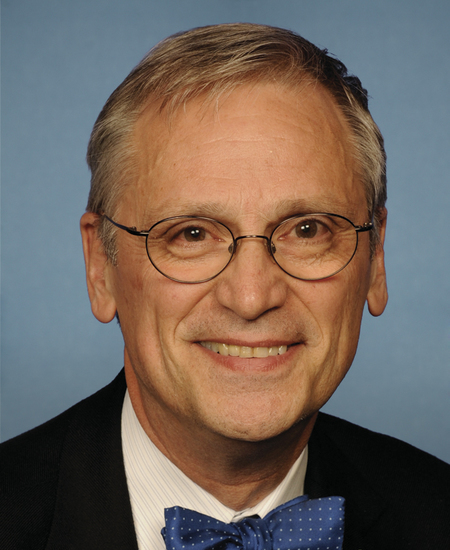
Rep. Earl Blumenauer
Sponsored bills
Maddy summaryHR 5545 requires the U.S. Agency for International Development (USAID) to create and implement a Global WASH in Healthcare Facilities Action Plan. The bill targets healthcare facilities in low- and middle-income countries - where 1 in 5 lack basic water access and 79% lack sanitation - to improve water, sanitation, and hygiene services. Key provisions mandate handwashing stations at all care points, safe waste disposal, menstrual health support, and integration with pandemic preparedness. USAID must report annually on progress, spending, and outcomes like reduced infections, using World Health Organization metrics. The law directly affects patients, healthcare workers, and facilities in high-priority countries identified by USAID.
Maddy summaryThe Humane Cosmetics Act of 2023 bans cosmetic animal testing in the United States, prohibiting companies from conducting or contracting such testing after its enactment (effective 1 year later). It also bans selling or transporting cosmetics developed using animal testing conducted after that date within U.S. interstate commerce. The law directly affects cosmetic manufacturers, retailers, and suppliers operating in the U.S. market, requiring them to use non-animal testing methods for safety evaluations. Exceptions exist for foreign regulatory requirements or when no alternative testing methods are available for specific ingredients.
Maddy summaryHRES 689 is a symbolic resolution designating October 25, 2023, as "Public Radio Music Day" and expressing the House's appreciation for public radio music stations. It directly recognizes the role of over 697 noncommercial stations serving 25.5 million weekly listeners across all 50 states, Washington D.C., Puerto Rico, and Guam. The resolution highlights how these stations support local music scenes, preserve diverse genres (like jazz, classical, and folk), and serve as community cultural hubs through programming, artist support, and educational outreach. This is a non-binding gesture of recognition, not a policy change affecting laws or funding.
Maddy summaryHRES 688 is a non-binding House resolution expressing support for designating September 16-23, 2023, as "National Estuaries Week." It highlights estuaries' critical role in the U.S. economy, noting they support 39% of jobs, 47% of economic output, and 68% of commercial fish by value. The resolution aims to raise public awareness about estuaries' ecological importance - such as providing habitat for fish, flood control, and carbon sequestration - and encourages efforts to protect and restore them. It does not create new laws or funding but symbolically acknowledges ongoing conservation work by federal, state, and community partners.
Maddy summaryThis bill prohibits individuals convicted of a misdemeanor hate crime or who received an enhanced sentence for a hate-motivated misdemeanor from obtaining, possessing, shipping, or transporting firearms. It directly affects people convicted under state, federal, or tribal law of a misdemeanor involving physical force or credible threat motivated by bias against race, religion, national origin, gender, sexual orientation, gender identity, or disability. The law amends existing federal gun laws (18 U.S.C. §§ 922(d) and 922(g)) to add this category to the list of prohibited persons, with specific exceptions for cases where the conviction was expunged, the person had proper legal counsel, or civil rights were restored. The bill focuses on concrete policy changes to restrict firearm access for this specific group, not broader speculation.
Maddy summaryHRES 492 is a congressional resolution condemning the Iranian government's systematic persecution of the Baha'i minority, which directly affects Baha'is in Iran facing arrests, property confiscation, and imprisonment. The resolution specifically calls for Iran to immediately release Baha'is detained for their faith, end state-sponsored hate propaganda against them, and reverse discriminatory policies denying equal access to education, employment, and religious freedom. It urges the U.S. President and Secretary of State to demand Iran’s compliance with international human rights treaties and to use existing sanctions authorities (under the 2010 and 2012 Iran sanctions laws) against officials responsible for these abuses. The resolution does not impose new legal requirements but serves as a formal U.S. government statement of condemnation and a call for diplomatic and sanctions action.
Maddy summaryHR 5322, the Time Off to Vote Act, requires most private employers (with 25+ employees) to provide two consecutive hours of paid leave for employees to vote in federal elections. Employers must grant this leave upon request, can schedule it during early voting periods if permitted by state law, and cannot include lunch breaks in the leave period. The bill prohibits retaliation against employees who take this leave and ensures it does not affect accrued employment benefits. Violations could result in civil penalties up to $10,000 per offense, enforced by the Department of Labor.
Voters on the Move Registration Act of 2023 This bill requires the Consumer Financial Protection Bureau to develop, and specified agencies to distribute, a statement providing individuals with information on how to register to vote and their voting rights. This information must be provided to individuals upon their participation in certain rental assistance programs or application for certain residential mortgages.
Maddy summaryThe People Over Long Lines Act (POLL Act) requires states to develop public plans ensuring voting wait times don't exceed 30 minutes at polling places for federal elections, particularly addressing documented disparities where voters in communities of color wait significantly longer than others. It establishes standards for minimum voting systems, poll workers, and resources based on factors like population demographics, voter turnout, and needs of disabled or limited English proficiency voters. The bill provides $500 million annually in federal funding to help states implement these changes, creates a private right of action allowing voters to sue states for violations with penalties including $50 per hour of wait time, and mandates remedial plans for states with excessive wait times. The law applies to federal elections starting in 2025, with states required to comply by January 1, 2025.