

Maddy summaryThe Wy’East Tribal Resources Restoration Act establishes "Indian Treaty Resources Emphasis Zones" within the Mount Hood National Forest to protect the Confederated Tribes of the Warm Springs Reservation's Treaty rights, including hunting, fishing, and gathering. It requires the Forest Service to co-manage these zones with the Tribe through memorandums of understanding, integrating traditional ecological knowledge into forest management and restricting new roads except for emergencies or safety. The bill mandates protecting Treaty resources from wildfires and invasive species while withdrawing zone lands from public entry, mining, and resource extraction. It authorizes $3.5 million annually for 2024-2028 to support Tribe-Forest Service collaboration on restoration and monitoring.
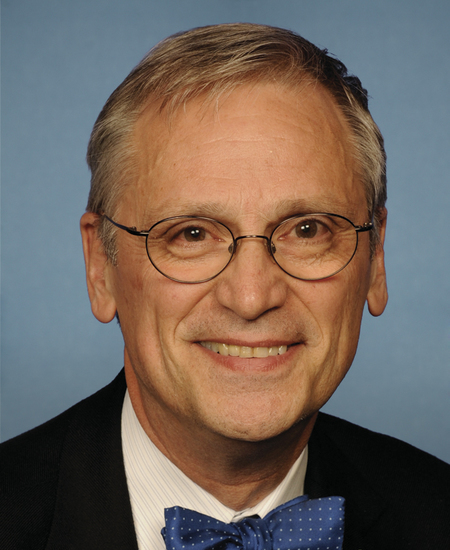
Rep. Earl Blumenauer
Sponsored bills
Maddy summaryThis bill amends federal transit grant rules to encourage housing near transit by adding incentives for projects that support "pro-housing policies." It defines such policies as local actions removing regulatory barriers to housing construction, including reducing parking minimums, creating faster approval processes for multi-family housing, and eliminating height restrictions. Transit project applicants can earn an extra point in their grant rating if they submit evidence of these policies in areas near transit, with the Department of Transportation consulting the Housing Secretary to assess how the policies will increase housing supply. The bill directly affects state and local governments implementing these policies and transit project applicants seeking federal capital investment grants.
Maddy summaryThe PHASE Act of 2023 directs the National Institute of Standards and Technology (NIST) to identify innovative traffic control technologies that improve safety for pedestrians and cyclists without causing distraction. It requires the Transportation Secretary to conduct a study analyzing urban areas with rising pedestrian fatalities and test physical safety measures like crosswalk technology, better lighting, and accessible sidewalks. The bill also creates a $5 million annual grant program for cities, tribes, and municipalities to fund specific pedestrian safety infrastructure, including marked crosswalks, adaptive lighting, accessible curb ramps, and upgraded traffic signals. These grants must comply with federal regulations and the Americans with Disabilities Act. The law directly affects local governments seeking funding and aims to protect pedestrians and vulnerable road users through concrete infrastructure improvements.
Maddy summaryHR 5983, the Clean Water Act of 2023, redefines "protected water resources" under federal law to explicitly include all interstate and intrastate waters (such as intermittent and ephemeral streams), wetlands, and their tributaries. This directly affects federal agencies like the EPA, states managing water quality, and developers or landowners needing permits for activities near these waters. The bill eliminates the Supreme Court’s narrow "navigable waters" definition from Sackett v. EPA (2023), restoring protections for tens of millions of acres of wetlands and millions of miles of small streams. Key mechanisms require the EPA to annually review and adjust exclusions from protections based on scientific evidence, ensuring water bodies critical to drinking water, flood control, and ecosystems remain safeguarded.
Transportation Assistance for Individuals with Disabilities Act This bill directs the Department of Transportation (DOT) to establish a grant program for protection and advocacy (P&A) systems to advocate for individuals with disabilities to access transportation. (Each state has a designated P&A system that protects and advocates for the rights of individuals with disabilities.) The bill directs DOT to select 10 P&A systems to receive five-year grants. Grant recipients must submit an annual report documenting the work they have done to address the barriers to accessing transportation for individuals with disabilities. Further, DOT must award one grant annually to a national organization with extensive knowledge of P&A systems to provide training and technical assistance to the systems.
Maddy summaryHRES 771 is a non-binding resolution expressing the U.S. House of Representatives' support for Israel following Hamas' October 7, 2023, attack. It condemns Hamas' actions, affirms Israel's right to self-defense, and calls for the immediate release of hostages. The resolution also urges enforcement of existing laws restricting aid to terrorists and sanctions against Iran for supporting Hamas. It does not create new policies or allocate funds, as it is a symbolic statement of congressional support.
Maddy summaryHRES 768 is a symbolic House Resolution expressing congressional support for Israel following Hamas' October 7, 2023 attacks. It condemns Hamas' actions, reaffirms Israel's right to self-defense, and calls for the immediate release of hostages. The resolution references the U.S. commitment to Israel's security through existing military aid programs, including the 2016 U.S.-Israel Memorandum of Understanding, and emphasizes enforcement of laws like the Taylor Force Act to prevent U.S. aid from reaching terrorist groups. As a symbolic resolution, it does not create new policy but serves as a statement of congressional support for Israel.
This resolution expresses respect for the sovereignty of Mexico and condemns calls for military action in Mexico without Mexico's consent. The resolution also states that while the President has the inherent power to repel sudden attacks, the manufacture and sale of fentanyl does not constitute such a sudden attack or an armed invasion.
Maddy summaryHR 6054, the Represent America Abroad Act of 2023, creates a 3-year pilot program to increase diversity in the U.S. Foreign Service by recruiting mid-career professionals from historically excluded groups - including racial/ethnic minorities, women, people with disabilities, and others - through a modified lateral entry pathway. The program requires participants to have 5-8 years of relevant experience, pass standard Foreign Service exams, and complete specialized training, with a goal of placing at least 50% of participants into mid-level Foreign Service roles annually. It mandates annual reporting to Congress on applicant demographics, advancement rates, retention, and recruitment efforts, targeting outreach to minority-serving institutions and community organizations. The bill directly affects the Department of State and USAID, aiming to address documented diversity gaps in leadership (currently 13-17% minority representation at executive levels) by expanding recruitment from underrepresented talent pools.
Maddy summaryThis bill authorizes a one-time $40,000 payment to former Air America employees who served at least five years during 1950-1976, or to their survivors (widows/widowers, dependents, or children). Additional $8,000 payments are provided for each full year of service beyond five years. The total funding is capped at $60 million, with claims due within two years of regulations being finalized. It does not create ongoing benefits or change Air America’s legal status, and payments are issued as a single lump sum.