

Maddy summaryThis bill (Public Law 118-33, enacted December 26, 2023) amends the Siletz Reservation Act to preserve the existing 1980 Siletz Agreement governing hunting, fishing, trapping, and gathering rights for the Confederated Tribes of Siletz Indians. It requires any future government-to-government agreements between the Tribe and Oregon to be mutually agreed upon, while prohibiting new or expanded fishing rights in the Columbia River or Willamette River (from mouth to Willamette Falls) in any successor agreements. The bill also clarifies that judicial challenges to the 1980 Consent Decree must be reviewed on the merits, without using res judicata as a defense. It does not change existing tribal rights but establishes a framework for updating agreements under specific conditions.
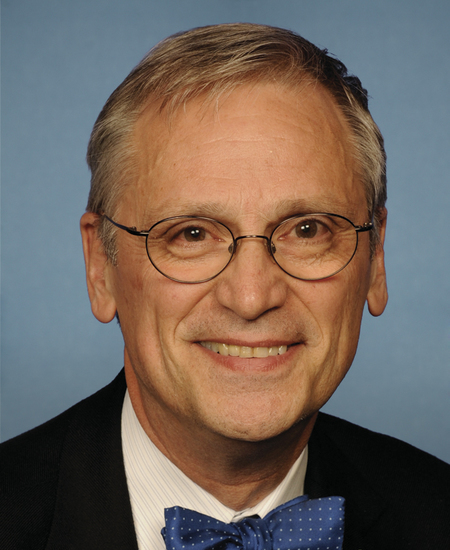
Rep. Earl Blumenauer
Sponsored bills
Maddy summaryThis bill amends the Grand Ronde Reservation Act to redefine the reservation boundary as specifically the 84-acre Thompson Strip, replacing a prior description of lands within Oregon. It also prohibits the Confederated Tribes of Grand Ronde from using any land acquired through federal land claim settlements (including land purchased with settlement funds) for gaming under federal law. The amendment applies to the tribe's current and future land holdings related to settlement agreements. The bill explicitly states it does not affect the tribe's existing treaty rights.
Maddy summaryHR 6888, the Clean Energy Workforce Act, provides $100 million in federal grants to develop clean energy job training programs. It directly affects local schools, career technical education centers, colleges, and industry partners by funding: (1) new or expanded training programs in clean energy fields (like renewable energy and climate adaptation), designed to be shared with other schools and accessible to diverse students; and (2) upgrades to school facilities to use renewable energy and improve energy efficiency. Grants require partnerships between educational institutions, industry representatives, and community groups to create replicable training that prepares students for jobs in growing clean energy sectors. The bill focuses on concrete workforce development, not environmental outcomes.
Maddy summaryHR 6416, the "Russian War Crimes in Ukraine Tax Act," imposes a 100% tax on interest and dividends earned from frozen Russian and Belarusian sovereign assets held abroad. This tax revenue is directed into a new Ukraine Reconstruction Trust Fund, which must be used for Ukraine's reconstruction, humanitarian aid, economic development, and transparent governance. The bill requires U.S. financial institutions to withhold this tax from qualifying income and overrides international treaty obligations to ensure implementation. It also mandates annual reports on fund usage to Congress, specifying that all revenues from the tax must support Ukraine's recovery efforts as defined in the legislation.
Maddy summaryThis bill reauthorizes and extends funding for programs addressing substance use disorders and opioid addiction, including residential treatment for pregnant and postpartum women, first responder training, and community recovery initiatives. It increases funding levels for these programs, adds xylazine to Schedule III of controlled substances, and requires a study on remote monitoring for patients prescribed opioids. The bill also expands Medicaid coverage requirements for medication-assisted treatment and mandates reporting on mental health condition data alongside substance use disorder data, directly affecting individuals with substance use disorders, healthcare providers, and state and tribal governments.
Maddy summaryThis bill creates a federal grant program to fund electric bicycle sharing services in disadvantaged communities. It provides up to $5 million per grant to states, local governments, or nonprofits for purchasing e-bikes (required to be made in the U.S.), installing charging infrastructure, and offering community outreach and subsidized memberships. Grants must address community transportation needs, improve cyclist safety, and include reporting on usage, emissions reductions, and user demographics. The program, authorized for $100 million annually through 2033, requires services to operate in communities identified by the federal Climate and Economic Justice Screening Tool.
Maddy summaryThe STATES 2.0 Act would allow states to regulate cannabis according to their own laws without federal interference, while establishing a federal framework for interstate commerce. It would create a federal excise tax on marijuana to support regulation without adding excessive costs to consumers, and would require the FDA to regulate marijuana products as drugs, food, or cosmetics. The bill would exempt state-legal cannabis activities from federal prohibition, including removing cannabis from the federal controlled substances schedule when sold in compliance with state law. It would also allow federally recognized tribes to regulate cannabis within their jurisdictions under tribal law, and would require a study on how cannabis legalization affects traffic safety.
Maddy summaryThis bill restricts warrantless surveillance of U.S. persons by amending the Foreign Intelligence Surveillance Act. It limits who can conduct queries of U.S. person data (capping at five personnel per FBI field office), prohibits using such queries for law enforcement without proper authorization, and requires documentation of all queries. The bill creates exceptions for emergencies, consent, and cybersecurity, but prohibits using metadata results to access protected communications. It also limits how information acquired under Section 702 can be used in criminal proceedings, requiring specific approvals for such use.
Maddy summaryHR 6654, the Farewell to Foam Act of 2023, bans the sale and distribution of expanded polystyrene foam food containers, packaging peanuts ("loose fill"), and coolers starting January 1, 2026. It directly affects food service providers (like restaurants and schools), manufacturers, distributors, and retailers who sell these foam products. The bill prohibits selling these items, with enforcement starting with a written warning for first violations, followed by escalating civil penalties ($250 for a second violation, up to $1,000 for fourth+ violations), while exempting small businesses with low annual revenue from repeated penalties within a 7-day period.
Parking Cash-Out Act of 2023 This bill denies a tax exclusion for qualified parking fringe benefits unless employers providing such benefits offer their employees the option to receive, in lieu of the parking benefit, the fair market value of the parking (e.g., an equivalent cash benefit or alternative tax-exempt fringe benefit).