

Scientific Integrity Act This bill revises provisions regarding the release of scientific research results by federal agencies. Each agency that funds, conducts, or oversees scientific research must (1) adopt and enforce a scientific integrity policy that includes requirements such as that scientific conclusions are not based on political considerations, and (2) submit such policy to the Office of Science and Technology Policy (OSTP) for approval. Each agency must make such policy available to the public and submit such policy to Congress. Agencies and the OSTP must periodically review the policies. The Government Accountability Office shall review implementation of the policies. Each agency shall (1) appoint a Scientific Integrity Officer, (2) establish a process for dispute resolution consistent with the scientific integrity policy, and (3) establish a specified training program for current and new employees.
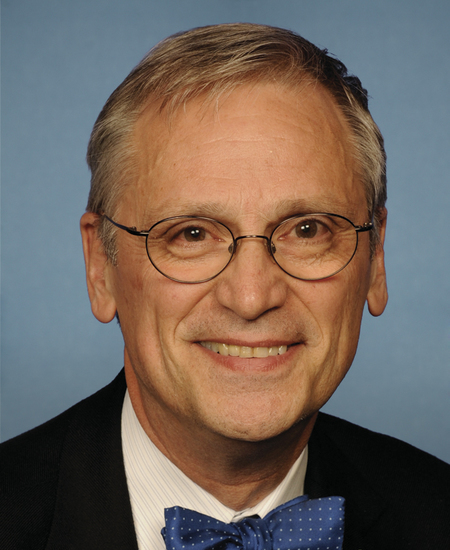
Rep. Earl Blumenauer
Sponsored bills
FEMA Climate Change Preparedness Act This bill requires the Federal Emergency Management Agency (FEMA) to (1) revise its 2018-2022 Strategic Plan to ensure that the plan explicitly mentions climate change and addresses the implications of climate change on homeland security and near- and long-term national disaster risk, and (2) ensure that future strategic plans do likewise. The Department of Homeland Security must establish, as a subcommittee of the National Advisory Council, the Climate Change Subcommittee, which shall advise FEMA on how to best incorporate climate change, including risk assessments and strategies for adaptation and mitigation, into and throughout FEMA's policies, plans, programs, and operations. FEMA must publish as a report, submit to specified congressional committees, and make available to Congress and the public, a comprehensive assessment of climate change risks and preparedness.
Green Bus Act of 2021 This bill requires all buses purchased or leased with Federal Transit Administration funds to be zero-emission beginning on October 1, 2029. The Department of Transportation (DOT) must issue an annual best practices report on zero-emission bus programs to help states and transit agencies implement zero-emission bus fleets. DOT must give preference in awarding grants under the low or no emission program to transit agencies who have completed a full fleet transition plan. The federal share of the cost of any zero-emission bus purchased or leased in accordance with this bill shall be 90%.
Safe And Friendly for the Environment Streets Act or the SAFE Streets Act This bill revises the Highway Safety Improvement Program to create special rules for vulnerable road users. The bill defines vulnerable road user as a nonmotorist such as a pedestrian, pedalcylcist, bicyclist, other cyclist, or person on personal conveyance. Specifically, the bill requires states and metropolitan planning organizations (MPOs) with above the median rate of vulnerable road user fatalities and serious injuries to dedicate at least 75% of funds under the program for projects to improve safety for such users, and states and MPOs to create vulnerable road user safety assessments that include locations and corridors where serious injuries and fatalities occur and strategies to reduce safety risks for such users in the corridors.
No Congressional Gun Loophole Act This bill prohibits the Capitol Police Board from allowing Members of Congress or their staff to carry firearms on the grounds of the U.S. Capitol or in its buildings. Members and their staff may store firearms in their cars in Capitol complex garages if their possession complies with the firearms laws of the District of Columbia and the firearms are locked with gun locks while on the complex. Current board regulations allow Members of Congress to keep firearms in their offices; the regulations also allow Members and their staff to transport unloaded and securely wrapped firearms within the Capitol grounds. Firearms are prohibited inside the chambers of the Senate and the House of Representatives, as well as in adjacent lobbies and cloakrooms, the galleries, the Marble Room of the Senate, and the Rayburn Room of the House, unless approved by the Sergeants at Arms for security purposes.
Transportation Alternatives Enhancements Act This bill revises the surface transportation block grant program (Transportation Alternatives Program) of the Department of Transportation (DOT). The bill requires DOT to set aside 10% of apportioned funds under the program each fiscal year for states, and allows states to allocate funds to counties, metropolitan planning organizations (MPOs), regional transportation planning organizations, and local governments. Funds may be used for certain projects or activities, including the construction, planning, and design of infrastructure-related projects and systems that will provide safe routes for nondrivers, such as children, older adults, and individuals with disabilities, to access daily needs. MPOs that serve an urbanized area with a population of 200,000 or fewer are eligible for funding under the program. The bill also adjusts funding limits for states to improve the ability of applicants to access funding in an efficient and expeditious manner.
Preparing Localities for an Autonomous and Connected Environment Act or the PLACE Act This bill directs the Department of Transportation to provide grants to institutions of higher education to (1) operate a national highly automated vehicle and mobility innovation clearinghouse; (2) collect, conduct, and fund research on how autonomous vehicles and mobility innovation can impact land use, urban design, transportation systems, real estate, accessibility, municipal budgets, social equity, availability and quality of jobs, air quality and climate, energy consumption, and the environment; (3) make such research publicly available online; and (4) conduct outreach and disseminate information on the research to assist communities.
Road User Charge Advancement Act of 2021 This bill revises the Surface Transportation Systems Funding Alternatives program. The program provides grants to states to demonstrate user-based alternative revenue mechanisms that utilize a user fee structure to maintain the long-term solvency of the Highway Trust Fund. Specifically, the bill revises the program to set forth certain eligibility requirements, ensure that activities carried out using grant funds include test solutions to ensure the privacy and security of data collected for the purpose of implementing a user-based alternative revenue mechanism, increase the maximum amount of federal share that may payable for the costs of an activity from 50% to 80% of the total costs, and modify reporting requirements for the Department of Transportation to include annually publishing a report that contains a determination of the characteristics of the most successful mechanisms with the highest potential for future widespread deployment. The bill also provides funding for FY2022-FY2025 to carry out the program.
Bikeshare Transit Act of 2021 This bill allows bikeshare projects to be eligible for federal funding. The bill also makes shared micromobility (including bikesharing and shared scooter systems) projects eligible for funds if they shift traffic demand to non-peak hours or other transportation modes, increase vehicle occupancy rates, or otherwise reduce demand for roads.
FEMA Empowering Essential Deliveries Act or the FEED Act This bill authorizes the Federal Emergency Management Agency (FEMA) to approve state, local, and Indian tribal government plans to partner with small and mid-size restaurants and nonprofit organizations to provide nutritious meals to individuals in need. Specifically, during the period following the President's emergency declaration of March 13, 2020, and under any subsequent major disaster declaration that supersedes it, FEMA may approve plans from state, local, and Indian tribal governments that (1) establish contracts with small and mid-sized restaurants and nonprofits, including faith-based organizations and soup kitchens, to prepare healthy meals for people in need; and (2) provide for partnerships with nonprofit organizations to purchase directly from food producers and farmers. FEMA shall waive federal matching requirements under the Robert T. Stafford Disaster Relief and Emergency Assistance Act during such period.