

Help Independent Tracks Succeed Act or the HITS Act This bill permits taxpayers to treat as currently deductible expenses the cost of qualified sound recording productions not exceeding $150,000 in a taxable year. The bill defines qualified sound recording production as certain sound recordings produced and recorded in the United States.
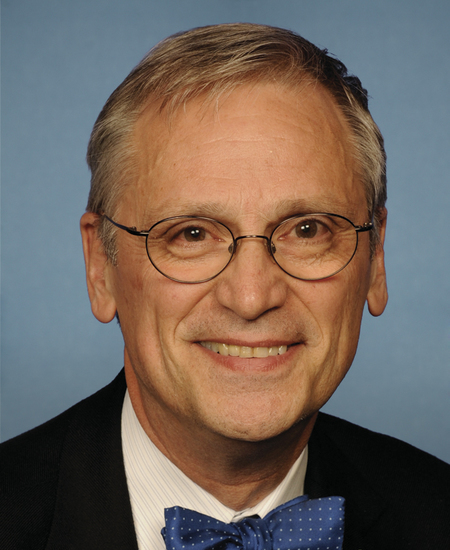
Rep. Earl Blumenauer
Sponsored bills
Improving Access to Indian Health Services Act This bill permanently extends certain Medicaid flexibilities relating to Indian health care providers. Specifically, the bill permanently expands coverage to include clinical services that are furnished outside of a clinic by an Indian Health Service (IHS) facility, a tribe or tribal organization, or an Urban Indian Organization (UIO). Current guidance from the Centers for Medicare & Medicaid Services allows IHS and tribal facilities to receive payment for clinical services provided outside of clinics through October 31, 2021; facilities are expected to work with their state Medicaid programs to transition to other, more permanent payment options for these services. The bill also permanently establishes a 100% federal matching rate, also known as the Federal Medical Assistance Percentage (FMAP), for UIO services. Current law provides a 100% FMAP for UIO services during the eight fiscal quarters after March 11, 2021.
No Glory for Hate Act This bill prohibits the use of federal funds to commemorate a president twice impeached by the House of Representatives and restricts the benefits afforded such president after leaving office. Specifically, the bill prohibits the use of federal funds for any symbol, monument, structure, building, or public land commemorating a former president twice impeached or who has been convicted of a state or federal crime relating to actions taken in an official capacity. The bill also restricts the benefits given to former presidents who have been twice impeached, including with regard to pension, staff, travel, and burial in Arlington National Cemetery.
Grand Canyon Protection Act This bill withdraws 1,006,545 acres of federal lands in Arizona, including any land or interest in land acquired by the United States after enactment of this bill, from entry, appropriation, and disposal under the public land laws; location, entry, and patent under the mining laws; and operation of the mineral leasing and geothermal leasing laws and mineral materials laws.
Information Transparency & Personal Data Control Act This bill requires the Federal Trade Commission (FTC) to establish requirements for certain entities when they collect, transmit, store, process, use, or otherwise control sensitive personal information. Information relating to an identifiable individual is generally considered sensitive personal information. However, information that is publicly available is not considered sensitive. Specifically, these entities must (1) obtain affirmative consent from users for functionality related to the disclosure of sensitive personal information, (2) publish a privacy and data use policy that is readily understandable, (3) provide users the ability to opt-out of the sharing of their nonsensitive information, and (4) obtain at least once every two years a privacy audit that evaluates the sufficiency of the entity's data privacy and security controls. These requirements do not apply to the collection or sharing of sensitive or nonsensitive personal information for certain purposes such as detecting fraud or identity theft. The bill provides authority for the FTC and state attorneys general to enforce these requirements. Additionally, the FTC must hire 500 new employees to focus on privacy and data security.
Funding for Aviation Screeners and Threat Elimination Restoration Act or the FASTER Act This bill repeals the requirement that a portion of aviation security service fees collected from passengers be credited as offsetting receipts and deposited in the general fund of the Treasury. It requires such fees to be deposited into a separate account in the Treasury for expenditure to pay only the costs of activities and services for which the fee is imposed (i.e., aviation security screening).
Civics Secures Democracy Act of 2021 This bill provides resources to expand educational programs in American civics and history, including by establishing grant and fellowship programs and reauthorizing various programs. First, the bill authorizes the Department of Education (ED) to award grants to states, qualified nonprofit organizations, institutions of higher education (IHEs), and qualified researchers to support and expand access to civics and history education. Next, the bill establishes a fellowship program to diversify the civics and history education workforce. In addition, the bill reauthorizes through FY2027 and revises the American History for Freedom grant program. The bill renames the program as the American Civics Education Program. The bill revises the grant program to authorize ED to award grants to IHEs once every three years to establish or strengthen academic programs to promote American political thought and history; the history, achievements, and impact of American representative democracy and constitutional democracies globally; and the means of participation in political and civic life. IHEs may use grants to support additional activities, such as collaborating with federal or state humanities programs and using open educational resources. Further, the bill reauthorizes through FY2022 and revises the Harry S. Truman Memorial Scholarship Trust Fund and the James Madison Memorial Fellowship Trust Fund. Finally, the bill requires the National Assessment of Educational Progress in civics and history to be administered every two years to certain grade levels.
Repeatedly Flooded Communities Preparation Act This bill requires a community that participates in the National Flood Insurance Program and has been repeatedly flooded, as specified by the bill, to (1) assess the continuing risks to community areas repeatedly damaged by floods; and (2) develop and implement a publicly available, community-specific plan for mitigating continuing flood risks to such areas. The Federal Emergency Management Agency (FEMA) must, upon request, provide a community with appropriate data to assist in preparation of the required plan. In making decisions with respect to awarding flood risk mitigation grants, FEMA may consider the extent to which a community has complied with these requirements and is working to remedy problems with repeatedly flooded areas. A community that does not comply with these requirements may be subject to appropriate sanctions.
Public School Green Rooftop Program This bill directs the Department of Energy (DOE) to establish a grant program for installing and maintaining green roof systems on public elementary and secondary school buildings. Green roof refers to a layer of vegetation that is planted over a waterproofing system or to a waterproof management practice that is installed on a roof and may support plant growth. Specifically, DOE must award grants to public elementary and secondary schools, local educational agencies, and partnerships with nonprofit organizations to (1) pay the costs of planning assistance for green roof systems on school buildings (e.g., assessing structures, conducting financial and engineering analyses, and receiving cost estimates), and (2) install green roof systems on these buildings. Additionally, a grant recipient must complete the installation of a green roof system within four years of receiving the grant. A grant recipient that completes this installation requirement shall receive additional funding for maintenance activities, such as conducting routine inspections to monitor the condition of the green roof.
Stop Tax Haven Abuse Act This bill authorizes the Department of the Treasury to impose restrictions on foreign jurisdictions or financial institutions to counter money laundering and efforts to significantly impede U.S. tax enforcement. Among other provisions, the bill expands reporting requirements for certain foreign investments and accounts held by U.S. persons, establishes a rebuttable presumption against the validity of transactions by institutions that do not comply with reporting requirements under the Foreign Account Tax Compliance Act, treats certain foreign corporations managed and controlled primarily in the United States as domestic corporations for tax purposes, treats swap payments sent offshore as taxable U.S. source income, requires corporations to disclose certain financial information on a country-by-country basis, imposes penalties for failing to disclose offshore holdings, modifies the base erosion anti-abuse tax to lower the gross receipts applicability threshold from $500 million to $100 million, makes investment advisers and persons engaged in forming new business entities subject to new anti-money laundering requirements, requires reporting of U. S. beneficial owners of foreign-owned financial accounts, and imposes additional requirements for third party summonses used to obtain information in tax investigations that do not identify the person with respect to whose liability the summons is issued (i.e., John Doe summons).