

Elijah E. Cummings Lower Drug Costs Now Act This bill establishes several programs and requirements relating to the prices of prescription drugs. In particular, the bill requires the Department of Health and Human Services (HHS) to negotiate prices for certain drugs (current law prohibits HHS from doing so). Specifically, HHS must negotiate maximum prices for single-source, brand-name drugs that lack certain generics and that are among either the 125 drugs that account for the greatest national spending or the 125 drugs that account for the greatest Medicare spending. HHS must negotiate the prices of at least 25 such drugs for 2024 and of at least 50 such drugs thereafter and must also negotiate prices for certain newly approved drugs and for insulin products. The negotiated prices must be offered under Medicare and may also be offered under private health insurance unless the insurer opts out. The negotiated maximum price may not exceed (1) 120% of the average price in Australia, Canada, France, Germany, Japan, and the United Kingdom; or (2) if such information is not available, 85% of the U.S. average manufacturer price. Drug manufacturers that fail to comply with the bill's negotiation requirements are subject to civil and tax penalties. The bill also makes a series of additional changes to Medicare prescription drug coverage and pricing, including by (1) requiring drug manufacturers to issue rebates to the Centers for Medicare & Medicaid Services for covered drugs that cost $100 or more and for which the average manufacturer price increases faster than inflation, and (2) capping annual out-of-pocket spending under the Medicare prescription drug benefit. The bill also requires drug manufacturers to report specified information for certain high-cost drugs, and it provides funds for opioid epidemic initiatives and biomedical research.
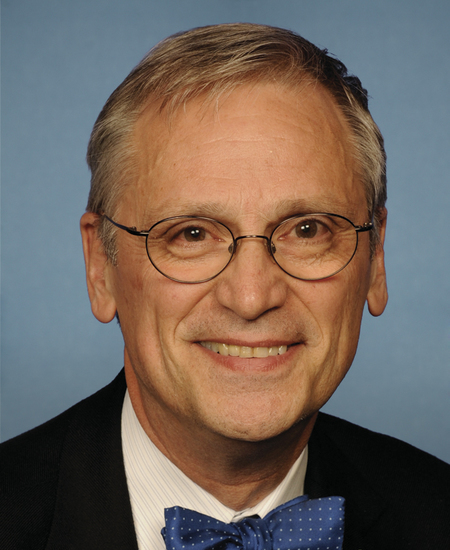
Rep. Earl Blumenauer
Sponsored bills
This joint resolution proposes a constitutional amendment to lower the minimum age for the right to vote from 18 to 16.
This resolution urges (1) the President to issue a proclamation recognizing Earth Day; and (2) governments and people to continue building upon the Paris Agreement and other efforts to ensure that future generations inherit a livable, sustainable, and ecologically rich planet. The resolution reaffirms that immediate action is needed to reduce greenhouse gas emissions and ameliorate environmental injustices in order to protect our planet, public health, and overall well-being of all people and wildlife. In addition, it encourages the American people to mark Earth Day by working to address environmental challenges, educate others about the need for year-round action, and honor the stewardship ethic for which Senator Gaylord Nelson stood.
This resolution condemns the bigotry that fueled those who stormed the U.S. Capitol, the elected officials who stoked that bigotry, including former President Trump, and the Members of Congress who have continued to support those individuals. It reaffirms that harmful rhetoric and violent behavior against individuals based on factors including religion, race, immigration status, and sex will not be tolerated.
Agriculture Resilience Act This bill establishes, expands, and revises multiple programs and activities of the Department of Agriculture (USDA) primarily to reduce carbon emissions from the agriculture sector. Specifically, USDA must finalize and implement a plan to achieve net-zero emissions from the sector by 2040. USDA must periodically review and revise the plan, as necessary, and annually report on its implementation. Additionally, the bill expands the scope of various USDA research, extension, and education programs; conservation programs; and livestock programs to incorporate climate change adaption and mitigation. Expanded activities include efforts to improve soil health and preserve farmland and grassland. Further, the bill changes programs that support renewable energy in rural areas to address carbon emissions in the agriculture sector. Among these changes, the bill provides statutory authority for a program for reducing methane emissions from livestock waste that is carried out by the Environmental Protection Agency and transitions the program to USDA. The bill also addresses food waste, for example, by (1) standardizing the voluntary labels used by food producers to indicate the date by which food should be used or discarded, and (2) making composting activities eligible for support through USDA conservation programs. Moreover, the bill establishes grants to reduce and prevent food waste in landfills and in schools.
Promoting Effective and Empowering Recovery Services in Medicare Act of 2021 or the PEERS Act of 2021 This bill specifies that peer support specialists may participate in the provision of behavioral health integration services with the supervision of a physician or other entity under Medicare. The bill defines peer support specialists as individuals who are recovering from a mental health or substance-use condition and have certain national or state credentials, as specified, to provide peer support services.
Community Solar Consumer Choice Act of 2021 This bill supports the expansion of community solar energy and doubles the allowable time period for a long-term contract between the General Services Administration (GSA) and a public utility. Specifically, the bill requires the Department of Energy (DOE) to establish a program for expanding community solar energy options, including options for low-income and moderate-income individuals. In addition, DOE must expand existing grant, loan, and financing programs to include community solar projects as specified by the bill. Further, the bill revises requirements for electric utilities, including by requiring each electric utility to offer a community solar program. Finally, the bill allows the GSA to make a public utility contract for a period of up to 30 years. Currently, the GSA may make a public utility contract for up to 10 years.
Justice is Not For Sale Act of 2021 This bill prohibits private for-profit entities from operating confinement facilities (e.g., prisons) or providing electronic monitoring of released persons at the federal, state, and local levels. The bill also establishes various requirements related to the standards of detention and availability of services at confinement facilities. The bill provides for the establishment of limits on the fees and charges for financial services (e.g., money transfer services), caps on the rates charged for communications services, detention standards and oversight requirements related to the detention of noncitizens, and community-based alternatives to the detention or separation of family units apprehended under immigration authorities.
Lady Liberty Act of 2021 This bill sets a floor of 125,000 for the maximum number of refugees who may be admitted into the United States each fiscal year. Under current law, the President sets the annual cap on refugee admissions at the beginning of each fiscal year. (The cap for FY2021 is 15,000, and the cap for FY2020 was 18,000.)
Hadiya Pendleton and Nyasia Pryear-Yard Gun Trafficking and Crime Prevention Act of 2021 This bill makes trafficking in firearms a stand-alone criminal offense. A person who commits or conspires to commit a gun trafficking offense is subject to criminal penalties—a prison term of up to 20 years (or up to 25 years, if the person also acted as an organizer), a fine, or both.