

Pursuing Equity in Mental Health Act This bill establishes and expands programs to address racial and ethnic disparities in mental health. Specifically, the Department of Health and Human Services (HHS) must award grants to establish interprofessional behavioral health care teams in areas with a high proportion of racial and ethnic minority groups. In addition, HHS may award grants to incorporate best practices and competencies to address mental health disparities in curricula for training social workers, psychologists, and other behavioral health professionals. HHS must also promote behavioral and mental health and reduce stigma associated with mental health conditions and substance use disorder through outreach to racial and ethnic minority groups. HHS must consult with appropriate advocacy groups and behavioral health organizations to develop a strategy for this outreach. The bill also (1) reauthorizes the minority fellowship program to support the education of mental health professionals who provide services to racial and ethnic minorities, and (2) requires studies on mental health disparities and the effects of social media use on adolescents.
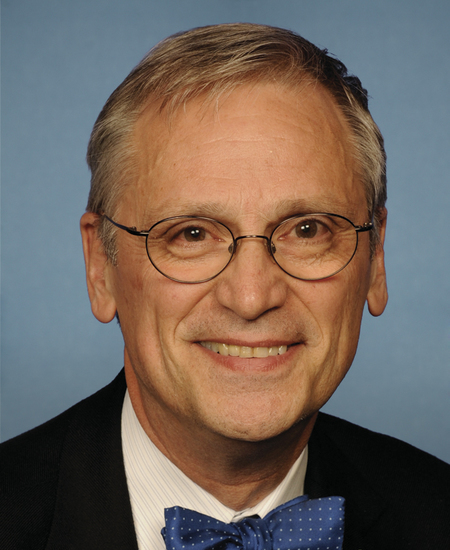
Rep. Earl Blumenauer
Sponsored bills
Protecting Moms Who Served Act This bill requires the Department of Veterans Affairs (VA) to implement the maternity care coordination program. The VA must provide community maternity care providers (i.e., non-VA maternity care providers) with training and support with respect to the unique needs of pregnant and postpartum veterans, particularly regarding mental and behavioral health conditions in relation to the service of the veterans in the Armed Forces. Additionally, the Government Accountability Office must report on maternal mortality and severe maternal morbidity among pregnant and postpartum veterans, with a focus on racial and ethnic disparities in maternal health outcomes for veterans.
Mental Health Services for Students Act of 2021 This bill provides specific statutory authority for the Project AWARE (Advancing Wellness and Resiliency in Education) State Educational Agency Grant Program that is administered by the Substance Abuse and Mental Health Services Administration. The program supports school-based mental health services, including screening, treatment, and outreach programs.
This resolution honors the life and legacy of award-winning children's author Beverly Cleary, expresses profound regret at the announcement of her passing, and recognizes her as one of the most significant and successful authors of the 20th century. The resolution extends the sympathy of the House of Representatives to the family of Beverly Cleary.
Safer Neighborhoods Gun Buyback Act of 2021 This bill authorizes the Department of Justice's Bureau of Justice Assistance (BJA) to make grants to states, local governments, or gun dealers to conduct gun buyback programs. The BJA may distribute smart prepaid cards for use by a state, local government, or gun dealer to compensate individuals who dispose of firearms. Additionally, the bill establishes a new criminal offense for using or accepting a smart prepaid card in the acquisition or transfer of a firearm or ammunition. A violator is subject to a fine, up to two years in prison, or both.
Healthy Maternity and Obstetric Medicine Act or the Healthy MOM Act This bill expands health insurance coverage availability for pregnant individuals. It requires health insurers, health insurance exchanges, and group health plans to offer a special enrollment period to pregnant individuals. The special enrollment period offered by an insurer or exchange must begin when the pregnancy is reported to the insurer or exchange. The special enrollment period offered by a group health plan must begin when the pregnancy is reported to the plan or is confirmed by a health care provider. The bill also makes pregnancy a qualifying life event for the purpose of enrolling in a federal employee health benefit plan. Additionally, a group health plan or health insurer that covers dependents must provide coverage for maternity care to all covered individuals. Any individual who is eligible for Medicaid and is, or becomes, pregnant maintains such eligibility for one year after the end of the pregnancy. The bill revises the range in which a state must establish a maximum level of family income for pregnant women and infants to be eligible for Medicaid. The upper limit of the range is eliminated and the lower limit is set to the level in place on January 1, 2014.
Medical Nutrition Therapy Act of 2021 This bill expands Medicare coverage of medical nutrition therapy services. Currently, Medicare covers such services for individuals with diabetes or kidney disease under certain circumstances; such services must also be provided by a registered dietitian or nutrition professional pursuant to a physician referral. The bill extends coverage to individuals with other diseases and conditions, including obesity, eating disorders, cancer, and HIV/AIDS; such services may also be referred by a physician assistant, nurse practitioner, clinical nurse specialist, or (for eating disorders) a clinical psychologist.
Interstate Rail Compacts Advancement Act of 2021 This bill establishes a grant program and makes other changes to support interstate rail compacts with improving and enhancing intercity passenger rail transportation systems. The Department of Transportation (DOT) must award up to 10 matching grants each fiscal year to interstate rail compacts or commissions for administrative costs related to the compact. In awarding the grants, DOT must consider (1) the amount of funding from and participation of railroads and other stakeholders, (2) whether the compact seeks to restore routes formerly operated by Amtrak, and (3) other factors. Additionally, DOT must give preference to compacts that are initiating, restoring, or enhancing intercity rail passenger transportation. Further, DOT must publish on its website a list of interstate rail compacts, as well as annuallly updated information for the public about how states may establish compacts. The bill also repeals a prohibition on the use of funds made available for Amtrak to carry out interstate rail compacts.
Green Transportation Act This bill incorporates greenhouse gas emission reduction in various transportation-related planning activities and programs. Specifically, states and metropolitan planning organizations must address greenhouse gas emission reductions and certain other issues (e.g., public health and climate change) in long-range and other planning related to highways and public transportation. The bill also makes reducing carbon dioxide and other greenhouse gas emissions from the transportation system a national goal of the Federal-aid Highway Program. The Department of Transportation (DOT) must establish applicable performance measures and standards related to that goal. Additionally, states and metropolitan planning organizations may use certain funding available through the National Highway Trust Fund to develop standardized models and methodologies to measure and monitor transportation-related greenhouse gas emissions. DOT must collect and organize such models and methodologies in a publicly available clearinghouse and report about them to Congress. Further, DOT must establish a program to fund projects that support the reduction of greenhouse gas emissions from the surface transportation system. As part of this program, DOT must annually evaluate carbon dioxide emissions on public roads and evaluate states' progress in reducing emissions.
Northern Rockies Ecosystem Protection Act This bill designates specified National Forest System lands, National Park System lands, and public lands in Idaho, Montana, Oregon, Washington, and Wyoming as wilderness and as components or additions to existing components of the National Wilderness Preservation System. The Department of the Interior and the Department of Agriculture (USDA) must accept donations of leases or permits authorizing grazing on specified public or National Forest System lands. The bill also designates (1) specified federal lands as biological connecting corridors and as special corridor management areas; (2) segments of specified rivers and creeks in Idaho, Montana, and Wyoming as components of the National Wild and Scenic Rivers System; and (3) specified areas as wildland recovery areas. USDA shall develop a wildland recovery plan for each recovery area. A panel of independent scientists shall study roadless lands greater than 1,000 acres that are within the National Forest System in the Wild Rockies bioregion in Idaho, Montana, Oregon, Washington, or Wyoming and that are not designated as components of the National Wilderness Preservation System for their role in maintaining biological diversity in the Northern Rockies and as part of the overall forest reserve system. Any new road construction or reconstruction or timber harvest is prohibited in those lands after the evaluation without an act of Congress. Oil or gas leasing, mining, or other development which impairs the natural and roadless qualities of the land is also prohibited.