

Climate Change Health Protection and Promotion Act of 2021 This bill requires the Department of Health and Human Services (HHS) to take a series of actions to address the potential impacts of climate change on public health. Specifically, HHS must develop a strategic action plan and a climate and health program to ensure the public health and health care systems in the United States and other nations are prepared for, and can respond to, the impacts of climate change on health. HHS must revise the plan periodically to reflect new scientific developments and information. Additionally, HHS must establish a permanent science advisory board to provide (1) scientific and technical recommendations on the impacts of climate change on public health, and (2) advice for purposes of issuing the plan and conducting the program.
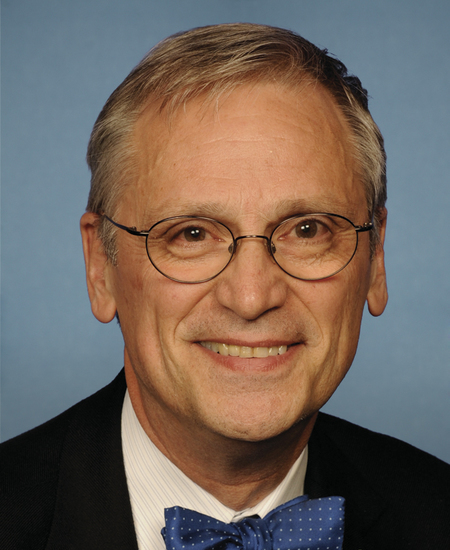
Rep. Earl Blumenauer
Sponsored bills
Transportation Equity Act This bill directs the Department of Transportation (DOT) to reestablish the Transportation Equity Committee. The committee must provide independent advice and recommendations to DOT on transportation equity issues. The committee must also evaluate the work of DOT in connecting people to economic and related forms of opportunity and carrying out its strategic, research, technological, regulatory, community engagement, and economic policy activities related to transportation and opportunity. In addition, DOT must appoint a full-time federal employee to serve as coordinator and act as the designated federal officer for the committee.
Medicare for All Act of 2021 This bill establishes a national health insurance program that is administered by the Department of Health and Human Services (HHS). Among other requirements, the program must (1) cover all U.S. residents; (2) provide for automatic enrollment of individuals upon birth or residency in the United States; and (3) cover items and services that are medically necessary or appropriate to maintain health or to diagnose, treat, or rehabilitate a health condition, including hospital services, prescription drugs, mental health and substance abuse treatment, dental and vision services, and long-term care. The bill prohibits cost-sharing (e.g., deductibles, coinsurance, and copayments) and other charges for covered services. Additionally, private health insurers and employers may only offer coverage that is supplemental to, and not duplicative of, benefits provided under the program. Health insurance exchanges and specified federal health programs terminate upon program implementation. However, the program does not affect coverage provided through the Department of Veterans Affairs or the Indian Health Service. The bill also establishes a series of implementing provisions relating to (1) health care provider participation; (2) HHS administration; and (3) payments and costs, including the requirement that HHS negotiate prices for prescription drugs. Individuals who are age 18 or younger, age 55 or older, or already enrolled in Medicare may enroll in the program starting one year after enactment of this bill; other individuals may buy into the program at this time. The program must be fully implemented two years after enactment.
Citizenship for Essential Workers Act This bill establishes a mechanism for eligible aliens who worked as essential workers during the declared COVID-19 (i.e., coronavirus disease 2019) public health emergency to apply for and obtain permanent resident status. The bill also narrows certain grounds for deportability and inadmissibility. To be eligible for permanent resident status under this bill, an alien must have earned income at any point during the COVID-19 emergency period doing work deemed essential by the Department of Homeland Security (DHS) or a state or local government. An alien may also be eligible if that alien is a parent, spouse, or child of (1) an eligible alien who died from COVID-19, or (2) a member of the Armed Forces. Certain aliens shall be ineligible, such as an alien who was a refugee on January 1, 2021. To obtain permanent resident status under this bill, an applying alien must satisfy additional requirements, including by passing a background check. Furthermore, the bill repeals provisions providing for three-year bars and permanent bars to admission into the United States. (Generally, these bars apply to aliens who were previously removed or unlawfully present in the United States.) The bill also narrows the scope of certain crime-based grounds for inadmissibility or deportability, such as by redefining the term conviction to exclude expunged convictions. The Department of Justice or DHS may waive certain grounds of inadmissibility or deportability (1) for humanitarian purposes, (2) to ensure family unity, or (3) for the public interest.
Hate Crimes Commission Act of 2021 This bill establishes the United States Commission on Hate Crimes. The commission must investigate and report on whether hate crimes have increased; factors that contributed to an increase in hate crimes, if one is determined to exist; policies or actions by law enforcement agencies to reduce the commission of hate crimes; the impact of underreporting on hate crimes statistics and prevention; and successful community bias prevention responses.
COVID - 19 Hate Crimes Act This bill requires a designated officer or employee of the Department of Justice (DOJ) to facilitate the expedited review of COVID-19 (i.e., coronavirus disease 2019) hate crimes and reports of COVID-19 hate crimes. It defines COVID-19 hate crime as a violent crime that is motivated by two things: (1) the actual or perceived characteristic (e.g., race or ethnicity) of any person, and (2) the actual or perceived relationship to the spread of COVID-19 of any person because of that characteristic. The bill requires DOJ to issue guidance for state and local law enforcement agencies on (1) the establishment of online hate crime reporting processes and the availability of online reporting in multiple languages, and (2) the expansion of culturally competent education campaigns. Additionally, DOJ and the Department of Health and Human Services must issue guidance on best practices for mitigating racially discriminatory language in describing the COVID-19 pandemic.
Choosing Our Own Lives Over Fast Firearms Act or the COOL OFF Act This bill establishes a three-day waiting period for certain handgun transfers. Specifically, the bill makes it unlawful for a licensed importer, manufacturer, or dealer to sell or transfer a handgun to an unlicensed individual unless three business days have elapsed since the licensee initiated a background check. A violator is subject to criminal penalties—a fine, up to one year in prison, or both. Additionally, the bill makes it unlawful for an unlicensed individual to receive a handgun from another unlicensed individual unless at least three business days have elapsed since the recipient most recently offered to take possession of the handgun. A violator is subject to criminal penalties—a fine, up to five years in prison, or both. The three-day waiting period does not apply to certain handgun transfers, such as for a loan between spouses for a lawful purpose.
Destigmatizing in Immigration Act This bill removes various immigration-related penalties pertaining to marijuana and addresses related issues. Specifically, offenses involving marijuana use, possession, or distribution shall not be grounds for (1) barring an alien from admission into the United States, (2) removing an alien from the United States, or (3) finding that an alien lacks good moral character for immigration purposes. An alien who was previously barred or deported due to such marijuana-related offenses shall be readmitted into the United States. Under this bill, the distribution of marijuana shall not constitute an aggravated felony for immigration purposes. Furthermore, the bill repeals a statutory provision stating that habitual drunkards lack good moral character for immigration purposes.
Resources for Victims of Gun Violence Act of 2021 This bill establishes the Advisory Council to Support Victims of Gun Violence. Among other things, the advisory council must assess the needs of victims of gun violence and disseminate information about helpful resources.
Adoptee Citizenship Act of 2021 This bill provides for the automatic acquisition of citizenship for certain individuals adopted by a U.S. citizen. A child born outside the United States and adopted by a U.S. citizen shall automatically acquire citizenship upon meeting certain requirements, regardless of when the adoption was finalized. Currently, adoptees who were over the age of 18 on February 27, 2001, do not automatically acquire citizenship. An individual born outside the United States and residing in the United States shall automatically acquire citizenship if the individual (1) was adopted by a citizen before becoming 18 years old, (2) was physically present in the United States in the citizen parent's custody pursuant to lawful admission before becoming 18 years old, (3) never acquired citizenship before this bill's enactment, and (4) was lawfully residing in the United States on this bill's enactment date. An individual born outside the United States and residing outside the United States but who otherwise meets all of the requirements shall automatically acquire citizenship upon being physically present in the United States pursuant to lawful admission. Such an individual shall be subject to a background check. If the background check reveals the individual has committed a crime that was not properly resolved, the individual may not receive a visa unless the Department of Homeland Security and Department of State have coordinated with law enforcement to ensure that action was taken to resolve the issue.