

Bolstering Infectious Outbreaks Preparedness Workforce Act of 2021 or the BIO Preparedness Workforce Act of 2021 This bill establishes a student loan repayment program for health care and related professionals who are engaged in either bio-preparedness and response activities or infectious disease care in underserved communities. For each year that a professional meets the work requirements of the program, the Health Resources and Services Administration may pay up to $50,000 of the professional's student loan principal and interest, up to a maximum amount of $150,000.
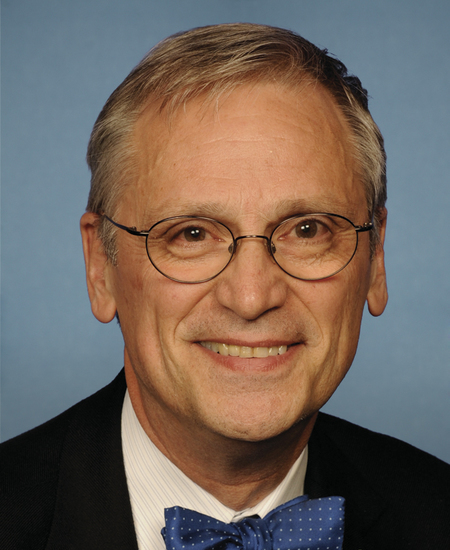
Rep. Earl Blumenauer
Sponsored bills
PrEP Assistance Program Act This bill establishes a grant program to provide pre-exposure prophylaxis (PrEP) and related services to individuals at no cost. PrEP is medication given to individuals at risk of HIV to reduce their likelihood of contracting the virus. The Department of Health and Human Services must award the grants to state, tribal, and local governments; certain health clinics; and community-based organizations.
Outdoors for All Act This bill directs the Department of the Interior to establish an outdoor recreation legacy partnership grant program under which Interior may award grants to states, certain political subdivisions of a state, special purpose districts, Indian tribes, or Alaska Native or Native Hawaiian communities or organizations. Funds must be used for projects to (1) acquire land and water for parks and other outdoor recreation purposes in qualifying areas, and (2) develop new or renovate existing outdoor recreation facilities that provide outdoor recreation opportunities to the public in qualifying areas. A qualifying area is an area that has a population of 30,000 or more in the most recent census, or that is administered by an Indian tribe or an Alaska Native or Native Hawaiian community organization. Interior shall give priority to projects that create or significantly enhance access to park and recreational opportunities in an urban neighborhood or community, engage and empower underserved communities and youth, provide opportunities for employment or job training for youth or underserved communities, establish or expand public-private partnerships, and take advantage of coordination among various levels of government.
Arts Education for All Act This bill expands arts education and programming for children in early education, K-12 students, and juveniles and adults in the criminal justice system. Specifically, the bill allows Child Care and Development Block Grant funding to be used for additional activities, including arts programming. Additionally, the bill addresses arts programming in elementary and secondary schools by directing each state educational agency to include information on arts programming in its state plan, including how it will integrate arts education instruction into the curriculum and increase the number of arts teachers in schools; requiring state report cards to include information on arts courses; requiring local educational agency (LEA) plans to describe how the LEA will encourage the use of arts education to improve student achievement; and allowing certain funds to be used for professional development for arts teachers. The bill directs the National Center for Education Research to carry out research on the use of arts and arts education in elementary and secondary schools, including in low-performing schools. Further, the National Center for Education Statistics must compile data on arts education. The National Assessment of Educational Progress must include a specified arts assessment. The bill requires a state's juvenile justice and delinquency plan to describe how the state will coordinate services and activities for juvenile justice and delinquency prevention with arts agencies and arts organizations. Additionally, grants for adult offender reentry demonstration projects may be used for facilitating arts education.
Reducing Waste in National Parks Act This bill directs the National Park Service to establish a program for the National Park System to reduce disposable plastic products and, if applicable, eliminate the sale and distribution of disposable plastic products. Each regional office of the National Park Service must eliminate the sale of water in disposable plastic products and the sale and distribution of other disposable plastic products after consideration of several specified factors (e.g., the costs and benefits to overall operations). Each regional office must develop a proactive visitor education strategy to address visitor expectations of water availability and explain the rationale for the program and its implementation.
Reconciliation in Place Names Act This bill directs the Department of the Interior to establish the Advisory Committee on Reconciliation in Place Names to advise the Board on Geographic Names with regard to renaming geographic features with offensive place names. The board shall rename a geographic feature with an offensive name in accordance with a recommendation of the committee unless the board determines that (1) there is a compelling reason and substantial public interest in rejecting the recommendation, or (2) approving the recommendation would violate federal law. The board shall accept or reject a recommendation within three years of receiving the recommendation.
Primary and Virtual Care Affordability Act This bill extends until December 31, 2023, the exemption for telehealth services from certain high deductible health plan rules. It also provides a high deductible health plan safe harbor for the absence of a deductible for certain primary care services provided in any plan year beginning on or before December 31, 2023 (COVID-19 emergency period). The Government Accountability Office must complete a study, and report on, the effects of the safe harbor for certain primary care services provided during the COVID-19 emergency period.
This resolution supports the designation of World Food Day and encourages the people of the United States to observe the days with appropriate ceremonies and activities.
Animal Freedom from Testing, Experiments, and Research Act of 2021 or the AFTER Act of 2021 This bill requires federal research facilities to facilitate the adoption or nonlaboratory placement of certain warm-blooded animals (e.g., dogs, cats, monkeys, guinea pigs, hamsters, and rabbits) with animal rescue organizations, animal sanctuaries, animal shelters, or individuals. In order to be adopted or placed, the animals must (1) no longer be needed for research; (2) be suitable for release; (3) not be birds, rats, or mice.
Bringing Regulatory Advances Into Neuroscience Act of 2021 or the BRAIN Act of 2021 This bill requires the Food and Drug Administration (FDA) to establish the Neuroscience Center of Excellence. The center must develop and implement processes to coordinate FDA activities related to a major disease area or areas affecting the brain or central nervous system. The FDA must also establish and maintain the Neuroscience Translation Working Group to advise the center. If the FDA terminates the center, the working group shall advise the FDA.