

Maddy summaryThe Restore Honor to Service Members Act of 2023 establishes a Department of Defense "Tiger Team" to improve outreach to veterans with certain discharge statuses (specifically those discharged under "former section 654" before 2011, often related to policies like the "Don't Ask, Don't Tell" era). The team will collaborate with the VA, veterans' groups, and other stakeholders to identify eligible veterans, share contact information, and guide them through the existing review process under Section 527 of the 2020 National Defense Authorization Act. The bill requires the team to submit regular progress reports to Congress and a final report within three years, tracking how many veterans successfully changed their discharge status to "honorable" through the review process. This focuses on streamlining access to an existing review mechanism, not creating new benefits or altering discharge standards.
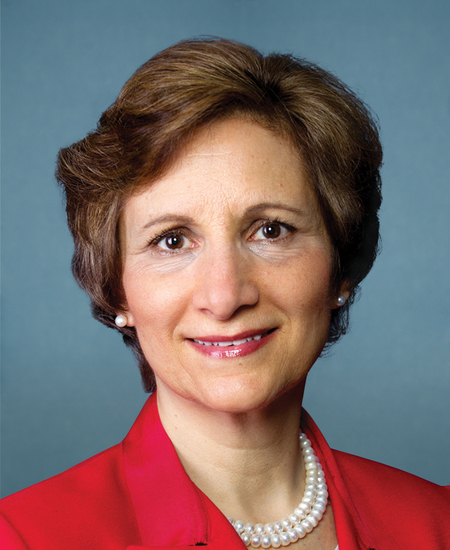
Rep. Suzanne Bonamici
Sponsored bills
Maddy summaryThe Eviction Prevention Act of 2023 provides $125 million annually to states and local governments to fund legal counsel for eligible individuals (those with income below 125% of the federal poverty level) facing eviction. It establishes a national database requiring courts to collect detailed data on eviction cases, including tenant demographics, reasons for eviction, representation status, and case outcomes. The database will track court-ordered evictions, administrative evictions, and illegal evictions, with specific requirements for reporting by courts and law enforcement. This legislation authorizes $100 million annually for the database's operation through fiscal year 2028, aiming to improve understanding of eviction patterns and outcomes. The bill creates concrete mechanisms for increasing legal representation access and gathering comprehensive eviction data to inform policy decisions.
Maddy summaryHR 6692 establishes a new Assistant Director and Student Loan Borrower Advocate position within the Consumer Financial Protection Bureau. This role coordinates with the Department of Education and handles complaints from borrowers with both federal and private student loans, while producing annual reports on student loan risks, campus banking practices, and young consumers' financial products. The bill creates an Office for Students and Young Consumers to educate borrowers and coordinate federal/state consumer protection efforts. It requires the Department of Education to enter a formal agreement with the Advocate to share relevant data and coordinate complaint resolution, without accessing personal financial information. The law directly affects student loan borrowers, financial institutions, and federal agencies managing student aid programs.
Maddy summaryThis bill creates a National Center for Advanced Development in Education within the Institute of Education Sciences to identify and promote advances in teaching and learning across all education levels. The Center will collect and analyze education data, fund research through grants, and disseminate evidence-based practices to educators and parents, with specific focus on addressing educational disparities and supporting student development through the "science of learning and development." It authorizes $500 million annually for fiscal years 2024-2028 to support these activities, including improving statewide data systems that track student progress from early childhood through workforce. The Center will work with schools, educators, and communities to develop solutions for improving education outcomes, particularly for underserved students. This legislation directly affects educators, school administrators, and students by creating a new federal entity focused on evidence-based education research and implementation.
Maddy summaryThis bill creates a federal grant program to fund electric bicycle sharing services in disadvantaged communities. It provides up to $5 million per grant to states, local governments, or nonprofits for purchasing e-bikes (required to be made in the U.S.), installing charging infrastructure, and offering community outreach and subsidized memberships. Grants must address community transportation needs, improve cyclist safety, and include reporting on usage, emissions reductions, and user demographics. The program, authorized for $100 million annually through 2033, requires services to operate in communities identified by the federal Climate and Economic Justice Screening Tool.
Maddy summaryHR 6654, the Farewell to Foam Act of 2023, bans the sale and distribution of expanded polystyrene foam food containers, packaging peanuts ("loose fill"), and coolers starting January 1, 2026. It directly affects food service providers (like restaurants and schools), manufacturers, distributors, and retailers who sell these foam products. The bill prohibits selling these items, with enforcement starting with a written warning for first violations, followed by escalating civil penalties ($250 for a second violation, up to $1,000 for fourth+ violations), while exempting small businesses with low annual revenue from repeated penalties within a 7-day period.
Maddy summaryThis bill amends the Equal Credit Opportunity Act to require lenders to collect and report data on loans to LGBTQI-owned businesses. It specifically adds "LGBTQI-owned" to existing categories for data collection, includes sexual orientation, gender identity, and intersex status as protected characteristics in lending data, and defines an "LGBTQI-owned business" as one where over 50% of ownership/control and net profit/loss accrues to self-identifying LGBTQI individuals. The policy change directly affects financial institutions that report lending data to the government, mandating they track and disclose these new categories. This provides concrete data on lending practices for LGBTQI business owners, who face documented barriers in accessing credit.
Maddy summaryThe Workers POWER Act (HR 6634) strengthens federal labor enforcement by expanding staffing and resources for the Department of Labor's Wage and Hour Division and Occupational Safety and Health Administration (OSHA). It creates new paid student positions (5 in Washington, DC, plus 2 per regional office), establishes child labor fellowships (5 per agency), and increases student loan repayment benefits for eligible employees. The bill also authorizes performance-based bonuses, retention incentives, and $250 million annually in grants to states to improve their labor enforcement capacity. These changes directly affect Department of Labor enforcement staff and state/local labor agencies working to address wage theft, child labor, and workplace safety violations.
Maddy summaryThis bill makes the Department of Education's 2023 SAVE Plan repayment regulations permanent by incorporating them directly into federal law. It directly affects federal student loan borrowers who use the SAVE Plan, which sets income-driven repayment terms. The key mechanism is transferring the specific rules from the 2023 regulations (published in the Federal Register) into Title 34 of the U.S. Code, ensuring those terms remain in effect without needing future regulatory updates. This change provides stability for borrowers and eliminates the need for the Department to reissue the same rules as new regulations.
Maddy summaryHRES 907 is a non-binding House resolution condemning rising antisemitism in the U.S., citing increased hate crimes (25% rise in 2022 per FBI data) and campus incidents (41% increase from 2021-2022 per ADL). It calls on all Americans, including campus leaders and government agencies, to combat antisemitism and urges implementation of the U.S. National Strategy to Counter Antisemitism. The resolution specifically requests increased funding for the Nonprofit Security Grant Program to strengthen safety protections for Jewish communities. It directly affects Jewish Americans, campus communities, and government agencies responsible for hate crime prevention and community safety.