

Maddy summaryHR 9402, the NSF AI Education Act of 2024, creates new funding programs to expand artificial intelligence education across U.S. schools and colleges. It establishes scholarships and fellowships for undergraduate and graduate students in AI-related fields, with priority for programs focused on K-12 AI education, AI in manufacturing/agriculture, and outreach to rural institutions and Tribal Colleges. The bill also creates "Centers of AI Excellence" at community colleges and career technical schools to integrate AI into curricula and workforce development, and provides research funding specifically for AI teaching methods in K-12 schools serving low-income, rural, and Tribal communities. Additionally, it incorporates AI skills development into the National STEM Teachers Corps to prepare educators to teach AI concepts in classrooms.
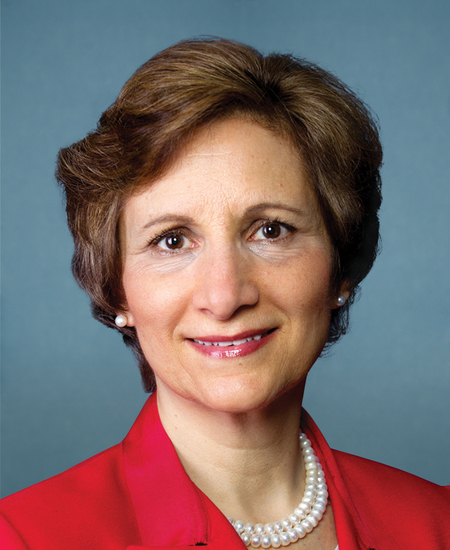
Rep. Suzanne Bonamici
Sponsored bills
Maddy summaryThis bill caps the interest rate at 6% on student loans that active-duty servicemembers (or their spouses jointly) consolidate or refinance *during* military service, but only if those loans were originally taken out *before* they joined the military. It directly affects servicemembers who use consolidation or refinancing to manage pre-service student debt while serving. The key provision limits interest rates on these specific consolidated/refinanced loans to 6% for the duration of military service, excluding other types of debt. The bill defines "student loan" to include both federal loans under the Higher Education Act and qualifying private loans.
Maddy summaryThe LIFT AI Act (HR 9211) provides federal funding to develop AI literacy education for K-12 students and teachers. It directs the National Science Foundation to award grants to colleges, nonprofits, or consortia for creating classroom curriculum, teacher training, and evaluation tools focused on AI skills like ethical use, critical interpretation, and problem-solving. The bill specifically targets schools (K-12) and aims to integrate AI literacy into existing lessons through project-based learning and professional development. Key provisions include developing learner-centered materials, training educators on AI proficiency, and creating tools to assess student progress in AI literacy.
Maddy summaryHR 9215, the Workforce for AI Trust Act, creates new fellowship programs at the National Science Foundation (NSF) to support graduate and postdoctoral researchers studying ethical AI development and governance. It requires institutions to recruit diverse candidates committed to "trustworthy AI" and funds tuition, stipends, and research expenses for up to three years. The bill also directs NSF to expand AI skills training for STEM students through workshops and professional development, while NIST is directed to develop technical standards for AI risk management careers like testing and evaluation. These provisions directly affect researchers, universities, and future AI professionals by building workforce capacity in ethics and governance.
Maddy summaryThe CREATE AI Act of 2023 establishes a National Artificial Intelligence Research Resource (NAIRR) to improve access to AI research tools, computational resources, data, and educational materials for researchers and students across the United States. The NAIRR will provide computational resources, curated datasets, educational tools, and access to AI testbeds, with special emphasis on supporting groups historically underrepresented in STEM fields. Governed by a Steering Subcommittee chaired by the Director of the Office of Science and Technology Policy and managed by a Program Management Office within the National Science Foundation, the NAIRR includes specific requirements for ethical AI development, privacy protections, and security measures. The resource will be accessible to researchers at U.S. institutions of higher education, nonprofits, government agencies, and certain businesses, with priority given to projects addressing privacy, ethics, civil rights, and AI safety.
Maddy summaryHRES 1423 expresses the U.S. House of Representatives' support for designating the week of September 21-28, 2024, as "National Estuaries Week." The resolution highlights estuaries' economic and ecological importance, noting they support over 3.5 million jobs, contribute $476 billion to the U.S. GDP, and provide critical services like flood control and water filtration. It does not create new laws or funding but aims to raise public awareness about protecting estuaries, which face threats like pollution and habitat loss. The resolution acknowledges ongoing restoration efforts by federal, state, tribal, and community partners.
Maddy summaryThe AI Grand Challenges Act of 2024 creates a National Science Foundation program to award cash prizes for solving specific artificial intelligence challenges in critical U.S. priority areas like health, national security, energy, and cancer research. It requires the NSF to establish competitions with clear problem statements and success metrics, including a mandatory cancer-focused competition offering at least $10 million in prizes within one year of enactment. Eligible participants must be U.S. entities or U.S. citizens/permanent residents, and winners receive minimum $1 million prizes per competition. The NSF must publish competition details online, report annually to Congress on program outcomes, and ensure public accessibility of all challenges.
Maddy summaryHRES 1422 is a resolution recognizing the 60th anniversary of the Wilderness Act (enacted in 1964), which established the National Wilderness Preservation System. The resolution commends advocates for the Act, acknowledges wilderness areas' role in protecting over 112 million acres of public lands, and highlights their benefits for recreation, clean water, wildlife habitat, and climate resilience. It specifically emphasizes the importance of including Tribal governments in wilderness designation and management. As a commemorative resolution, it does not create new laws or directly affect any group.
Maddy summaryHR 9226, the Domestic Seafood Production Act, funds new or repaired seafood processing facilities and training in coastal communities historically dependent on fishing or facing economic hardship. It targets communities with high poverty rates (≥20%) or low median income (≤80% of state/metro average), requiring the Agriculture Secretary to create an action plan identifying eligible areas for grants. The bill allocates $45 million over two years for projects like cold storage infrastructure, local workforce training, and community-based seafood markets, while banning new offshore aquaculture projects. It mandates tribal consultation and requires projects to prioritize domestic seafood sales, local hiring, and minimizing community disruption.
Maddy summaryHR 7362, the SPACE Act of 2024, requires the U.S. Department of Agriculture to establish cooperative agreements with land-grant universities for research using satellite and remote sensing data to improve wildland fire management. The bill directs the Secretary to provide these institutions with existing satellite data (including real-time images and infrared capabilities) and mandates they share research findings on fire behavior, smoke patterns, and data gaps. It also requires two reports: one within one year detailing opportunities to expand research partnerships, and another within 180 days outlining plans to integrate satellite technology for fire forecasting, containment strategies, and resource deployment. The law directly affects land-grant universities, USDA agencies, and federal fire management entities like the National Interagency Fire Center.