

Maddy summaryHR 1449, the Energy Resilient Communities Act, creates a federal grant program to fund clean energy microgrids that support critical community infrastructure like hospitals, schools, and emergency facilities. Eligible entities - including states, local governments, nonprofits, and tribal agencies - can apply for grants covering up to 90% of costs for technical assistance, community outreach, or microgrid projects in environmental justice communities. Key provisions prioritize projects that reduce emissions, lower energy costs for low-income residents, minimize land use impacts, and ensure 40% of construction labor comes from local residents meeting specific criteria (e.g., displaced workers, environmental justice community members). The program authorizes $1.5 billion over 10 years, with at least 10% reserved for community-owned microgrid projects, and requires annual reporting on project outcomes and labor practices.
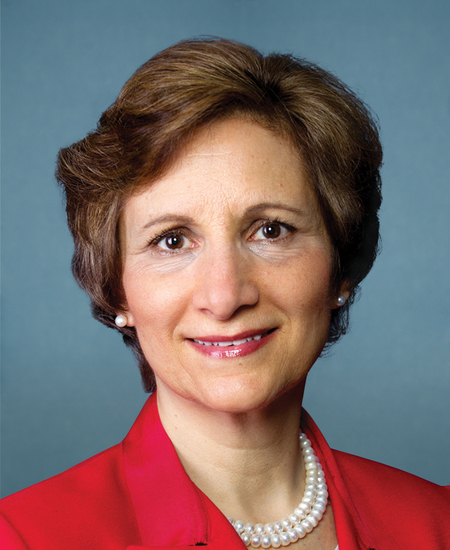
Rep. Suzanne Bonamici
Sponsored bills
Maddy summaryThis bill would require states to create a simplified process for out-of-state healthcare providers to join Medicaid and CHIP programs. Qualified providers (those already enrolled in Medicare or another state's program with low fraud risk) could enroll without excessive screening and would be approved for five years. It directly affects children under 21 enrolled in Medicaid or CHIP by expanding access to providers outside their state, particularly in underserved areas. The change applies to all states' Medicaid programs but takes effect three years after enactment.
Maddy summaryHR 1484 requires the Federal Aviation Administration (FAA) to commission the National Academies of Sciences to convene experts and issue a report on the health impacts of air traffic noise and pollution within 30 days of the bill's enactment. The report will summarize current scientific knowledge on these health effects and must be submitted to the FAA, Health and Human Services, the Environmental Protection Agency, and specific congressional committees. This bill creates a new study requirement but does not change existing regulations or funding; it solely mandates the collection of expert consensus on the health impacts of aviation noise and emissions.
Maddy summaryHR 1490, the TRIO Access Act, allows colleges to use tax return information from FAFSA applications for specific federal student support programs. It amends tax law (Internal Revenue Code §6103) and the Higher Education Act to permit institutions to share this data with students applying for TRIO programs like Student Support Services (Section 402D) and the McNair Post-Baccalaureate Program (Section 402E). The bill clarifies that tax information collected for financial aid may also be used to determine eligibility for these TRIO programs. This change directly affects colleges and students seeking support through these specific federal initiatives.
Maddy summaryThis bill doubles key tax benefits for child care expenses. It increases the maximum child and dependent care credit from $3,000 to $6,000 per child (and $6,000 to $12,000 for two or more children) and doubles the dependent care assistance program limit from $5,000 to $10,000 annually. It also doubles the employer credit for providing child care from $150,000 to $300,000 per year. These changes directly affect working parents paying for child care and employers offering on-site or subsidized care, applying to tax years starting in 2025.
Goldie's Act This bill expands enforcement provisions under the Animal Welfare Act (AWA). Specifically, the bill directs the Department of Agriculture (USDA) to document and record detailed descriptions of violations of the act observed during inspections and investigations. USDA must provide a copy of all records documenting violations to state, local, and municipal animal control or law enforcement officials within 24 hours of such inspections or investigations. Inspections must be held at least once a year of each research facility, the premises of each animal dealer, and each exhibitor of animals. If violations are found during inspections, then USDA must conduct any necessary follow-up inspections until all the violations are corrected. Inspectors must confiscate or destroy in a humane manner animals found to be suffering physical or psychological harm as a result of failure to comply with the AWA. Violators are subject to civil penalties as outlined in the bill.
Maddy summaryHRES 133 is a symbolic House resolution supporting the designation of February 15-22, 2025, as "National FFA Week." It recognizes the National FFA Organization’s role in developing student leadership through agricultural education and celebrates two milestones: the 90th anniversary of the New Farmers of America (which served Black students until merging with FFA in 1965) and the 75th anniversary of FFA’s federal charter (granted by Congress in 1950). The resolution has no policy impact or funding provisions - it simply expresses congressional support for these observances. It directly affects no individuals or entities, as it is a non-binding gesture honoring an educational organization.
Improving Care and Access to Nurses Act or the I CAN Act This bill allows other health care providers besides physicians (e.g., nurses) to provide certain services under Medicare and Medicaid. Among other changes, the bill (1) allows a nurse practitioner or physician assistant to fulfill documentation requirements for Medicare coverage of special shoes for diabetic individuals; (2) expedites the ability of physician assistants, nurse practitioners, and clinical nurse specialists to supervise Medicare cardiac, intensive cardiac, and pulmonary rehabilitation programs; and (3) allows nurse practitioners to certify the need for inpatient hospital services under Medicare and Medicaid.
Maddy summaryHR 1330 establishes the Smithsonian National Museum of the American Latino, authorizing its location within the National Mall's "Reserve" area. The bill requires the Smithsonian Board to coordinate with federal agencies managing potential museum sites, including notifying relevant congressional committees before land transfers. It mandates that the museum's exhibits and programs accurately represent the diverse cultures, histories, and viewpoints of Hispanic and Latino communities in the U.S., seeking input from a broad range of community experts. The Smithsonian must also submit regular reports to Congress detailing compliance with these representation requirements.
Maddy summaryThe Office of Gun Violence Prevention Act of 2025 would create a new office within the Department of Justice to coordinate federal efforts on reducing gun violence. The office, led by a Director appointed by the Attorney General, would integrate existing DOJ programs, evaluate data gaps, and develop evidence-based recommendations for Congress and the President. It would also establish an advisory council including survivors of gun violence, public health officials, and community representatives to guide its work. The office would produce annual reports detailing gun violence trends and policy proposals, while collaborating with agencies like Health and Human Services and the FBI.