

Maddy summaryThe American Family Act (HR 2763) establishes a new refundable child tax credit that provides monthly payments to eligible families with children. It would pay $300 per month for each child under age 6 and $360 per month (120% of $300) for each child age 6 or older, with income limits of $150,000 for joint filers and $112,500 for other filers. The bill creates a "period of presumptive eligibility" to determine eligibility for monthly payments, allowing families to receive advance payments based on information from previous tax returns. This would directly affect millions of families with children who meet the income requirements, providing more consistent financial support throughout the year rather than an annual tax credit.
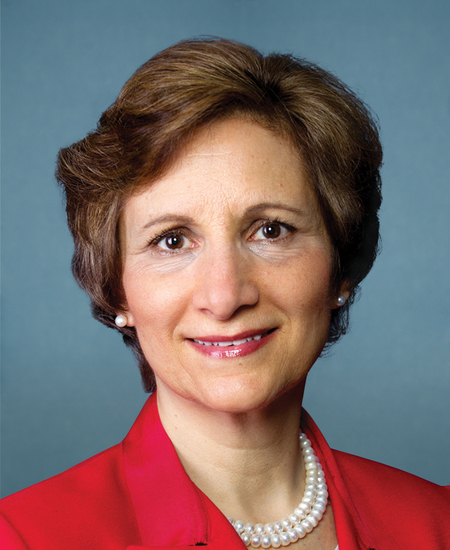
Rep. Suzanne Bonamici
Sponsored bills
Maddy summaryHR 2771, the Forest Legacy Management Flexibility Act, allows states to authorize qualified organizations (like accredited land trusts) to acquire, hold, and manage conservation easements under the Forest Legacy Program instead of requiring states to handle all such easements directly. To qualify, organizations must meet IRS standards for conservation purposes, maintain Land Trust Accreditation Commission accreditation, and demonstrate ability to monitor and enforce easements. The bill includes safeguards requiring easements to revert to the state or another approved organization if the qualified organization fails to meet program requirements or modifies easements inconsistently. This directly affects states administering the Forest Legacy Program and eligible land conservation groups working on forestland protection.
Maddy summaryHR 2799, the Closing the Bump Stock Loophole Act of 2025, prohibits the sale, possession, and modification of devices that increase the firing rate of semi-automatic firearms to mimic machine guns (commonly called "bump stocks"). It specifically bans manual, power-driven, or electronic devices designed to speed up firing, as well as modified firearms that achieve this effect. Owners of pre-existing modified firearms must register them within 120 days of the law's enactment, with exemptions for government entities and firearms already lawfully modified and registered before the bill passes. The bill does not restrict standard semi-automatic firearms or require registration of unmodified guns.
Maddy summaryThe Resilient Coasts and Estuaries Act of 2025 establishes a new Coastal and Estuarine Resilience and Restoration Program to protect and restore coastal areas with ecological, recreational, or community value. The program prioritizes lands threatened by development, that can be restored to enhance ecosystem function, or that benefit vulnerable communities facing coastal hazards like sea level rise. It requires the designation of at least five new National Estuarine Research Reserves within eight years and authorizes $47 million annually for 2025-2029 to support these efforts. The bill also creates new requirements for public access to protected lands and establishes a graduate research fellowship program focused on coastal management. This legislation directly affects coastal communities, conservation organizations, and federal agencies managing coastal zones under the Coastal Zone Management Act.
Maddy summaryThe Raise the Wage Act of 2025 gradually increases the federal minimum wage from $9.50 to $17.00 per hour over six years, with annual adjustments based on median wage growth. It raises the base wage for tipped workers from $6.00 to $17.00 per hour, phasing out their separate minimum wage structure by 2029. The bill also eliminates special minimum wage certificates for disabled workers after 2029, requiring employers to pay the standard minimum wage. These changes apply to most covered workers, including tipped employees and those under 20, with specific transition timelines for each group.
Maddy summaryThe PEER Support Act creates a new federal job classification for peer support specialists - individuals with lived experience in mental health or substance use recovery who provide support to others - by 2026. It establishes an Office of Recovery within the Substance Abuse and Mental Health Services Administration (SAMHSA) to lead training, certification, and career development for these specialists, including sharing best practices with states. The bill also requires a federal report analyzing state criminal background check laws for peer support specialists and recommending ways to reduce barriers to certification. This legislation directly affects peer support specialists, state certification programs, and federal agencies managing mental health services.
Maddy summaryThis bill prohibits federal funding for school police officers and establishes a $5 billion grant program to help schools replace law enforcement with mental health professionals like counselors, social workers, and psychologists. It requires schools to eliminate police contracts before receiving funds and mandates that grant money be used for trauma-informed services, restorative justice programs, and evidence-based mental health support instead of punitive discipline. The bill directly affects schools with police presence but insufficient mental health staff, particularly those serving Black, Latino, Native American, and other marginalized students who face racial disparities in school discipline. It aims to reduce the school-to-prison pipeline by shifting resources from law enforcement to supportive services that address students' needs. The legislation includes reporting requirements for schools to track disciplinary practices and demographic data to monitor progress in reducing disparities.
Maddy summaryThis bill establishes federal minimum standards for collective bargaining rights for public employees and supervisors. The Federal Labor Relations Authority would determine if state laws provide these rights, and if not, would establish them for affected employees. The bill guarantees public employees the right to form unions, bargain collectively, and engage in concerted activities, while requiring public employers to recognize unions and put agreements in writing. It also prohibits strikes or lockouts that would disrupt emergency services. This would apply to public employees in states that don't meet the federal standards for collective bargaining rights.
Maddy summaryHR 2737, titled the "ELON MUSK Act," is a procedural bill with a satirical title referencing Elon Musk. The bill prohibits "special Government employees" (as defined under 18 U.S.C. § 202) from entering into or benefiting from federal government contracts, requiring termination of any existing such contracts upon enactment. It uses standard legal terminology without creating new policy mechanisms beyond this contractual restriction. The bill does not directly affect specific individuals or entities but applies to a defined category of federal employees under existing law. The title's reference to Elon Musk is purely nominal and unrelated to the bill's actual provisions.
Maddy summaryHRES 297 is a non-binding resolution expressing the House of Representatives' support for fair compensation, benefits, and working conditions for paraprofessionals (like instructional assistants) and education support staff (including bus drivers, cafeteria workers, and clerical staff) in schools. It specifically calls for livable wages, job security, access to affordable health care, paid leave, and meaningful input in school policies for these workers. As a resolution, it does not create new laws or mandate changes but serves as a symbolic statement highlighting these workers' needs. The resolution directly addresses the concerns of over 3 million school support staff facing issues like underpayment, lack of benefits, and job instability.