

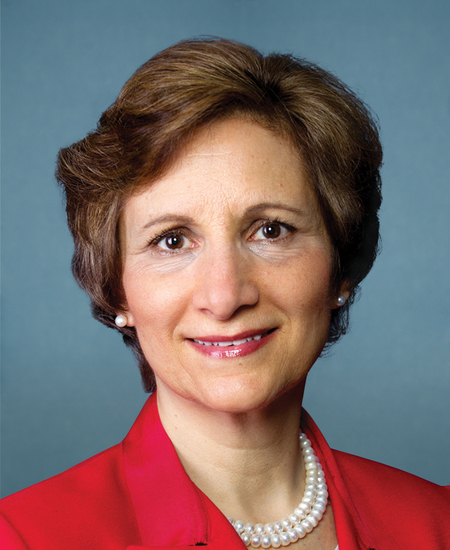
Photo of Suzanne Bonamici
D United States House · District 1 · Oregon On the 2026 ballot

Rep. Suzanne Bonamici

Compare
Total votes
2,837
all sessions
Attendance
97%
72 missed
Near the chamber average
With party
98%
of cast votes
Near the chamber average
Bipartisan score
1%
crosses aisle rarely
Near the chamber average
Sponsored
2,308
bills & resolutions
Higher than 94% of chamber peers
Committees
6
assignments
2,308 bills and resolutions

Sponsored bills

Total
2,308
Primary
181
Co-sponsor
2,127
This page
2,308
matching current filters
Co-sponsor HJRES 122
In committee · United States House · Co-sponsor
Proposing an amendment to the Constitution of the United States relating to the authority of Congress and the States to regulate contributions and expenditures intended to affect elections and to enact public financing systems for political campaigns.

Maddy summaryHJRES 122 proposes a constitutional amendment that would grant Congress and states explicit authority to regulate campaign contributions and spending intended to influence elections. It would allow for reasonable, viewpoint-neutral limits on how much money candidates and others can raise or spend, as well as enable public financing systems to reduce private wealth's influence in campaigns. The amendment would permit distinguishing between individuals and corporations in campaign finance rules, potentially banning corporate spending to influence elections. It explicitly states this amendment would not affect the freedom of the press.

In committee Sep 17, 2025 1 co-sponsor
Co-sponsor HRES 733
In committee · United States House · Co-sponsor
Expressing support for the designation of the week of September 20 through September 27, 2025, as "National Estuaries Week".

Maddy summaryHRES 733 is a symbolic resolution designating the week of September 20-27, 2025, as "National Estuaries Week." It expresses congressional support for raising public awareness about the economic and ecological importance of coastal estuaries, which support millions of jobs, generate significant economic output, and provide critical services like flood protection and habitat for fish and wildlife. The resolution acknowledges estuaries' role in sustaining employment, economic growth, and environmental health without creating new policies or funding. It directly affects the public, government officials, and conservation organizations by highlighting estuaries' value through a designated awareness week.

In committee Sep 17, 2025 1 co-sponsor
Co-sponsor HR 5434
In committee · United States House · Co-sponsor
988 LGBTQ+ Youth Access Act of 2025

Maddy summaryThis bill requires the 988 Suicide Prevention Lifeline to establish a dedicated "Press 3" option (via IVR) for LGBTQ+ youth seeking crisis support, directly affecting LGBTQ+ youth who face a four times higher suicide risk than peers. It mandates that at least 9% of funds allocated for the lifeline's services be reserved specifically for these specialized LGBTQ+ youth services. The bill amends existing law to formalize this dedicated resource, building on current services that handled over 1.5 million contacts from LGBTQ+ youth in 2025. This creates a concrete policy change for accessing tailored crisis support without altering other lifeline operations.

In committee Sep 17, 2025 1 co-sponsor
Co-sponsor HR 5443
In committee · United States House · Co-sponsor
Fair Housing Improvement Act of 2025

Maddy summaryHR 5443, the Fair Housing Improvement Act of 2025, expands federal housing anti-discrimination protections to include "source of income," "veteran status," and "military status." It defines "source of income" broadly to cover housing vouchers, Social Security benefits, child support, and other lawful income sources like savings or gifts. The bill adds these categories to all existing anti-discrimination provisions in the Fair Housing Act, prohibiting housing providers from refusing to rent or sell based on these factors. This directly affects renters and homeowners using housing assistance, veterans, active military members, and individuals receiving non-wage income.

In committee Sep 17, 2025 1 co-sponsor
Co-sponsor HR 5399
In committee · United States House · Co-sponsor
Equitable Arts Education Enhancement Act

Maddy summaryHR 5399, the Equitable Arts Education Enhancement Act, provides competitive federal grants to Minority-Serving Institutions (MSIs) to expand access to arts education for Black, Indigenous, and people of color students. The bill directs grant funds toward specific activities, including financial aid for arts students, mentorship programs, career counseling, and preserving BIPOC art collections. MSIs must prioritize initiatives directly benefiting minority students, such as outreach programs, paid internships with arts organizations, and training for future arts educators. This legislation aims to address systemic underfunding and lack of diversity in arts education by supporting institutions uniquely positioned to serve diverse artists and students.

In committee Sep 16, 2025 1 co-sponsor
Primary HR 5373
In committee · United States House · Lead sponsor
Alan Reinstein Ban Asbestos Now Act of 2025

Maddy summaryHR 5373, the Alan Reinstein Ban Asbestos Now Act of 2025, prohibits the manufacture, processing, use, and distribution in commerce of specific types of asbestos (including chrysotile and crocidolite) after its enactment. It directly affects manufacturers, distributors, and users of commercial asbestos, with two key exceptions: the chlor-alkali industry can continue using asbestos for diaphragms until January 1, 2030, and the President may grant limited national security exemptions (up to 3 years, extendable once). The bill explicitly states it does not alter existing regulations for cosmetics or other products containing asbestos as an impurity. It defines "commercial asbestos" to exclude products where asbestos is only an impurity, ensuring no overlap with current cosmetic safety rules.

In committee Sep 16, 2025 0 co-sponsors
Co-sponsor HR 5390
In committee · United States House · Co-sponsor
FAMILY Act

Maddy summaryThe FAMILY Act would establish a national paid family and medical leave insurance program that provides wage replacement benefits for workers needing time off for caregiving or medical reasons. It defines "qualified caregiving" to include caring for a family member with a serious health condition, personal medical needs, or recovery from violence (including domestic violence, sexual assault, or stalking). Benefits would be calculated based on earnings, with a minimum monthly benefit of $580 and maximum of $4,000, administered by a new Office of Paid Family and Medical Leave within the Social Security Administration. Eligible individuals would need to have worked for at least 8 quarters in the previous year and file an application with required documentation, while existing state paid leave programs would continue to operate alongside this federal program.

In committee Sep 16, 2025 1 co-sponsor
Co-sponsor HR 492
In committee · United States House · Co-sponsor
Saving the Civil Service Act

Saving the Civil Service Act This bill generally prohibits changes to the classification of positions in the competitive service and excepted service unless certain conditions are met. (Competitive service positions are subject to competitive examination while excepted service positions are appointed under one of five schedules. Competitive service positions have notice and appeal requirements for adverse actions that are not applicable to most excepted positions, including those of a confidential, policy-determining, policy-making, or policy-advocating character under Schedule C.) On October 21, 2020, President Donald Trump issued an executive order that placed executive agency positions that are of a confidential, policy-determining, policy-making, or policy-advocating character, and that are not normally subject to change as a result of a presidential transition, under a new Schedule F in the excepted service. The order was subsequently revoked by President Joe Biden. The bill prohibits executive agency positions in the competitive service from being placed in the excepted service, unless such positions are placed in a schedule in the excepted service as in effect on September 30, 2020. The bill also prohibits positions in the excepted service from being placed in any schedule other than the aforementioned schedules. Additionally, agencies may not (1) transfer occupied positions from the competitive or excepted service into Schedule C without the consent of the Office of Personnel Management, or (2) transfer employees in the excepted service to another schedule or transfer employees in the competitive service to the excepted service without employee consent.

In committee Sep 16, 2025 1 co-sponsor
Co-sponsor HRES 710
In committee · United States House · Co-sponsor
Expressing support for the designation of "Community School Coordinators Appreciation Week ".

Maddy summaryHRES 710 is a symbolic resolution expressing support for designating September 14-20, 2025, as "Community School Coordinators Appreciation Week." It recognizes community school coordinators - who connect schools with local resources to improve student outcomes like attendance, mental health, and academic achievement - as essential to school success. The resolution encourages public participation in events celebrating these coordinators but does not create new laws, allocate funding, or directly affect policies or programs. It cites studies showing coordinators’ positive impact, such as a $7.11 return on investment per dollar spent on their salaries.

In committee Sep 15, 2025 1 co-sponsor
Co-sponsor HR 5361
In committee · United States House · Co-sponsor
George Floyd Justice in Policing Act of 2025

Maddy summaryThe George Floyd Justice in Policing Act of 2025 would establish a National Police Misconduct Registry to track officer complaints, disciplinary actions, and misconduct records across all law enforcement agencies. It would require law enforcement agencies to implement body-worn camera programs with specific recording and retention policies, ban chokeholds and no-knock warrants in drug cases, and reform qualified immunity to make it easier to hold officers accountable for misconduct. The bill mandates comprehensive data collection on use of force incidents, requiring agencies to report detailed information about stops, searches, and force used, disaggregated by race, ethnicity, gender, and other demographics. These provisions would directly affect all Federal, State, and local law enforcement agencies that receive federal grant funding, with requirements for policy changes, training, and data reporting.

In committee Sep 15, 2025 1 co-sponsor
Showing 301 to 310 of 2,308 bills
Previous 1 … 30 31 32 … 231 Next