

Outdoors for All Act This bill directs the Department of the Interior to establish an outdoor recreation legacy partnership grant program under which Interior may award grants to states, certain political subdivisions of a state, special purpose districts, Indian tribes, or Alaska Native or Native Hawaiian communities or organizations. Funds must be used for projects to (1) acquire land and water for parks and other outdoor recreation purposes in qualifying areas, and (2) develop new or renovate existing outdoor recreation facilities that provide outdoor recreation opportunities to the public in qualifying areas. A qualifying area is an area that has a population of 30,000 or more in the most recent census, or that is administered by an Indian tribe or an Alaska Native or Native Hawaiian community organization. Interior shall give priority to projects that create or significantly enhance access to park and recreational opportunities in an urban neighborhood or community, engage and empower underserved communities and youth, provide opportunities for employment or job training for youth or underserved communities, establish or expand public-private partnerships, and take advantage of coordination among various levels of government.
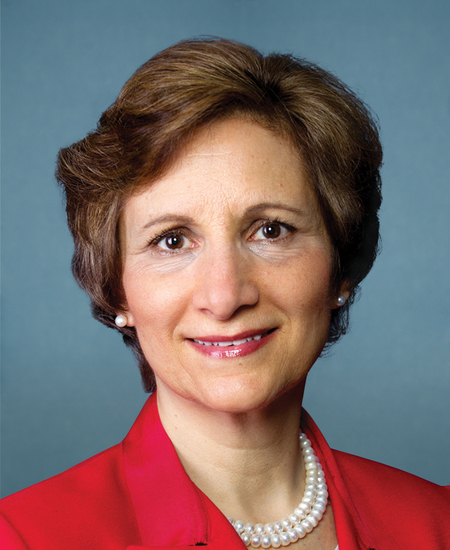
Rep. Suzanne Bonamici
Sponsored bills
Arts Education for All Act This bill expands arts education and programming for children in early education, K-12 students, and juveniles and adults in the criminal justice system. Specifically, the bill allows Child Care and Development Block Grant funding to be used for additional activities, including arts programming. Additionally, the bill addresses arts programming in elementary and secondary schools by directing each state educational agency to include information on arts programming in its state plan, including how it will integrate arts education instruction into the curriculum and increase the number of arts teachers in schools; requiring state report cards to include information on arts courses; requiring local educational agency (LEA) plans to describe how the LEA will encourage the use of arts education to improve student achievement; and allowing certain funds to be used for professional development for arts teachers. The bill directs the National Center for Education Research to carry out research on the use of arts and arts education in elementary and secondary schools, including in low-performing schools. Further, the National Center for Education Statistics must compile data on arts education. The National Assessment of Educational Progress must include a specified arts assessment. The bill requires a state's juvenile justice and delinquency plan to describe how the state will coordinate services and activities for juvenile justice and delinquency prevention with arts agencies and arts organizations. Additionally, grants for adult offender reentry demonstration projects may be used for facilitating arts education.
Reducing Waste in National Parks Act This bill directs the National Park Service to establish a program for the National Park System to reduce disposable plastic products and, if applicable, eliminate the sale and distribution of disposable plastic products. Each regional office of the National Park Service must eliminate the sale of water in disposable plastic products and the sale and distribution of other disposable plastic products after consideration of several specified factors (e.g., the costs and benefits to overall operations). Each regional office must develop a proactive visitor education strategy to address visitor expectations of water availability and explain the rationale for the program and its implementation.
Stabilizing Medicare Access to Rehabilitation and Therapy Act or the SMART Act This bill modifies the application of a certain Medicare payment methodology for outpatient physical therapy services and outpatient occupational therapy services that are furnished by a therapy assistant. Under current law, effective January 1, 2022, payment for such services is 85% of the otherwise applicable rate. The bill delays this effective date by one year and excludes services that are furnished in rural or medically underserved areas from this payment methodology. The bill also specifies that supervision requirements for outpatient physical therapy services that are furnished through private practice may not be more stringent for purposes of Medicare coverage than under state law.
Supporting Older Workers Act This bill allows states to use allocated Workforce Innovation and Opportunity Act (WIOA) funds for statewide training activities to support older workers. Specifically, the bill authorizes training activities that coordinate with existing programs for older workers, support the development of activities that enhance the skills of older individuals, or enhance economic choices available to older individuals. The bill also requires the Department of Labor to award grants to states and local areas to hire WIOA coordinators for older worker and establishes the Older Workers Bureau. The Government Accountability Office must study how well existing state and local performance accountability measures under WIOA measure the success of older individuals.
Furthering Opioid Services, Training, and Education Resources Act or the FOSTER Act This bill reauthorizes through FY2026 and expands the scope of grants available for states and Indian tribes to address the opioid crisis. Specifically, the bill allows the use of grant funds for workforce recruitment and training, health care services, and foster and adoptive parent recruitment and training to support opioid abuse prevention and treatment services for children and caregivers, kinship care families, and kinship caregivers.
Water Advanced Technologies for Efficient Resource Use Act of 2021 This bill provides statutory authority for the WaterSense program of the Environmental Protection Agency (EPA) and sets forth related requirements. Under the program, the EPA awards grants to provide incentives for consumers to purchase water-efficient products.
Indigenous Peoples' Day Act This bill designates Indigenous Peoples' Day as a legal public holiday in lieu of Columbus Day.
School Food Recovery Act of 2021 This bill directs the Department of Agriculture (USDA) to provide competitive grants and technical assistance for local educational agencies to implement food waste measurement and reporting, prevention, education, and reduction projects. In awarding grants, USDA must give priority to agencies that agree to use grant funds for carrying out specific projects, including (1) experiential education activities that encourage children enrolled in such agencies to participate in food waste measurement and education; and (2) the establishment of food waste measurement, prevention, and reduction projects with long-term sustainability. The federal share of project costs may not exceed 75% of the total cost of carrying out such projects. All projects must comply with the nutrition requirements of the National School Lunch Program or the School Breakfast Program, including by offering no less than the minimum quantities of required food components.
This bill requires the Department of Defense (DOD) to conduct outreach to build awareness among former members of the Armed Forces of the process established for the review of discharge characterizations related to sexual orientation (i.e., on the basis of Don't Ask, Don't Tell or a similar policy). DOD must also provide for specified relief for former members of the Armed Forces who were impacted by the discharge characterizations and ensure that DOD oral historians review related facts and receive testimony from affected individuals.