

Respect for Marriage Act This act provides statutory authority for same-sex and interracial marriages. Specifically, the act replaces provisions that define, for purposes of federal law, marriage as between a man and a woman and spouse as a person of the opposite sex with provisions that recognize any marriage between two individuals that is valid under state law. (The Supreme Court held that the current provisions were unconstitutional in United States v. Windsor in 2013.) The act also replaces provisions that do not require states to recognize same-sex marriages from other states with provisions that prohibit the denial of full faith and credit or any right or claim relating to out-of-state marriages on the basis of sex, race, ethnicity, or national origin. (The Supreme Court held that state laws barring same-sex marriages were unconstitutional in Obergefell v. Hodges in 2015; the Court held that state laws barring interracial marriages were unconstitutional in Loving v. Virginia in 1967.) The act allows the Department of Justice to bring a civil action and establishes a private right of action for violations. The act does not (1) affect religious liberties or conscience protections that are available under the Constitution or federal law, (2) require religious organizations to provide goods or services to formally recognize or celebrate a marriage, (3) affect any benefits or rights that do not arise from a marriage, or (4) recognize under federal law any marriage between more than two individuals.
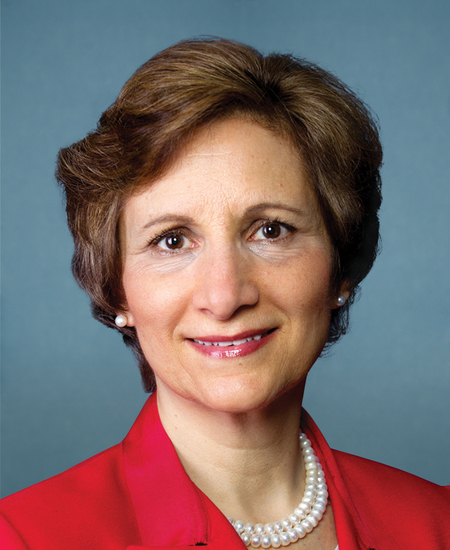
Rep. Suzanne Bonamici
Sponsored bills
International Violence Against Women Act of 2022 This bill requires a U.S. global strategy to prevent and respond to violence against women and girls. The bill establishes in the Department of State an Office of Global Women's Issues, which shall be headed by an Ambassador-at-Large for Global Women's Issues. The Ambassador-at-Large shall (1) coordinate U.S. government efforts regarding gender equality and the advancement of women and girls in foreign policy, and (2) develop or update periodically a U.S. global strategy to prevent and respond to gender-based violence. The bill establishes in the U.S. Agency for International Development the position of Senior Coordinator for Gender Equality and Women's Empowerment who shall coordinate policies, programs, and funding regarding gender equality and women's empowerment.
This concurrent resolution recognizes the disparity between wages paid to Latina women, and its impact on women, families, and the nation and reaffirms Congress' commitment to supporting equal pay and to narrowing the gender wage gap.
This resolution congratulates the Portland Thorns Football Club on winning the 2022 National Women's Soccer League championship and completing a successful 2022 season.
Crypto-Asset Environmental Transparency Act of 2022 This bill establishes greenhouse gas emission reporting and related requirements for certain crypto-asset (e.g., Bitcoin) mining operations.
Coral Reef Sustainability Through Innovation Act of 2022 This bill authorizes the federal agencies on the U.S. Coral Reef Task Force, which includes the National Oceanic and Atmospheric Administration, to carry out prize competitions that promote coral reef research and conservation. The prize competitions must be designed to help the United States achieve its goal of developing new and effective ways to advance the understanding, monitoring, and sustainability of coral reef ecosystems. Priority is given to establish programs that address communities, environments, or industries that are in distress due to the decline or degradation of coral reef ecosystems.
READ Act Reauthorization Act of 2022 This bill reauthorizes a law that requires the implementation of a strategy to promote quality basic education in partner countries by (1) expanding access to basic education for all children, particularly marginalized children and vulnerable groups; and (2) improving the quality of basic education and learning outcomes.
Truth and Healing Commission on Indian Boarding School Policies Act This bill establishes the Truth and Healing Commission on Indian Boarding School Policies in the United States and sets forth its powers, duties, and membership. Among other duties, the commission must investigate the impacts and ongoing effects of the Indian Boarding School Policies (federal policies under which American Indian, Alaska Native, and Native Hawaiian children were forcibly removed from their family homes and placed in boarding schools). Further, the commission must develop recommendations on ways to (1) protect unmarked graves and accompanying land protections; (2) support repatriation and identify the tribal nations from which children were taken; and (3) discontinue the removal of American Indian, Alaska Native, and Native Hawaiian children from their families and tribal communities by state social service departments, foster care agencies, and adoption agencies.
The Jackie Walorski Maternal and Child Home Visiting Reauthorization Act of 2022 This bill reauthorizes through FY2027, increases funding for, and modifies the Maternal, Infant, and Early Childhood Home Visiting Program. This program supports home visits for expectant and new parents who live in communities that are at-risk for poor maternal and child health outcomes. Changes to the program include setting out requirements for allocating program funds; increasing the percentage of funds reserved for tribal entities; establishing a publicly available dashboard that reports program outcomes; requiring activities to reduce unnecessary data collection, reporting, and other administrative requirements of the program; and allowing for virtual home visits (provided certain conditions are met). The bill also reduces funding for the Medicare Improvement Fund.
Pregnant Women in Custody Act This bill establishes requirements to address the health needs of incarcerated women related to pregnancy and childbirth. The bill requires the Bureau of Justice Statistics to collect data on the health needs of incarcerated pregnant women at the federal, state, tribal, and local levels. With respect to incarcerated women at the federal level, the bill requires the Bureau of Prisons (BOP) to provide appropriate services and programs to address the health and safety needs related to pregnancy and childbirth, as well as appropriate health care to a woman with a high-risk pregnancy; limits the use of restrictive housing for prisoners who are pregnant or in postpartum recovery; and requires the BOP to report annually on the number of administrative claims and appeals filed by pregnant inmates. With respect to incarcerated women at the state and local levels, the bill requires the Government Accountability Office to study the services and protections for pregnant incarcerated women in state and local correctional settings.