Nationwide Right To Unionize Act This bill provides authorization for labor agreements to require membership in a labor organization as a condition of employment regardless of state law (thus preempting state laws that prohibit such agreements).
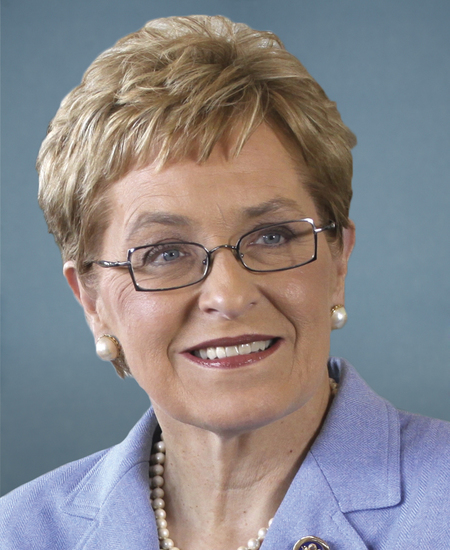
Rep. Marcy Kaptur
Sponsored bills
Farmers Market and Food Bank Local Revitalization Act of 2022 This bill provides for increased support for farmers' markets. The bill extends through FY2028, expands eligibility for, and increases benefits under the Senior Farmers' Market Nutrition Program. The bill extends through FY2025 and increases benefits under the Women, Infants, and Children Farmers' Market Nutrition Program. The Department of Agriculture (USDA) must make loans, loan guarantees, and grants to public agencies and nonprofit organizations for the construction of new farmers markets or the improvement or rehabilitation of existing farmers markets. Additionally, the bill requires USDA to establish a pilot grant program in which food banks may voluntarily contract with their local farmers for them to grow produce for food bank programs to promote local procurement of produce.
Save Our Sequoias Act This bill provides for the conservation of giant sequoia trees ( Sequoiadendron giganteum ) in California, including by providing statutory authority for the Giant Sequoia Lands Coalition; directing the coalition to submit a Giant Sequoia Health and Resiliency Assessment; declaring an emergency on certain public lands and allowing officials to carry out protection plans during the emergency to respond to the threat of wildfires, insects, and drought; directing the Department of the Interior to develop and implement a Giant Sequoia Reforestation and Rehabilitation Strategy; and establishing a variety of programs and funds to support the conservation of giant sequoias.
Harriet Tubman Bicentennial Commemorative Coin Act This bill directs the Department of the Treasury to mint and issue 50,000 $5 gold coins, 400,000 $1 silver coins, and 750,000 half-dollar clad coins emblematic of the legacy of Harriet Tubman as an abolitionist. The Secretary may issue coins under this bill only during the period of January 1, 2024, through December 31, 2024. All surcharges received by Treasury from the sale of such coins must be paid equally to the National Underground Railroad Freedom Center in Cincinnati, Ohio, and The Harriet Tubman Home, Inc. in Auburn, New York, for the purpose of accomplishing and advancing their missions.
National World War II Memorial Commemorative Coin Act This bill directs the Department of the Treasury to mint and issue up to 50,000 $5 coins, 400,000 $1 silver coins, and 750,000 half-dollar clad coins in commemoration of the National World War II Memorial in the District of Columbia. The design of the coins shall be emblematic of the memorial and the service and sacrifice of American soldiers and civilians during World War II. All surcharges received from the sale of such coins shall be paid to the Friends of the National World War II Memorial to support the National Park Service in maintaining and repairing the memorial, and for educational and commemorative programs.
Cash Refunds for Flight Cancellations Act of 2022 This bill requires air carriers and ticket agents to offer full cash refunds for airline tickets if (1) an airline cancels or significantly delays a flight, or (2) a passenger cancels their ticket for a flight up until 48 hours of the scheduled departure time. The bill permits air carriers and tickets agents to offer alternative forms of compensation, including credit, or vouchers, provided that such offer is valid indefinitely and the offer includes a clear and conspicuous notice of the passenger's right to a cash refund. Additionally, the bill requires air carriers and ticket agents to disclose to passengers, prior to the sale of airline tickets, that they can cancel their tickets and receive a full refund.
Assault Weapons Ban of 2022 This bill makes it a crime to knowingly import, sell, manufacture, transfer, or possess a semiautomatic assault weapon (SAW) or large capacity ammunition feeding device (LCAFD). The prohibition does not apply to a firearm that is (1) manually operated by bolt, pump, lever, or slide action, except for certain shotguns; (2) permanently inoperable; (3) an antique; (4) only capable of firing rimfire ammunition; or (5) a rifle or shotgun specifically identified by make and model. The bill also exempts from the prohibition the following, with respect to a SAW or LCAFD: importation, sale, manufacture, transfer, or possession related to certain law enforcement efforts, or authorized tests or experiments; importation, sale, transfer, or possession related to securing nuclear materials; and possession by a retired law enforcement officer. The bill permits continued possession, sale, or transfer of a grandfathered SAW, which must be securely stored. A licensed gun dealer must conduct a background check prior to the sale or transfer of a grandfathered SAW between private parties. The bill permits continued possession of, but prohibits sale or transfer of, a grandfathered LCAFD. Newly manufactured LCAFDs must display serial number identification. Newly manufactured SAWs and LCAFDs must display the date of manufacture. The bill also allows a state or local government to use Edward Byrne Memorial Justice Assistance Grant Program funds to compensate individuals who surrender a SAW or LCAFD under a buy-back program.

Banning Oil Exports to Foreign Adversaries Act This bill requires the Department of Energy (DOE) to prohibit the export or sale of petroleum products (e.g., crude oil) from the Strategic Petroleum Reserve to (1) China, North Korea, Russia, and Iran; (2) any other country the government of which is subject to sanctions imposed by the United States; and (3) any entity owned, controlled, or influenced by such countries or the Chinese Communist Party. However, DOE may issue a waiver of the prohibition if the export or sale of petroleum products is in the national security interests of the United States.
Summer Meals Act of 2021 This bill revises provisions related to the Summer Food Service Program (SFSP) of the Department of Agriculture (USDA), which provides meals to children and teens in low-income areas during the summer months when school is not in session. The bill redefines areas in which poor economic conditions exist , where the SFSP may operate, as areas in which at least 40% (currently, 50%) of the children have been determined to be eligible for free or reduced price school meals under the school lunch and breakfast programs. The bill reimburses service institutions (other than school food authorities) for up to one meal and one snack per child each day during after-school hours, weekends, and school holidays during the regular school calendar. Currently, such institutions are reimbursed for meals and snacks served to children over the summer months or to children who are on vacation under a continuous school calendar. USDA may award competitive grants to service institutions to increase participation in the summer food service program for children at congregate feeding sites through innovative approaches to limited transportation and mobile meal trucks. Service institutions that are participating in the summer food service program for children may serve up to three meals, or two meals and one snack, during each day of operation. Currently, this option is reserved for camps and service institutions that serve meals primarily to migrant children.
Susan Muffley Act of 2022 This bill restores the full vested monthly benefits for eligible participants of certain pension plans that were sponsored by Delphi Corporation and terminated as a result of General Motors' bankruptcy in 2009. The Pension Benefit Guaranty Corporation (PBGC) must recalculate and adjust each plan participant's monthly benefits payment. The PBGC must also apply the recalculation to previously-made monthly payments and make a lump-sum payment for any additional benefits based on the recalculation. The bill establishes and provides appropriations to a fund for the payment of these benefits and specifies how the lump-sum payments are treated for tax purposes. Finally, the bill requires the PBGC to report on recommendations to ensure the long-term solvency of its insurance programs.