

Frank Harrison, Elizabeth Peratrovich, and Miguel Trujillo Native American Voting Rights Act of 2021 This bill addresses the voting rights of Native American and Alaska Native voters and voting access on tribal lands. The bill includes provisions expanding the types of facilities that can be used as voter registration agencies; increasing polling site accessibility, including by expanding early in-person voting and providing ballot drop boxes; providing enforcement power to citizens and attorneys general; requiring approval for actions like moving a polling place; validating certain tribal identification for voting or registering to vote; permitting voters to designate another individual to return a ballot on their behalf; and expanding requirements for bilingual voting accessibility. In addition, the bill establishes a Native American voting task force grant program for the purpose of increasing voter outreach, education, registration, turnout, and accessibility for Native American communities. The bill also directs the Government Accountability Office to study and report on (1) the prevalence of nontraditional or nonexistent mailing addresses among Indians, members of tribes, and individuals residing on Indian lands; and (2) the alternatives for removing barriers to voter registration, receipt of voter information and materials, and receipt of ballots.
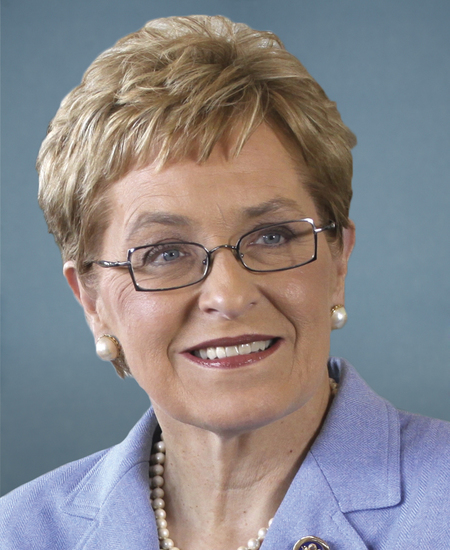
Rep. Marcy Kaptur
Sponsored bills
Supreme Court Ethics Act This bill establishes a new statutory requirement for the Judicial Conference of the United States to issue a judicial code of conduct for judges and justices of U.S. courts, including Justices of the Supreme Court. Currently, the Judicial Conference issues a code of conduct for judges of U.S. courts (but not for Justices of the Supreme Court).
Foreign Extortion Prevention Act This bill establishes a federal criminal offense involving bribery by foreign officials. Specifically, the bill makes it a crime for foreign officials to demand or accept anything of value personally or for another person or a nongovernmental entity to influence the performance of an official act or otherwise confer an improper advantage. The bill explicitly grants extraterritorial jurisdiction over the offense. A violation is subject to criminal penalties—a fine, a prison term of up to 15 years, or both. Finally, the bill establishes a Victims of Kleptocracy Fund in the Treasury and directs fines and penalties for violations to be deposited into the fund for anti-corruption initiatives.
Improving Access for Afghan Refugees Act This bill requires the Department of State to provide priority refugee status to eligible habitual residents of Afghanistan. To be eligible for such priority status, a habitual resident of Afghanistan must also be a national of Afghanistan or stateless. Such an individual shall receive priority refugee status if the individual (1) has suffered persecution or has a well-founded fear of persecution and worked in a specified field that makes the individual a target of persecution on account of race, religion, or other characteristics; (2) was employed for at least one year in Afghanistan by U.S.-based media or nongovernmental entities or an entity that received a contract or grant from the U.S. government; or (3) is the beneficiary of a visa petition sponsored by a relative who is a U.S. citizen or permanent resident. The State Department may also provide priority status to other groups of individuals who are nationals and residents of Afghanistan. Certain annual numerical limits on refugee admissions shall not apply to individuals who receive priority status under this bill. For refugee applications under this bill, the State Department and the Department of Homeland Security shall ensure that all steps in the approval process in the U.S. government's control are completed within six months of an application's submission, with exceptions for cases that need more time to address national security concerns.
Revealing and Explaining Visa Exclusions for Accountability and Legitimacy Act or the REVEAL Act This bill authorizes the Department of State to publicly disclose the identity of an alien who has been denied admission into the United States because that alien's entry would pose potentially serious adverse foreign policy consequences. The State Department may also reveal the grounds that it relied on to make such a determination. The President must annually report to Congress a list of individuals denied a visa on such foreign policy grounds and another list of the instances when the State Department chose to not publicly disclose the identity of such an individual.
Daniel Anderl Judicial Security and Privacy Act of 2021 This bill generally prohibits federal agencies and private businesses from publicly posting the personally identifiable information (e.g., home addresses) of federal judges and their immediate family members. It also (1) requires information to be removed upon written request from the federal judge concerned, (2) prohibits data brokers from purchasing or selling such information, and (3) establishes programs to protect such information at the state and local level and to enhance security for judges.
Housing is Infrastructure Act of 2021 This bill generally addresses housing affordability and infrastructure. The bill authorizes the Department of Housing and Urban Development (HUD) to provide grants, programs, and other support related to public housing, affordable housing preservation and construction, and mortgage access. The bill also establishes and funds the National Investment Authority (NIA) which must design, finance, and implement a strategy of long-term national economic growth and development. The NIA must select projects that coordinate investment of public and private capital in equitable, inclusive, and sustainable growth of the economy. Furthermore, the bill establishes the National Infrastructure Bank (NIB) to implement the strategy by engaging in credit market activities that support public and private investment in critical public infrastructure projects. The bill gives the NIA bond issuing authority and authorizes the Board of Governors of the Federal Reserve System to purchase these bonds. The Federal Reserve must lend funds on a short-term basis upon the request of the NIB and other subsidiaries. Additionally, the Department of the Treasury must provide for a line of credit not to exceed 100% of the NIA's total assets. Finally, the bill (1) authorizes HUD to provide support for fair housing organizations, and (2) requires consultation with a fair housing enforcement organization as part of an application for certain housing grants or funds.
Golden Visa Accountability Act This bill requires the Department of State to establish and maintain a database containing information about investor visa denials due to the applicant's involvement in corruption or serious human rights abuses. (Generally, the United States offers immigrant visas to qualified individuals who invest in the United States and create a certain number of full-time jobs.) Initially, the database must include records related to such denials of U.S. investor visas. The bill also requires the State Department to eventually expand the database to include records of such denials of investor visas in other countries. The State Department shall prioritize including records from European Union countries and from Australia, Canada, New Zealand, and the United Kingdom. The State Department may admit a foreign country to be part of the database if the State Department determines (1) that country will be honest and forthcoming with its records, and (2) that country's investor visa program is at risk of abuse by corrupt foreign officials.
Veterans Visa and Protection Act of 2021 This bill provides permanent resident status and citizenship eligibility to certain noncitizen veterans and addresses related issues. The Department of Homeland Security (DHS) must establish a program that allows (1) eligible noncitizen veterans outside of the United States to be admitted as permanent residents, and (2) eligible noncitizen veterans in the United States to obtain permanent resident status. Generally, an eligible noncitizen veteran under this bill is one who was not removed from the United States for certain crimes related to violence or national security. DHS may waive these eligibility requirements for humanitarian, family unity, public interest, or exceptional military service reasons. A noncitizen veteran who obtains permanent resident status under this bill shall be eligible for (1) naturalization through service in the Armed Forces, and (2) military and veterans benefits as if they had not been removed (or ordered removed) from the United States. For a noncitizen veteran in removal proceedings or subject to a final removal order, the Department of Justice (DOJ) must determine whether the veteran is eligible for permanent resident status under this bill. If the veteran is eligible, DOJ must adjust the veteran's status. The bill also protects noncitizen veterans or service members from being removed from the United States unless the veteran has been convicted of a crime of violence.
Foreign Corruption Accountability Act This bill temporarily authorizes the President to impose visa-blocking sanctions against any foreign person that engages in public corruption activities (e.g., soliciting or accepting bribes or engaging in extortion) against the United States. The President may terminate the sanctions by making a determination that the person (1) is no longer engaged in (or has taken significant verifiable steps to cease) the sanctionable conduct, or (2) will not knowingly engage in sanctionable conduct in the future. In addition, the President may also terminate the sanctions if it is in U.S. national security interests. The President must notify Congress at least 15 days before terminating the sanctions. The President must annually report to Congress on the imposition and termination of sanctions on foreign persons for engaging in public corruption. The authority to impose the sanctions terminates six years after this bill's enactment.