

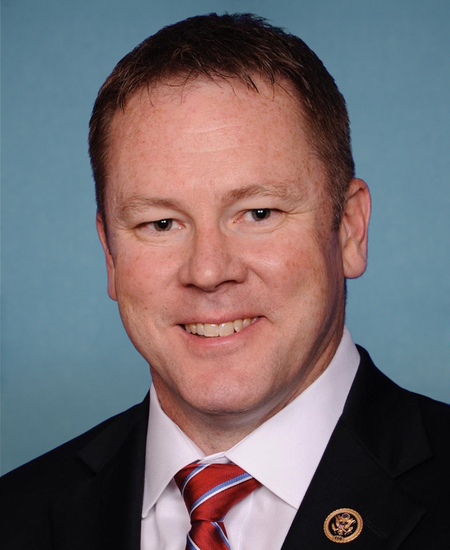
Photo of Warren Davidson
R United States House · District 8 · Ohio On the 2026 ballot

Rep. Warren Davidson

Compare
Total votes
2,837
all sessions
Attendance
98%
50 missed
Near the chamber average
With party
86%
of cast votes
Lower than 95% of chamber peers
Bipartisan score
7%
crosses aisle rarely
Higher than 94% of chamber peers
Sponsored
723
bills & resolutions
Near the chamber average
Committees
7
assignments
723 bills and resolutions

Sponsored bills

Total
723
Primary
104
Co-sponsor
619
This page
723
matching current filters
Co-sponsor HJRES 163
In committee · United States House · Co-sponsor
Providing for congressional disapproval under chapter 8 of title 5, United States Code, of the rule submitted by the Environmental Protection Agency relating to "New Source Performance Standards for Greenhouse Gas Emissions From New, Modified, and Reconstructed Fossil Fuel-Fired Electric Generating Units; Emission Guidelines for Greenhouse Gas Emissions From Existing Fossil Fuel-Fired Electric Generating Units; and Repeal of the Affordable Clean Energy Rule".

Maddy summaryThis bill (HJRES 163) is a congressional disapproval resolution targeting an Environmental Protection Agency (EPA) rule finalized on May 9, 2024. The EPA rule established new emissions standards for greenhouse gases from fossil fuel power plants (both new and existing) and repealed a previous rule called the Affordable Clean Energy Rule. The resolution would block this EPA rule from taking effect by invoking the Congressional Review Act (Chapter 8 of Title 5, U.S. Code). If passed, it would prevent the EPA rule from being enforced, directly affecting fossil fuel power plant operators and the EPA’s regulatory authority over emissions.

In committee Sep 18, 2024 1 co-sponsor
Co-sponsor HR 1425
Passed · United States House · Co-sponsor
No WHO Pandemic Preparedness Treaty Without Senate Approval Act

Maddy summaryHR 1425, the "No WHO Pandemic Preparedness Treaty Without Senate Approval Act," requires the U.S. Senate to approve any World Health Organization (WHO) pandemic preparedness treaty through a two-thirds vote. The bill deems any convention, agreement, or international instrument on pandemic prevention drafted by the WHO’s International Negotiating Body (INB) as a treaty subject to Senate ratification, rather than allowing it to take effect as an executive agreement. This directly affects U.S. foreign policy implementation regarding WHO agreements, ensuring Congress has a formal role in approving such binding international commitments. The bill stems from congressional concerns about WHO’s pandemic response and public skepticism toward the organization, as outlined in its findings.

Passed Sep 17, 2024 1 co-sponsor
Primary HR 9518
In committee · United States House · Lead sponsor
BRAVE Act of 2024

Maddy summaryThe BRAVE Act of 2024 modifies federal tax law to exclude pay received by active-duty military members while deployed outside the United States from their gross income for tax purposes. This directly affects all enlisted personnel and commissioned officers serving in designated deployments abroad, making their deployment pay tax-free. The bill replaces the outdated term "combat zone" with "deployment" throughout the tax code and updates definitions to align with current military operations. It also removes obsolete references to the Vietnam conflict, streamlining the tax treatment for deployed service members.

In committee Sep 10, 2024 0 co-sponsors
Primary HR 510
Passed · United States House · Lead sponsor
Chinese Currency Accountability Act of 2023

Maddy summaryThis bill directs the U.S. to oppose any increase in the Chinese renminbi's weight within the International Monetary Fund's (IMF) currency basket (Special Drawing Rights) unless specific conditions are met. The Treasury Secretary must certify that China complies with IMF rules, hasn't manipulated its currency in the past year, has policies enabling a "freely usable" renminbi, and follows international debt and export credit standards. If these conditions aren't certified, the U.S. will vote against raising the renminbi's role in the IMF basket. The provision expires 10 years after the bill's enactment.

Passed Sep 10, 2024 0 co-sponsors
Co-sponsor HR 9503
In committee · United States House · Co-sponsor
Protecting Taxpayer Dollars from Taliban Theft Act

Maddy summaryThis bill requires U.S. agencies to prevent taxpayer funds from indirectly supporting the Taliban in Afghanistan. It mandates that State Department and USAID implement new reporting rules for aid recipients, requiring them to track and report all payments (including taxes, fees, and duties) made to the Taliban or Afghan government entities. Agencies must create these rules within 180 days and amend existing contracts to ban such payments. Recipients must submit detailed reports to Congress every six months, identifying who paid, to whom, and the amount.

In committee Sep 9, 2024 1 co-sponsor
Co-sponsor HR 4763
Passed · United States House · Co-sponsor
Financial Innovation and Technology for the 21st Century Act

Maddy summary# Summary of Proposed Digital Assets and Financial Technology Legislation This comprehensive legislation establishes a new regulatory framework for digital assets and financial technology in the United States, creating a balanced approach that promotes innovation while protecting consumers and maintaining market integrity. Key components include: 1. **Digital Asset Regulatory Structure**: - New requirements for digital commodity exchanges, including transparency standards, customer asset protection, and operational safeguards - Qualified digital commodity custodians with specific regulatory requirements - Digital commodity brokers and dealers with registration and operational standards 2. **New Regulatory Bodies**: - FinHub (Strategic Hub for Innovation and Financial Technology) within the SEC to foster responsible innovation - LabCFTC within the CFTC to serve as an information platform for financial technology innovation - CFTC-SEC Joint Advisory Committee on Digital Assets to promote regulatory harmonization 3. **Mandatory Studies**: - Study on decentralized finance (DeFi) examining its nature, risks, benefits, and integration with traditional markets - Study on non-fungible digital assets (NFTs) analyzing their market structure, benefits, and risks - Study on financial market infrastructure improvements to facilitate tokenized securities and derivatives 4. **Modernization of Regulatory Approach**: - Updates to SEC's mission to explicitly include "innovation" alongside "efficiency" - Enhanced information sharing between agencies - Clearer definitions of ancillary activities that don't require full regulatory registration The legislation aims to create a regulatory environment that encourages responsible innovation in digital assets while maintaining market integrity, consumer protection, and financial stability. It establishes a comprehensive framework for regulating digital commodities as a distinct asset class with specific requirements for market participants.

Passed Sep 9, 2024 1 co-sponsor
Co-sponsor HJRES 167
In committee · United States House · Co-sponsor
Disapproving the rule submitted by the Department of Agriculture relating to "Use of Electronic Identification Eartags as Official Identification in Cattle and Bison".

Maddy summaryHJRES 167 cancels a U.S. Department of Agriculture rule that would have allowed electronic eartags as official identification for cattle and bison. The resolution directs that the rule published in the Federal Register on May 9, 2024 (89 Fed. Reg. 39540), has no force or effect. This directly affects ranchers and farmers who would have been required to use electronic identification systems for livestock. The bill halts the implementation of this specific regulatory change without creating new requirements.

In committee Sep 3, 2024 1 co-sponsor
Primary HR 8757
In committee · United States House · Lead sponsor
REAL Meat Act of 2024

Maddy summaryHR 8757, the REAL Meat Act of 2024, prohibits federal funding for cell-cultured meat production, research, promotion, or related facilities. It directly affects federal programs, agencies, and recipients of agricultural funding by banning the use of taxpayer money for any activity involving lab-produced meat. The bill defines cell-cultured meat as meat grown from animal cells in a lab and exempts NASA funding intended for space consumption. This policy change restricts federal support for the emerging cell-cultured meat industry while allowing specific space-related research.

In committee Aug 8, 2024 0 co-sponsors
Primary HR 9248
In committee · United States House · Lead sponsor
Railroad Responsibility Act of 2024

Maddy summaryThis bill allows states to set rules limiting how long railroads can block highway-rail grade crossings without federal preemption. It amends federal law to explicitly state that states (including D.C.) can adopt their own laws or regulations controlling the duration of such blockages. The key change removes a potential federal barrier, giving states direct authority to address traffic disruptions caused by extended railroad blockages at crossings. This directly affects railroad carriers operating in states that choose to implement such rules.

In committee Aug 3, 2024 0 co-sponsors
Co-sponsor HJRES 127
In committee · United States House · Co-sponsor
Providing for congressional disapproval under chapter 8 of title 5, United States Code, of the rule submitted by the Securities and Exchange Commission relating to "The Enhancement and Standardization of Climate-Related Disclosures for Investors".

Maddy summaryHJRES 127 is a congressional disapproval resolution targeting a Securities and Exchange Commission (SEC) rule requiring public companies to standardize climate-related financial disclosures. It seeks to block the SEC’s March 2024 rule (89 Fed. Reg. 21668), which would mandate consistent reporting on climate risks for investors. If passed, this resolution would prevent the SEC rule from taking effect, directly affecting publicly traded companies required to comply with the proposed disclosure standards. The bill uses a specific congressional process under Title 5, U.S. Code, to nullify the rule without creating new regulations.

In committee Jul 30, 2024 1 co-sponsor
Showing 261 to 270 of 723 bills
Previous 1 … 26 27 28 … 73 Next