

Maddy summaryThis bill requires cabinet secretaries (like the Secretary of Defense or Health Secretary) to notify Congress in writing within 24 hours if they cannot perform their duties. It applies to all cabinet members whose appointments require Senate confirmation. If a secretary cannot notify due to a medical emergency or other urgent situation, their agency must submit the notice instead. The law aims to ensure Congress is promptly informed about temporary leadership gaps in major federal departments.
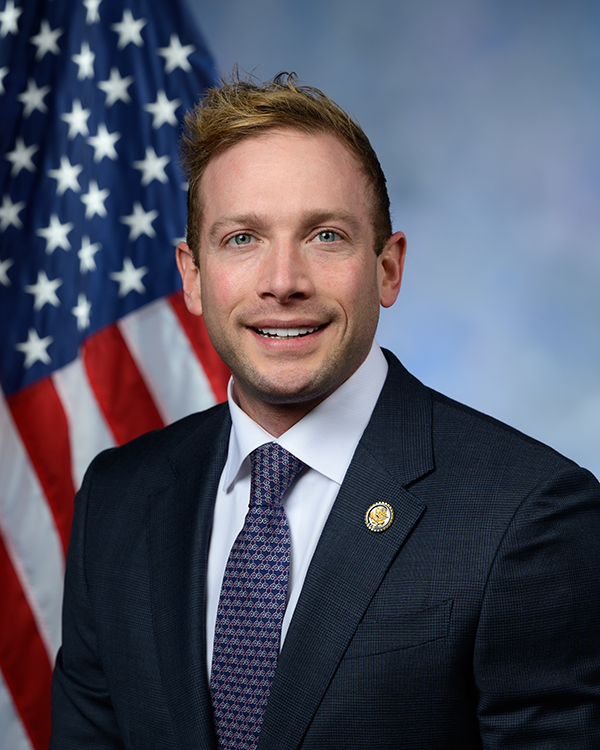
Rep. Max L. Miller
Sponsored bills
Maddy summaryThe Affordable Connectivity Program Extension Act of 2024 allocates $7 billion in funding for the Affordable Connectivity Program (ACP) during fiscal year 2024. The ACP provides subsidies to low-income households to help cover the cost of internet service and connected devices like laptops or tablets. This funding ensures the program can continue supporting eligible households throughout the year, with the money remaining available until fully spent. The bill extends existing program funding without changing eligibility criteria or service requirements.
Maddy summaryThe Bipartisan Workforce Pell Act creates a new grant program providing financial aid to students enrolled in short-term, career-focused educational programs (150-600 clock hours, 8-15 weeks) that prepare students for high-demand jobs. To qualify, programs must meet specific standards including alignment with industry needs, minimum job placement rates of 70%, and median earnings that exceed local wage benchmarks. The bill requires institutions to collect and publicly report data on program outcomes including completion rates, job placement, and student earnings through the College Scorecard website. It also establishes new accreditation standards for agencies evaluating these workforce programs, with $40 million authorized for fiscal year 2025 and $30 million for each of the next four years.
Maddy summaryThe TRANQ Research Act of 2023 requires the National Institute of Standards and Technology (NIST) to coordinate research on illicit drugs containing xylazine, novel synthetic opioids, and other concerning substances. The bill mandates NIST to develop faster detection methods, create data tools for identifying these substances, and consult with agencies like the DEA, CDC, and National Institute on Drug Abuse to establish safe handling practices. NIST must also form partnerships with universities, federal labs, and the private sector to improve detection capabilities. Within one year, NIST must report to Congress on its implementation, and the Comptroller General must conduct a study on federal capabilities to respond to new psychoactive substances, reporting within two years.
Maddy summaryHR 1147, the Whole Milk for Healthy Kids Act of 2023, allows schools participating in the National School Lunch Program to offer whole milk as an option during lunch. It amends the school lunch law to explicitly permit schools to serve flavored and unflavored whole milk alongside reduced-fat, low-fat, and fat-free milk choices for students. The bill also requires the Secretary of Agriculture to adjust meal regulations to account for saturated fat from whole milk, ensuring it doesn't count against meal fat limits. This change directly affects participating schools and the students who receive school lunches, expanding their milk beverage options.
Maddy summaryHR 6762, the Protecting American Advanced Manufacturing Act, blocks tax credits for manufacturing components produced by companies linked to foreign adversaries (like China or Russia). It prohibits the Advanced Manufacturing Production Credit under tax code section 45X for any component made by a "disqualified entity," defined as companies with 10%+ ownership by foreign adversaries, subject to their control, or involved in prohibited financial arrangements (like debt or leases). This directly affects manufacturers relying on components from such entities, requiring them to source domestically or from non-adversary suppliers to qualify for the credit. The law takes effect for taxable years after its enactment, with the IRS given authority to establish implementation rules.
Maddy summaryThe NASA Talent Exchange Program Act (HR 6771) creates a formal process for temporarily swapping employees between NASA and private sector organizations. It allows NASA employees to work at private companies for up to two years (renewable to a total of three years), or private sector employees to work at NASA, with strict requirements: NASA employees must return to federal service for double the assignment period, and both parties must sign agreements prohibiting misuse of confidential information. The program includes safeguards like a 2% cap on NASA staff participating simultaneously, prohibitions against circumventing workforce rules, and mandatory annual reports to Congress on participation and impacts. The bill also requires NASA to implement ethics protocols and report on how assignments align with mission goals.
Maddy summaryThe STATES 2.0 Act would allow states to regulate cannabis according to their own laws without federal interference, while establishing a federal framework for interstate commerce. It would create a federal excise tax on marijuana to support regulation without adding excessive costs to consumers, and would require the FDA to regulate marijuana products as drugs, food, or cosmetics. The bill would exempt state-legal cannabis activities from federal prohibition, including removing cannabis from the federal controlled substances schedule when sold in compliance with state law. It would also allow federally recognized tribes to regulate cannabis within their jurisdictions under tribal law, and would require a study on how cannabis legalization affects traffic safety.
Maddy summaryThis bill amends the Clean Air Act to explicitly include "fuel for ocean-going vessels" in the definition of fossil fuel used for regulatory purposes. It directly affects ocean shipping companies and the Environmental Protection Agency (EPA), as the EPA must create new regulations within one year to implement this change. The key provision expands existing Clean Air Act requirements to cover marine fuels, requiring the EPA to promulgate regulations and submit a report to Congress within 365 days of final rulemaking. The bill does not mandate specific fuel types but adjusts regulatory scope to include ocean vessels.
Maddy summaryThis bill prohibits legislative branch offices (like congressional offices) from using federal funds to acquire or display any flag or pennant other than the U.S. flag, a state/territory/possession flag, or the POW-MIA flag. It allows displays of state flags, government department flags, and military flags under specific exceptions. The rule applies to all legislative branch offices starting in fiscal year 2024 and does not restrict the use of non-federal funds for other displays. This is a procedural rule affecting flag displays in federal legislative offices, not a substantive policy change.