

Religious Exemptions for Social Security and Healthcare Taxes Act This bill allows taxpayers who have a religious objection to participation in the Social Security system a credit or refund of employment taxes deducted to fund benefits under such system.
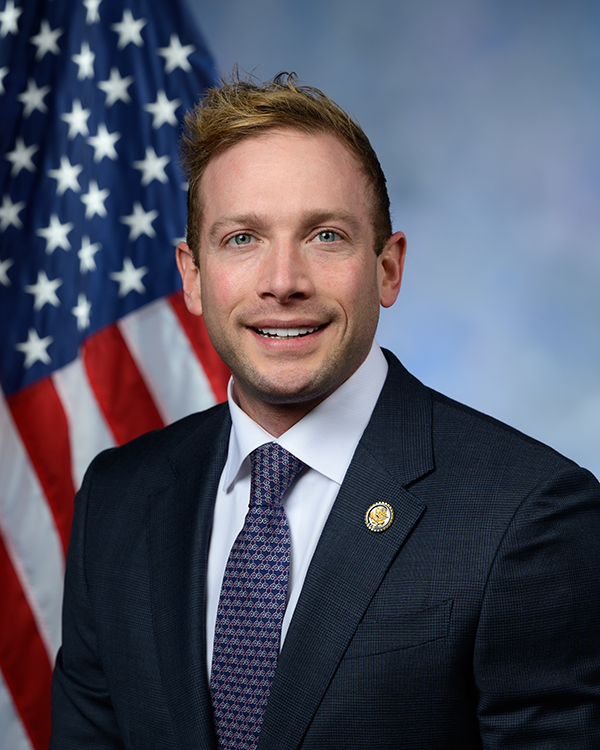
Rep. Max L. Miller
Sponsored bills
Maddy summaryHR 537 authorizes a Congressional Gold Medal to honor 60 diplomats who saved Jewish lives during the Holocaust by issuing visas and passports against their governments' orders, risking expulsion and personal danger. The medal will be presented to the next of kin of these diplomats, alongside representatives from their home countries, and permanently displayed at the United States Holocaust Memorial Museum. The bill also permits the sale of bronze duplicates to cover production costs, with proceeds going to the U.S. Mint. This legislation recognizes the diplomats' humanitarian actions without creating new government programs or altering existing laws.
Maddy summaryHRES 965 is a non-binding resolution calling for the immediate release of Ryan Corbett, a U.S. citizen wrongfully detained by the Taliban in Afghanistan since August 2022. It directly affects Corbett (held in poor conditions without charges) and other Americans detained by the Taliban. The resolution demands the Taliban release Corbett unconditionally, urges respect for his human rights, commends Qatar’s role as U.S. protecting power, and condemns the Taliban’s practice of detaining U.S. citizens. It does not create new law but formally expresses congressional support for Corbett and other wrongfully detained Americans.
Maddy summaryThis bill (HR 8644) amends the Water Resources Development Act of 2022 to expand eligibility for federal funding for harbor projects in underserved communities. It clarifies that "projects" include single-cycle maintenance dredging, beneficial dredged material placement, or breakwater maintenance at these harbors, regardless of prior federal authorization. The bill also mandates that at least 25% of annual funds for these projects must support harbors in the Great Lakes Navigation System. This directly affects small, underserved coastal communities seeking federal assistance for harbor maintenance and infrastructure.
Maddy summaryHRES 1255 is a non-binding House resolution introduced on May 23, 2024, that calls on all Americans to observe Memorial Day 2024 as a day of remembrance for military personnel who died in service. The resolution specifically honors "the men and women of the Armed Forces who have died in the pursuit of freedom and peace" and urges the public to demonstrate appreciation for their sacrifices. It does not create new laws or policies but serves as a symbolic expression of national gratitude, emphasizing respect for those who died while defending democratic values. The resolution was co-sponsored by multiple House members and aligns with the traditional observance of Memorial Day.
Maddy summaryHR 7581 requires the Attorney General to submit three new reports within 270 days of enactment, focusing on data gaps affecting law enforcement safety. The bill mandates a detailed analysis of violent attacks against officers (including ambushes), non-criminal aggressive incidents not currently reported, and mental health impacts from such events. These reports will assess current data collection systems, training effectiveness, resource availability, and disparities in reporting across federal, state, and local law enforcement. The goal is to inform better prevention strategies and resource allocation for officer safety and wellness, without creating new funding or programs.
Maddy summaryHRES 1226 is a non-binding resolution honoring 282 law enforcement officers killed in the line of duty during 2023, listed by name in the resolution. It formally acknowledges their sacrifice, expresses unwavering support for current officers, and recognizes the need for adequate resources to protect them. The resolution does not create new laws or policies but serves as a ceremonial tribute to memorialize fallen officers and support their families, aligning with existing National Police Week observances established since 1962.
Maddy summaryHR 7109, the Equal Representation Act, requires the U.S. Census Bureau to add a citizenship status checkbox to the 2030 and future decennial censuses, asking respondents to identify if they are U.S. citizens, U.S. nationals, lawful residents, or unlawful residents. It then mandates excluding noncitizens (both lawful and unlawful residents) from the population count used to determine each state's number of congressional seats and electoral votes starting with the 2030 census. This bill directly affects how states are apportioned representation in Congress and presidential electoral votes, based solely on the citizen population. The key change is shifting the apportionment base from total population to citizen population alone, using the new census data.
Maddy summaryHRES 1219 is a symbolic House resolution condemning President Biden's pause on certain arms transfers to Israel, which the resolution states occurred without consulting Congress. It specifically references the administration's reported decision to halt defense articles ready for imminent delivery to Israel, amid ongoing threats from Iran and its proxies. The resolution calls on the administration to resume all previously approved arms transfers and fully utilize congressionally appropriated security funds for Israel. As a non-binding resolution, it does not change policy but expresses congressional disapproval of the pause.
Maddy summaryThis bill amends federal law to simplify interstate firearm transfers. It replaces "rifle or shotgun" with "firearm" in transfer rules, allowing all firearms to be treated uniformly. The key change permits licensed dealers to sell firearms to other licensed dealers anywhere in the U.S., and lets licensed sellers transfer firearms to unlicensed buyers at temporary locations (like gun shows) in any state. It also updates residency definitions for military members and federal employees stationed across state lines, clarifying which state they're considered residents of for firearm purposes. The bill directly affects licensed firearm dealers, military personnel, and federal employees who travel between states.