This bill designates the facility of the United States Postal Service located at 3493 Burnet Avenue in Cincinnati, Ohio, as the John H. Leahr and Herbert M. Heilbrun Post Office.
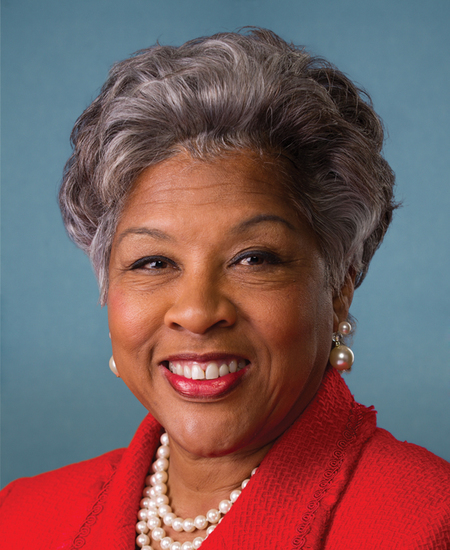
Rep. Joyce Beatty
Sponsored bills
This concurrent resolution condemns violence and threats of violence against historically Black colleges and universities (HBCUs) and reaffirms the federal government's commitment to combating violence against HBCU students, faculty, and staff.
Maternal and Child Health Stillbirth Prevention Act of 2022 This bill expands the scope of the Maternal and Child Health Services Block Grant to include research and activities to prevent stillbirths.
Maddy summaryThe Harriet Tubman Day Act would add "Harriet Tubman Day" to the list of federal holidays for U.S. government employees, as specified in Section 6103(a) of Title 5 of the U.S. Code. This bill does not establish a specific date for the holiday but would insert it into the existing federal holiday schedule, following Washington's Birthday. It directly affects federal employees, who would receive a paid day off on this new holiday, and federal agencies, which would close on that day. The bill is procedural, focusing solely on naming the holiday without altering other holiday dates or creating new obligations.
Maddy summaryHRES 971 is a non-binding resolution expressing the House of Representatives' view that corporations should prioritize gender diversity in leadership. It cites multiple studies showing that companies with more women on boards and in senior roles often achieve better financial performance, higher investor confidence, and more stable growth. The resolution does not impose new requirements on corporations but formally states that fuller inclusion of women in corporate leadership strengthens economic growth. It specifically references data on underrepresentation (e.g., women holding only 30% of S&P 500 board seats in 2020) and the benefits linked to diverse leadership teams.
This resolution condemns the terrorist attack on Congregation Beth Israel in Colleyville, Texas, on January 15, 2022. It also expresses support for the affected community, commends the actions of law enforcement and emergency responders, and reaffirms a commitment to combat hate, bigotry, anti-Semitism, and violence against Jewish Americans.
Job Protection Act This bill reduces from 12 months to 90 days the employment period required for employees (including federal employees) to become eligible for family and medical leave. Additionally, the bill makes the family and medical leave requirements applicable to all employers (currently, the requirements apply to employers with 50 or more employees).
Ending Forced Arbitration of Sexual Assault and Sexual Harassment Act of 2021 This bill invalidates arbitration agreements that preclude a party from filing a lawsuit in court involving sexual assault or sexual harassment, at the election of the party alleging such conduct.
Maddy summaryHRES 952 is a resolution expressing the U.S. House of Representatives' support for designating February 28, 2022, as "Rare Disease Day." It recognizes that rare diseases affect fewer than 200,000 people in the U.S. and that over 7,000 such conditions impact approximately 1 in 10 Americans. The resolution calls for improved awareness, earlier diagnosis, and support for developing treatments, diagnostics, and cures for rare diseases. As a symbolic gesture, it does not create new laws, funding, or direct policy changes but aims to highlight challenges faced by individuals with rare diseases and their families.
Women's Health Protection Act of 2021 This bill prohibits governmental restrictions on the provision of, and access to, abortion services. Specifically, governments may not limit a provider's ability to prescribe certain drugs, offer abortion services via telemedicine, or immediately provide abortion services when the provider determines a delay risks the patient's health. Furthermore, governments may not require a provider to perform unnecessary medical procedures, provide medically inaccurate information, comply with credentialing or other conditions that do not apply to providers whose services are medically comparable to abortions, or carry out all services connected to an abortion. In addition, governments may not (1) require patients to make medically unnecessary in-person visits before receiving abortion services or disclose their reasons for obtaining such services, or (2) prohibit abortion services before fetal viability or after fetal viability when a provider determines the pregnancy risks the patient's life or health. The bill also prohibits other governmental measures that are similar to the bill's specified restrictions or that otherwise single out and impede access to abortion services, unless a government demonstrates that the measure significantly advances the safety of abortion services or health of patients and cannot be achieved through less restrictive means. The Department of Justice, individuals, or providers may bring a lawsuit to enforce this bill, and states are not immune from suits for violations. The bill applies to restrictions imposed both prior and subsequent to the bill's enactment.