Disarm Hate Act The bill expands the categories of persons who are prohibited from receiving or possessing a firearm. Specifically, it prohibits firearm sale or transfer to and receipt, possession, shipment, or transport by a person (1) who has been convicted of a misdemeanor hate crime, or (2) who has received an enhanced hate crime misdemeanor sentence.
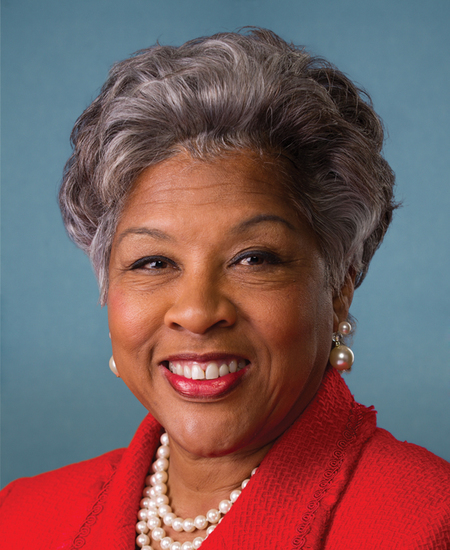
Rep. Joyce Beatty
Sponsored bills
Eviction Prevention Act of 2021 This bill authorizes the Department of Justice to provide grants to state and local governments to make legal counsel available to eligible tenants undergoing eviction proceedings. An eligible tenant is an individual whose income is less than 125% of the federal poverty level. The bill also requires the Department of Housing and Urban Development to establish a national database of evictions. The Government Accountability Office must report on the national status of legal representation of tenants in eviction proceedings, including the effects of access to representation on case outcomes.
Menstrual Equity For All Act of 2021 This bill expands access to free sanitary napkins and tampons (i.e., menstrual products) in certain locations and for particular groups. It also requires Medicaid to cover menstrual products, as well as liners, cups, and similar items used by individuals with respect to menstruation. Specifically, the bill imposes requirements to make free menstrual products available in federal and state correctional facilities (including facilities that house aliens detained by the Department of Homeland Security) and restrooms in federal buildings that are open to the public. It also establishes a demonstration grant program to support the provision of free menstrual products on campuses of institutions of higher education and permits elementary and secondary schools to use certain grants to provide menstrual products to students. Furthermore, the bill requires employers with at least 100 employees to provide free menstrual products for employees. It also permits the use of certain grants for emergency food and shelter to provide menstrual products to homeless individuals.
Extreme Risk Protection Order Act of 2021 This bill establishes grants to support the implementation of extreme risk protection order laws at the state and local levels, extends federal firearms restrictions to individuals who are subject to extreme risk protection orders, and expands related data collection. Extreme risk protection order laws, or red flag laws, generally allow certain individuals (e.g., law enforcement officers or family members) to petition a court for a temporary order that prohibits an at-risk individual from purchasing and possessing firearms. Among its provisions, the bill directs the Office of Community Oriented Policing Services within the Department of Justice to establish a grant program to help states, local governments, Indian tribes, and other entities implement extreme risk protection order laws; extends federal restrictions on the receipt, possession, shipment, and transportation of firearms and ammunition to individuals who are subject to extreme risk protection orders; and requires the Federal Bureau of Investigation to compile (and later destroy) records from federal, tribal, and state courts and other agencies that identify individuals who are subject to extreme risk protection orders.
Tulsa-Greenwood Massacre Claims Accountability Act of 2021 This bill provides a cause of action for the victims of the 1921 race massacre that occurred in the Greenwood community of Tulsa, Oklahoma. Specifically, any person who acted under color of authority of the State of Oklahoma or the City of Tulsa to deprive a victim, on account of race, of any constitutional right secured to the victim at that time shall be liable to the victim or the victim's beneficiary or heir in a civil action for compensation.
Endowment Transparency Act This bill requires certain actions regarding institutions of higher education (IHEs) and the management of their assets. Specifically, the bill requires the Department of Education to annually update the College Navigator website with information on the assets of IHEs, including information about investments with minority- or women-owned firms. The bill also requires the Minority Business Development Agency to (1) report on recommended changes for substantially increasing the use of minority- or women-owned firms in the investment and bond transactions of IHEs, and (2) convene a conference every five years.
Major Richard Star Act This bill provides that combat-disabled uniformed services retirees with fewer than 20 years of creditable service may concurrently receive, without reduction, veterans' disability compensation and retired pay or combat-related special compensation.
Ralph David Abernathy, Sr. National Historic Site Act This bill establishes the Ralph David Abernathy, Sr. National Historic Site in Georgia as a unit of the National Park System. The site shall preserve, protect, and interpret the area where the Reverend Dr. Abernathy served as pastor during the height of the modern civil rights movement and his role as an internationally recognized civil rights leader.
This bill designates the facility of the United States Postal Service located at 3900 Crown Road Southwest in Atlanta, Georgia, as the John R. Lewis Post Office Building.
Expanding Representation at HHS Act of 2022 This bill requires certain agencies and offices within the Department of Health and Human Services to address diversity in their procurement activities and workforce. The bill specifically covers offices and agencies that are authorized to award grants or other financial assistance, such as the Centers for Medicare & Medicaid Services and the Centers for Disease Control and Prevention. Each covered entity must establish an Office of Minority and Women Inclusion that is responsible for managing diversity within the entity and with respect to the entity's activities. This new office is not, however, responsible for enforcing civil rights statutes, regulations, or executive orders. In addition, an entity subject to the bill's requirements must modify its evaluation, award, and termination of grants and contracts to ensure, to the maximum extent feasible, the inclusion of minorities; women; and minority-led and women-led grantees, contractors, subgrantees, and subcontractors. Each entity must also undertake actions to increase diversity in its workforce, including by recruiting at institutions of higher education where the majority of the students are members of minority populations.