

Maddy summaryThis bill amends tax law to allow charitable organizations to fund collegiate housing projects without losing their tax-exempt status. Specifically, it permits 501(c)(3) charities to make grants for building, improving, or maintaining housing properties where full-time students live, as long as the housing is connected to a college or university. Grants cannot fund fitness facilities, and the bill clarifies that housing must primarily serve students (not incidental social activities). It directly affects charitable organizations and universities seeking tax-qualified funding for student housing infrastructure.
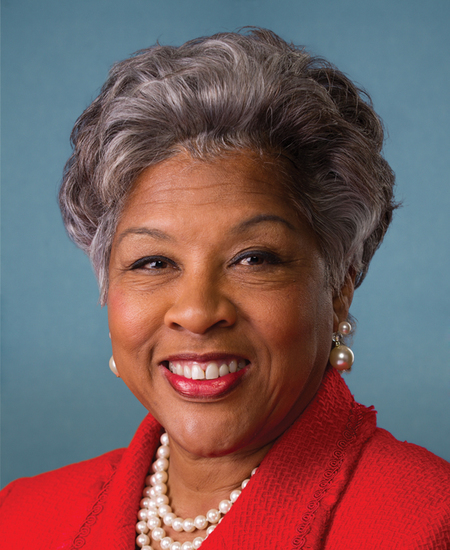
Rep. Joyce Beatty
Sponsored bills
Maddy summaryHRES 291 is a symbolic resolution supporting "Financial Literacy Month" to raise public awareness about the importance of personal financial education in the U.S. It cites statistics showing widespread challenges with financial literacy, such as 18.6% of households being unbanked or underbanked and only 44% of adults having a budget. The resolution urges federal, state, local governments, schools, nonprofits, and businesses to observe Financial Literacy Month with educational programs. It does not create new laws or funding but emphasizes the need for better financial education to help individuals manage money, credit, and debt.
Maddy summaryHRES 290 is a symbolic resolution (not a law) introduced on April 13, 2023, that formally supports National Deaf History Month in April. It recognizes the contributions of deaf and hard-of-hearing individuals in the U.S. (citing a 2017 estimate of 11.2 million people affected) and references key milestones like the founding of the American School for the Deaf (1817) and Gallaudet University (1864). The resolution encourages the public to observe the month with activities but does not create new policies or affect any specific group directly. As a non-binding measure, it serves only to raise awareness and honor historical contributions.
Maddy summaryHR 2584, the SAVE Act, creates a new federal criminal offense for assaulting or intimidating hospital employees while they're performing their duties, punishable by up to 10 years in prison, with enhanced penalties for using weapons, causing injury, or during public emergencies. The bill authorizes $25 million annually in federal grants to hospitals for violence prevention programs, including staff training, security technologies like panic buttons and video surveillance, and coordination with law enforcement. It defines "hospital" broadly to include various medical facilities such as long-term care hospitals, rehabilitation facilities, and critical access hospitals. The legislation directly affects hospital workers and medical facilities by establishing federal criminal penalties for violence against employees and providing funding to improve workplace safety. The law aims to address the rising problem of workplace violence against healthcare workers, which the bill states has increased since 2011.
Maddy summaryHR 2630, the Safe Step Act, requires group health plans and health insurance issuers to establish a clear, transparent process for patients or their doctors to request exceptions to medication step therapy protocols. These protocols typically force patients to try cheaper drugs first before covering more expensive alternatives. The bill mandates that plans must approve exceptions when prior treatments failed, delay would cause serious harm, a treatment is unsafe, or a patient is stable on a previously approved drug, with strict 72-hour (or 24-hour in emergencies) decision timelines. It also requires plans to publish the exception process online and limit documentation requests to only necessary medical information. This law directly affects health insurers, employers offering health plans, and patients using step therapy for prescription drugs.
Stop the Import of Fentanyl Act of 2023 This bill establishes within the Drug Enforcement Administration a National Center to Stop the Import of Illicit Synthetic Drugs.
Expanding Opportunities for Diverse Entrepreneurs Act This bill requires the Department of Transportation (DOT) Disadvantaged Business Enterprise (DBE) program and recipients of assistance from the program to analyze and report on the program. The DBE program seeks to offer small disadvantaged businesses (i.e., certified as owned and controlled by socially and economically disadvantaged individuals) a fair opportunity to compete for federally funded transportation contracts. The bill requires the DBE liaison officers to track and provide an analysis of all efforts to expand knowledge of services and opportunities available (e.g., minimum outreach, training, and online development support) to non-certified and certified DBEs to increase an enterprise's ability to compete for, and perform on, federally funded transportation contracts; DOT to publicly post online a searchable and exportable version of the Uniform Report of DBE Awards/ Commitments and Payments for each state; and DOT to submit an annual report to Congress on the DBE program.
Maddy summaryHR 2439, the Ally’s Act, requires most private health insurance plans to cover hearing-related services and devices for qualifying individuals. It mandates coverage for cochlear implants, bone conduction devices, maintenance, upgrades every five years, hearing assessments, surgery, and rehabilitation, without separate cost-sharing or medical necessity reviews. This directly affects people with hearing loss who need implantable devices, as defined by a physician or audiologist. The law applies to group health plans under the Public Health Service Act, ERISA, and Internal Revenue Code, taking effect for plan years beginning January 1, 2025.
Resident Physician Shortage Reduction Act of 2023 This bill increases the number of residency positions eligible for graduate medical education payments under Medicare for qualifying hospitals, including hospitals in rural areas and health professional shortage areas. Current law provides for an increase of up to 200 positions per fiscal year beginning in FY2023, with a total increase of 1,000 positions; each hospital may receive up to 25 additional positions. Current law also provides for an additional increase of up to 200 positions for FY2026, with at least 100 of these positions for psychiatry or related specialties; each hospital may receive up to 10 additional positions. The bill provides for an additional increase of 2,000 positions per fiscal year from FY2025-FY2031; during this period, each hospital may receive up to 75 additional positions in total under the bill and current law. Additionally, one-third of the positions that are made available under the bill must be allocated to hospitals that are already operating above applicable resident limits. The bill also requires the Government Accountability Office to report on strategies to increase the diversity of the health professional workforce, including with respect to representation from rural, low-income, and minority communities.
Maddy summaryThe Women's Health Protection Act of 2023 would protect access to abortion services by prohibiting states from imposing restrictions that are more burdensome than those for comparable medical procedures. The bill would ensure people can obtain abortion services before fetal viability without unnecessary limitations like mandatory waiting periods or biased counseling, and after viability when necessary to protect the patient's life or health. It would preempt state laws that conflict with these protections and allow for civil enforcement actions to challenge restrictive state laws. This bill directly affects people seeking abortion services (including transgender and nonbinary individuals who can become pregnant), health care providers, and states that have implemented abortion restrictions.