

Maddy summaryThe Ending Homelessness Act of 2023 would expand housing assistance for low-income families by creating a new entitlement program for housing choice vouchers starting in 2028, with 500,000 new vouchers in 2024 and 1,000,000 annually through 2027. It would provide $1 billion annually for emergency relief grants to address unmet needs of homeless populations, prioritizing jurisdictions with the highest need and local policies that decriminalize homelessness. The bill prohibits housing discrimination based on source of income, including rental vouchers and Social Security benefits, and repeals current ineligibility criteria for housing programs. It also permanently authorizes funding for McKinney-Vento Homeless Assistance Act grants and expands eligibility for private nonprofit and faith-based organizations to receive housing assistance. The bill directly affects extremely low-income families, homeless individuals, and housing providers by increasing access to affordable housing and reducing barriers to housing stability.
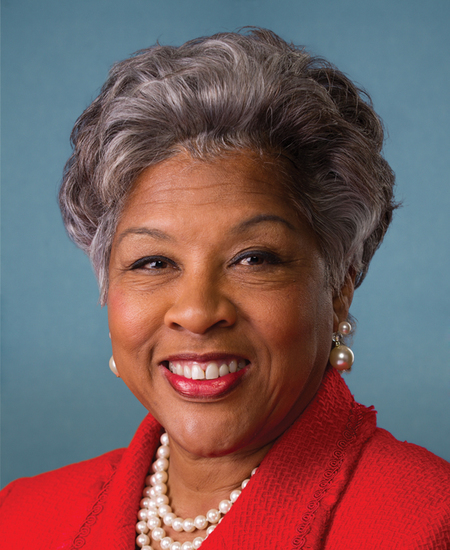
Rep. Joyce Beatty
Sponsored bills
Maddy summaryThe Housing Crisis Response Act of 2023 authorizes over $100 billion in funding for housing programs, including $10 billion for public housing capital improvements, $9.9 billion for the HOME Investment Partnerships Program, and $1.77 billion for energy efficiency improvements in affordable housing. It creates new down payment assistance programs for first-time and first-generation homebuyers, expands housing vouchers for vulnerable populations including those experiencing homelessness, and establishes new requirements for accessible housing units. The bill mandates that many housing projects maintain affordability for at least 20 years and includes specific provisions for rural housing, Native American communities, and lead-based paint hazard control. It also creates a new Housing Investment Fund to support affordable housing development and preservation, primarily for low-, very-low, and extremely low-income renters.
Maddy summaryThe Downpayment Toward Equity Act of 2023 creates a federal program to provide down payment assistance to first-generation homebuyers, defined as individuals whose parents did not own a home. The program would provide grants to states (75% of funds) and eligible entities (25% on competitive basis) to help cover down payments, closing costs, and mortgage interest reductions, with maximum assistance of $20,000 or 10% of purchase price. To qualify, homebuyers must have household income up to 120-140% of median area income, be first-time homebuyers, and meet the "first-generation" definition. States must comply with fair housing requirements, and recipients must repay assistance if they don't occupy the home as their primary residence within five years, with exceptions for hardship.
Maddy summaryThe Equality Act (HR 15) would amend federal civil rights laws to explicitly prohibit discrimination based on sexual orientation and gender identity in public accommodations, housing, employment, credit, and jury service. It amends the Civil Rights Act of 1964 to include sexual orientation and gender identity as protected characteristics under existing sex discrimination provisions. The bill would require businesses, housing providers, employers, and government entities to provide equal access and services without regard to a person's sexual orientation or gender identity. It includes specific definitions for gender identity and sexual orientation to clarify protections across all covered areas. The law would apply to all entities covered by the Civil Rights Act of 1964, including those receiving federal funding.
Maddy summaryHR 4209, the Incentivizing Safe and Sound Banking Act, prohibits senior executives at large banks from selling securities they received as compensation if the bank faces regulatory issues. It directly affects senior executives at bank holding companies, bank subsidiaries, or banks with over $50 billion in assets that receive a poor regulatory rating (3-5) or fail to resolve issues noted by regulators within a deadline. The bill automatically blocks such stock sales until the bank fixes the problem to the regulator's satisfaction. This provision aims to align executive compensation with bank stability by preventing sales during periods of regulatory concern. The law amends the Federal Deposit Insurance Act to implement these restrictions.
Maddy summaryThis bill requires large standalone banks (those without a parent bank holding company) to follow the same enhanced supervision and prudential standards as bank holding companies with similar asset sizes. It amends the Financial Stability Act of 2010 to close a regulatory gap where these standalone banks previously faced fewer oversight requirements. The key mechanism mandates that banks with total consolidated assets comparable to covered bank holding companies must undergo identical stress testing, capital planning, and risk management processes. This directly affects large, independent banks that operate without a parent financial holding company but have significant assets.
Maddy summaryThis bill requires financial regulators to reclaim compensation from bank executives and directors whose negligence caused a bank's failure. It allows the FDIC to claw back salaries, bonuses, and other compensation received in the two years before the bank failed (with no time limit for fraud), and imposes fines of up to $25,000 per day for negligent conduct. Executives found responsible for a bank's failure may also face orders prohibiting them from working in any insured bank. The law directly affects executives and directors of failed institutions like Silicon Valley Bank, Signature Bank, and First Republic Bank. It amends the Federal Deposit Insurance Act and Dodd-Frank Act to strengthen accountability mechanisms without limiting existing regulatory powers.
Maddy summaryHR 4121, the Right to Contraception Act, establishes a federal statutory right for individuals to access contraceptives and contraception services without government restriction or coercion, directly affecting all people seeking reproductive care and health care providers. The bill prohibits state or federal laws that limit access to contraceptives (defined broadly to include devices, drugs, and fertility methods), prevent individuals from obtaining or using them, or allow providers to refuse services based on personal beliefs. It preempts conflicting state laws, requires any restrictions to be justified by "clear and convincing evidence" of advancing access with no less restrictive alternative, and allows private lawsuits to challenge violations. The Act applies nationwide to all health care providers and individuals, protecting access regardless of factors like race, income, or location.
Maddy summaryThis bill requires publicly traded companies to disclose voluntary self-identified data on the race, ethnicity, gender, and veteran status of their board members, board nominees, and executive officers in annual reports or proxy statements. Companies must also report whether they have diversity policies for these groups, with disclosures required annually or in the next annual report if no proxy statement is filed that year. The Securities and Exchange Commission must analyze this data annually, publish trends, and establish a diversity advisory group to study strategies for improving board diversity. The bill focuses solely on transparency and reporting requirements without mandating specific diversity outcomes.
Maddy summaryThe American Dream and Promise Act of 2023 would create two pathways to permanent residency for certain immigrants. The "Dream Act" portion would provide conditional permanent resident status to individuals who entered the U.S. as children, have lived continuously in the U.S. since January 1, 2021, and meet educational requirements (such as completing high school, earning a degree, or enrolling in education programs). The "American Promise Act" portion would provide permanent residency to individuals eligible for Temporary Protected Status (TPS) or Deferred Enforced Departure (DED) as of specific dates (January 1, 2017, or January 20, 2021). The bill includes provisions for background checks, fee exemptions for low-income applicants, and processes for removing conditional status after meeting specific criteria like completing higher education or earning income.