

Maddy summaryHR 2362, the VA Home Loan Awareness Act of 2025, requires lenders using the standard Uniform Residential Loan Application to add a specific disclaimer below the military service question. The disclaimer states: "If yes, you may qualify for a VA Home Loan. Consult your lender regarding eligibility." This affects all lenders nationwide that use this common mortgage application form. The bill also mandates a Government Accountability Office (GAO) study within 18 months to check if at least 80% of lenders are including the required disclaimer on the form.
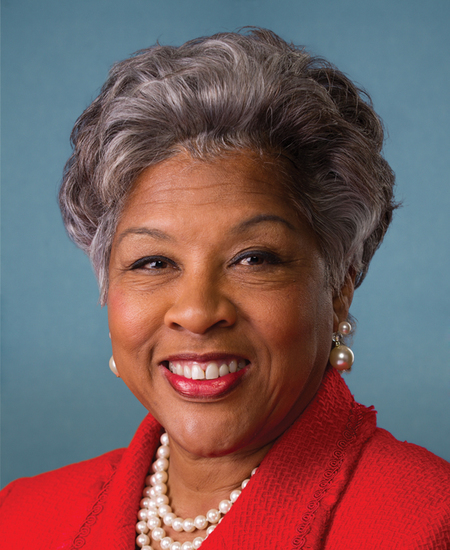
Rep. Joyce Beatty
Sponsored bills
Maddy summaryThis bill would require federal firearms licensees to prohibit sales of specific high-capacity rifles and shotguns to people under 21. It targets semiautomatic centerfire rifles and shotguns capable of holding more than 5 rounds in their magazines, raising the age limit from 18 to 21 for these weapons. Exceptions apply for active military members and certain government employees authorized to carry firearms. The law directly affects gun retailers and individuals under 21 seeking to purchase these specific firearms. It modifies existing federal gun sale rules without changing age requirements for other firearms.
Maddy summaryHCONRES 21 is a symbolic House resolution recognizing the persistent gender wage gap in the U.S., where women earn significantly less than men for comparable work. It cites specific data showing women overall earn 75 cents and women of color earn even less (e.g., 58 cents for Latinas) per dollar earned by White, non-Hispanic men. The resolution does not create new laws or policies but formally acknowledges the economic impact of this disparity, including annual lost wages exceeding $994 million for full-time women workers. It also highlights designated Equal Pay Days for different demographic groups to underscore the varying timelines to close the gap.
Maddy summaryThe Paycheck Fairness Act strengthens equal pay protections by expanding the definition of "sex" to include pregnancy, childbirth, sexual orientation, gender identity, and sex characteristics. It modifies employer defenses for pay disparities to require proof that any pay difference is job-related, not based on sex, and accounts for the entire pay gap. The bill prohibits employers from asking about salary history, enhances penalties for violations, and requires employers with 100+ employees to collect and report detailed pay data by race, sex, and job category. It also establishes training programs for employers on eliminating pay bias and creates a National Equal Pay Enforcement Task Force to coordinate enforcement efforts. This legislation directly affects employers, particularly those with 100+ employees, and aims to address pay disparities impacting women, people of color, and other underrepresented groups.
Maddy summaryH.J. Res. 80 would declare the Equal Rights Amendment (ERA) part of the U.S. Constitution, asserting it has been ratified by 38 states (three-fourths of the states) despite the original 1972 deadline. If passed, this resolution would formally establish the ERA as a constitutional amendment, requiring all federal and state laws to align with its gender equality protections. The bill does not create new laws but confirms the ERA's status as part of the Constitution, affecting how laws are interpreted and enforced. It is a procedural step to resolve the legal dispute over the ERA's validity after decades of debate.
Maddy summaryHRES 239 is a non-binding resolution recognizing racial disparities in colorectal cancer (CRC) outcomes, specifically highlighting that Black Americans face 20% higher CRC rates and 40% higher death rates compared to non-Hispanic Whites. It directly affects Black communities disproportionately impacted by these disparities, which include the lowest 5-year survival rate for CRC. The resolution encourages the CDC to research screening disparities and develop strategies to eliminate them, promotes adherence to U.S. Preventive Services Task Force screening guidelines, and urges states to expand coverage for early CRC screenings, particularly for Black individuals and other high-risk groups. It does not create new laws but aims to raise awareness and guide existing public health efforts.
Maddy summaryHRES 238 is a non-binding House resolution expressing the House's position that every person has the basic right to emergency health care, including abortion care during medical emergencies. It does not create new laws or alter existing regulations but formally states the House's view that abortion restrictions in emergencies endanger patients' health and lives. The resolution specifically highlights how current abortion bans put pregnant people at risk during life-threatening conditions like hemorrhage or infection, disproportionately impacting Black, Indigenous, people of color, immigrants, and low-income individuals. It serves as a symbolic statement opposing policies that restrict emergency reproductive care access.
Maddy summaryThe Shareholder Political Transparency Act of 2025 requires publicly traded companies (excluding investment companies) to disclose their political spending to shareholders and the public. It mandates quarterly reports to the SEC detailing amounts, dates, candidates supported/opposed, and trade associations involved in political activities exceeding $10,000. Annual reports to shareholders must summarize major political expenditures and outline planned spending for the coming year. All reports must be publicly searchable via the SEC’s EDGAR system, increasing transparency about how corporate funds influence elections and policy.
National STEM Week Act This bill requires the National Science and Technology Council's Committee on STEM to designate a week each calendar year as National STEM Week. (STEM refers to science, technology, engineering, and mathematics.) During this established week, the committee must encourage educational institutions (i.e., elementary schools, secondary schools, and institutions of higher education) to participate in the week and also encourage families of students attending these educational institutions to participate in STEM activities. Additionally, the committee must encourage STEM industries to (1) engage with students enrolled in educational institutions by providing mentorship programs, site visits, and guest lectures; and (2) support STEM education initiatives at these educational institutions through funding, resources, and expertise. The committee must annually report to Congress on the activities conducted during the established week.
Maddy summaryHRES 216 is a resolution condemning the leadership of the House Republican Conference for allowing a social media post that falsely questioned the immigration status and patriotism of Congressman Adriano Espaillat (Chairman of the Congressional Hispanic Caucus). The resolution specifically names House Speaker Mike Johnson, Majority Leader Steve Scalise, Majority Whip Tom Emmer, and other top Republican leaders as responsible for the post. It characterizes the post as xenophobic and inappropriate, stating such rhetoric violates the standards of conduct expected of members of Congress.