

Maddy summaryHRES 846 is a symbolic resolution designating October 2025 as National Domestic Violence Awareness Month. It expresses the House's support for raising awareness about domestic violence and its impacts, and calls for continued congressional attention to ending domestic violence through existing programs. The resolution does not create new laws, allocate funding, or directly affect any specific groups - it is purely a statement of support. It references statistics on domestic violence prevalence but focuses on awareness rather than policy changes.
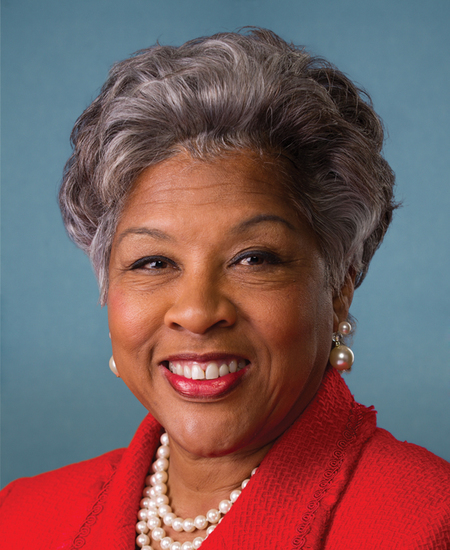
Rep. Joyce Beatty
Sponsored bills
Maddy summaryHR 5826, the IDEA Act of 2025, creates a federal grant program to increase access to entrepreneurship resources for minority business enterprises. The bill authorizes $25 million annually (2026-2030) to provide $1 million grants to business accelerators, which must use funds for capital, networking programs, or other support directly benefiting minority businesses in regions with at least 15 qualifying enterprises (each with $250k+ annual revenue). Grants require 25% non-federal funding match and mandate annual reports to Congress tracking grant distribution and program outcomes. This policy directly supports minority-owned businesses seeking capital and growth opportunities through established business accelerator networks.
Maddy summaryThis bill requires federal agencies to report detailed spending data on advertising contracts starting with the 2027 budget. Specifically, agencies must disclose total advertising expenditures and break down spending for contracts with women-owned, minority-owned, and socially/economically disadvantaged small businesses (as defined by law). The reporting applies to both past fiscal year spending and estimated future spending for each agency. This is a transparency measure focused solely on data collection, not on changing how contracts are awarded or funding levels.
Head Start Shutdown Protection Act of 2025 This bill requires the Department of Health and Human Services to reimburse a state, local government, or school district that uses its funds to maintain participation in the Head Start program or the Early Head Start program during a government shutdown in which there is a lapse in federal appropriations for the programs. The Head Start programs provide comprehensive early childhood education and development services to low-income children. The programs seek to promote school readiness through the provision of educational, health, nutritional, social, and other services.
Maddy summaryThis bill makes federal funding for the WIC program mandatory by requiring Congress to appropriate necessary funds annually for fiscal year 2026 and each subsequent year. It removes discretionary language from WIC funding requirements and clarifies that eligible participants must be served without participation limits. The bill directly affects low-income pregnant women, new mothers, and young children who rely on WIC for nutrition assistance, ensuring continued access to critical food, health, and education services.
Maddy summaryThis bill modifies the USDA's 502 housing loan program to make it easier for rural homeowners to transfer properties with existing loans. It allows qualified buyers to assume a guaranteed loan when purchasing a property, releasing the original borrower from liability and transferring the loan's obligations to the new owner. The changes apply to loans guaranteed under the program after the bill's enactment, directly affecting rural homeowners and buyers in USDA loan programs. The bill also permits servicers to charge fees for transaction costs related to these loan assumptions.
Maddy summaryHRES 795 is a non-binding resolution condemning Hamas for the October 7, 2023, attacks that killed over 1,200 people, took 251 hostages (including Americans), and involved sexual violence. It demands Hamas immediately surrender and release all remaining hostages - specifically noting 48 people still held, including two U.S. citizens. The resolution also affirms Israel’s right to self-defense, calls for humanitarian aid to reach Palestinians, and condemns global antisemitism following the attacks. As a symbolic congressional statement, it does not create new laws or alter policies.
Maddy summaryHR 5705 requires the federal government to reimburse state agencies for funds they use to maintain participation in the WIC program during a government shutdown. It directly affects states that cover WIC costs using their own money when federal funding lapses. The bill establishes a process where states can seek reimbursement from the federal government after the shutdown ends. This ensures states aren’t burdened with costs for a federal funding gap that impacts nutrition assistance for women, infants, and children.
Maddy summaryHR 5707, the Voter Purge Protection Act, sets strict standards for states removing voters from registration lists. It requires states to use only objective, reliable evidence (like proof of death or moved residence) to remove voters - not factors like not voting or not responding to notices - and mandates 48-hour written notice to affected voters with reinstatement instructions. States must also issue public notices about removal programs to help voters verify their status. This bill directly affects state election officials and voters whose registration might be challenged, aiming to prevent improper removals under the National Voter Registration Act. It amends existing federal voting laws to enforce these new verification and notice requirements.
Maddy summaryHR 5689, the "Shutdown Guidance for Financial Institutions Act," requires federal banking regulators (like the Fed and FDIC) to issue guidance within 180 days of enactment. The guidance directs financial institutions to help consumers and businesses affected by government shutdowns - such as furloughed federal workers, District of Columbia employees, or contractors with reduced income - by offering flexible payment options, modifying loan terms, and preventing temporary payment difficulties from harming credit scores. Regulators must also issue a press release within 24 hours of a shutdown starting to notify institutions and the public. The bill mandates a post-shutdown report to Congress within 90 days and potential guidance updates if issues arise.