

Expanding Broadcast Ownership Opportunities Act of 2021 This bill requires the Federal Communications Commission (FCC) to take certain actions to increase diversity of ownership in the broadcasting industry and establishes a related tax incentive. Specifically, the bill requires the FCC to report to Congress regarding (1) recommendations for increasing the total number of broadcast stations that are owned or controlled by members of minority groups or women, (2) the total number of broadcast stations that are owned or controlled by members of minority groups or women, and (3) whether there is a nexus between diversity of ownership or control of broadcast stations and the diversity of the viewpoints expressed on the stations. In addition, the bill allows companies engaged in the qualifying sale of a broadcast station to receive favorable tax treatment by electing nonrecognition of the gain or loss resulting from the sale. To qualify for this treatment, the sale must result in or preserve ownership and control of a broadcast station by socially disadvantaged individuals.
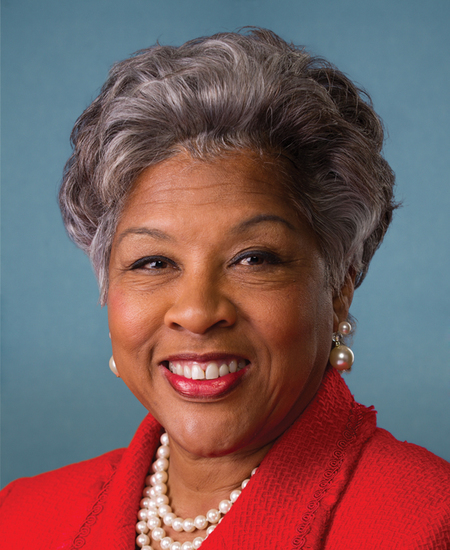
Rep. Joyce Beatty
Sponsored bills
Domestic Workers Bill of Rights Act This bill provides rights and protections for domestic workers (e.g., housekeepers, nannies, caretakers, personal assistants, and chauffeurs), including pay and leave rights, and health and safety protections. Specifically, the bill repeals the exemption of domestic live-in employees from certain minimum wage and maximum hour requirements. Employers must provide written notice of termination and provide at least 30 days of lodging and two weeks of severance pay to terminated live-in employees. Live-in employees also must be provided with reasonable access to telephone and internet service during their employment. The bill requires employers to provide domestic workers with a written agreement covering wages, sick leave, benefits, and other matters. Further, domestic workers may request and be granted changes to work schedules due to personal events. The bill also provides domestic workers with certain privacy rights, extends to domestic workers protections against discrimination in employment, and increases the federal medical assistance percentage (FMAP) for certain Medicaid-funded medical services provided by domestic workers. The Department of Labor must (1) award grants for a domestic worker national hotline for reporting emergencies, training on hazards facing domestic workers, and workforce investment activities for domestic workers; and (2) establish a Domestic Worker Wage and Standards Board to investigate standards in the domestic workers industry. Labor must publish online a document that describes the rights and protections for domestic workers under this bill.
Protecting Renters from Evictions Act of 2021 This bill extends through December 31, 2021, the order issued by the Centers for Disease Control and Prevention titled Temporary Halt in Residential Evictions To Prevent the Further Spread of COVID–19 and published on September 4, 2020.
This resolution (1) commits to advancing policies that will end roadway fatalities by 2050, and (2) calls on Congress and the Department of Transportation to commit to working together to achieve zero roadway fatalities by the year 2050.
STEM K to Career Act This bill provides for loan forgiveness and tax credits related to science, technology, engineering, or mathematics (STEM) education and addresses work-study for students employed in STEM fields. The bill requires the Department of Education to forgive student loan obligations of borrowers employed as full-time teachers of STEM in elementary or secondary schools in which the number of low-income children exceeds a certain percentage. Portions of the student loan debt, including interest, shall be forgiven on the basis of years of service, with 100% forgiven for five years of teacher service. The bill allows (1) an increased tax deduction for expenses of elementary and secondary school teachers for STEM education supplies; (2) a tax credit for the employment of STEM interns; and (3) a tax credit for employment of individuals who participated in an apprenticeship program in a STEM field, with the amount determined according to the degree of completion of the program. Beginning with FY2022, an institution of higher education must use at least 7% of federal work-study funds to compensate students employed in STEM fields.
Humane Research and Testing Act of 2021 This bill establishes the National Center for Alternatives to Animal Research and Testing within the National Institutes of Health to promote alternatives to animal research and testing and to reduce the number of animals used in such research and testing. In addition, federal departments or agencies and federally funded research entities that use animals for research and testing must develop plans to reduce the use of animals in their activities. They must also annually report the number of animals that they use to the center, and the center must make this information publicly available.
United States Call Center Worker and Consumer Protection Act of 2021 This bill establishes restrictions on businesses that relocate call centers or redirect customer service calls to locations outside the United States. Specifically, a business must notify the Department of Labor that it intends to move its customer service call center overseas and Labor must maintain a publicly available list of such businesses. Subject to narrow exceptions, a business appearing on such list is ineligible to receive federal grants or guaranteed loans for five years after the business is added to the list. Further, agencies must condition the awarding of government contracts on the requirement that any call center activity pursuant to the contract must be performed in the United States. Additionally, the bill requires call center employees to disclose their physical location at the beginning of each call initiated or received, unless all employees of the business participating in the communication are located in the United States, among other exceptions.
Universal School Meals Program Act of 2021 This bill revises requirements under the food and nutrition programs of the Department of Agriculture, such as the school lunch and breakfast programs. For example, the bill permanently provides free meals to all school children regardless of income. The bill increases the reimbursement rate for school food authorities participating in the food and nutrition programs. The bill also prohibits school food authorities from (1) physically segregating or otherwise discriminating against any child participating in the free breakfast program, or (2) overtly identifying a child participating in the program with a special token or announcement. Additionally, the bill expands the summer food service program by making all children eligible for participation in the program. Further, the bill revises eligibility determinations for measuring poverty to include runaway or homeless youth, foster children, migratory children, and children participating in specified programs (e.g., Head Start).
Strengthening the Vaccines for Children Program Act of 2021 This bill modifies vaccination programs and coverage for children under Medicaid and the Children's Health Insurance Program (CHIP). Specifically, the bill expands and otherwise modifies the Vaccines for Children Program, which provides free vaccinations to individuals 18 years of age or younger who are uninsured or underinsured (i.e., with limited or no insurance for vaccines), are eligible for Medicaid, or are American Indians or Alaskan Natives. The bill expands the program to include children enrolled in CHIP and temporarily provides for additional payments to incentivize provider participation. The Government Accountability Office must report on the related effects of the bill's changes. The bill also expands coverage under Medicaid and CHIP to include vaccine counseling and educational services for children and temporarily requires payments to be made at a rate that is no less than the rate under Medicare for equivalent services. It also temporarily increases the Federal Medical Assistance Percentage (i.e., federal matching rate) for states that conduct culturally appropriate outreach regarding the benefits of vaccinations for children.
This resolution expresses support for the designation of Black Maternal Mental Health Awareness Week.