

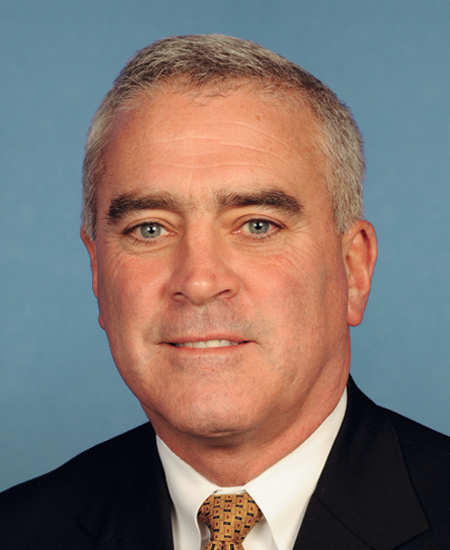
Photo of Brad R. Wenstrup
R United States House · District 2 · Ohio

Rep. Brad R. Wenstrup

Compare
Total votes
2,168
all sessions
Attendance
99%
17 missed
Higher than 80% of chamber peers
With party
96%
of cast votes
Near the chamber average
Bipartisan score
2%
crosses aisle rarely
Near the chamber average
Sponsored
592
bills & resolutions
Near the chamber average
Committees
0
assignments
592 bills and resolutions

Sponsored bills

Total
592
Primary
60
Co-sponsor
532
This page
592
matching current filters
Co-sponsor HR 6969
In committee · United States House · Co-sponsor
To direct the Joint Committee on the Library to procure a statue of Benjamin Franklin for placement in the Capitol.

Maddy summaryThis bill directs the Joint Committee on the Library to procure a statue of Benjamin Franklin and place it in the U.S. Capitol. The committee must secure the statue within two years of the bill's enactment and install it in a public-accessible location by January 1, 2026, for viewing during Capitol Visitor Center guided tours. It is a procedural measure with no policy changes or direct impact on constituents or legislation.

In committee Sep 18, 2024 1 co-sponsor
Primary HR 3800
Passed · United States House · Lead sponsor
Chronic Disease Flexible Coverage Act

Maddy summaryHR 3800, the Chronic Disease Flexible Coverage Act, clarifies that certain services for chronic conditions (like diabetes or heart disease) listed in IRS Notice 2019-45 must be treated as preventive care under federal tax rules. This means health insurance plans covering these services must provide them without cost-sharing (like copays) for enrollees, directly affecting individuals with chronic conditions and their insurance providers. The bill’s key mechanism simply aligns existing IRS guidance with the tax code, ensuring these specific services are consistently classified as preventive care without altering other IRS rules. It does not create new benefits or change coverage requirements beyond this administrative clarification.

Passed Sep 18, 2024 0 co-sponsors
Primary HR 9463
In committee · United States House · Lead sponsor
RISE Act

Maddy summaryThe RISE Act (HR 9463) requires that non-citizen employees hired at Veterans Health Administration (VHA) hospitals undergo background investigations before being appointed. This applies specifically to non-citizen appointees in VHA positions, directly affecting their hiring process. The bill amends existing law to mandate this background check as a prerequisite for employment, adding a new requirement to Section 7407(a) of Title 38. It creates a concrete policy change in VA hiring procedures without altering other employment standards.

In committee Sep 17, 2024 0 co-sponsors
Co-sponsor HR 705
In committee · United States House · Co-sponsor
Veterans 2nd Amendment Protection Act

Maddy summaryHR 705, the Veterans 2nd Amendment Protection Act, prohibits the Department of Veterans Affairs (VA) from automatically sending veterans' personal information to the national background check system solely because a fiduciary (like a guardian) manages their benefits. It specifically blocks the VA from sharing this data with the Justice Department without a court order finding the veteran a danger to themselves or others. This directly affects veterans who have a fiduciary appointed due to incapacity but are not deemed dangerous, preventing automatic barriers to firearm purchases based only on their fiduciary status. The bill amends 38 U.S.C. § 5501B to require judicial authorization before such data can be transmitted.

In committee Sep 16, 2024 1 co-sponsor
Co-sponsor HR 1516
Passed · United States House · Co-sponsor
DHS Restrictions on Confucius Institutes and Chinese Entities of Concern Act

Maddy summaryThis bill blocks U.S. Department of Homeland Security (DHS) funding to colleges and universities that maintain relationships with Confucius Institutes or "Chinese entities of concern" (defined as institutions linked to China's military or defense sectors). It requires affected schools to terminate such relationships within 12 months of the bill's enactment to regain eligibility for DHS funds. The law directly impacts higher education institutions receiving DHS funding, not all schools or federal programs. Key provisions mandate DHS to deny funding to institutions with ongoing ties to these entities, with eligibility restored only after relationship termination.

Passed Sep 12, 2024 1 co-sponsor
Primary HR 8333
Passed · United States House · Lead sponsor
BIOSECURE Act

Maddy summaryThe BIOSECURE Act prohibits U.S. federal agencies from contracting for or using biotechnology equipment and services from designated "biotechnology companies of concern," such as BGI, MGI, Complete Genomics, WuXi AppTec, and WuXi Biologics, and bans federal funds for these purposes. It requires the Office of Management and Budget to create and update a list of these companies based on national security risks, with implementation phased in over 60-180 days after regulations are issued. Exceptions include intelligence activities, overseas health care for U.S. personnel, and publicly available multiomic data, while limited waivers for national security or overseas health care are permitted with congressional notification. The law does not require new funding and mandates annual reviews of the designated companies.

Passed Sep 10, 2024 0 co-sponsors
Co-sponsor HR 9107
In committee · United States House · Co-sponsor
Airborne Hazards and Open Burn Pit Registry (AHOBPR) 2.0 Act

Maddy summaryThis bill requires the Secretary of Veterans Affairs to submit a report to Congress within 90 days of enactment. The report must detail the current status and timeline for completing the redesigned Airborne Hazards and Open Burn Pit Registry 2.0. It does not change the registry's functionality but mandates a VA update on the redesign process. The bill directly affects the Department of Veterans Affairs, requiring them to provide Congress with specific information about the registry's progress.

In committee Aug 28, 2024 1 co-sponsor
Co-sponsor HJRES 199
In committee · United States House · Co-sponsor
Providing for congressional disapproval under chapter 8 of title 5, United States Code, of the rule submitted by the National Highway Traffic Safety Administration relating to "Corporate Average Fuel Economy Standards for Passenger Cars and Light Trucks for Model Years 2027 and Beyond and Fuel Efficiency Standards for Heavy-Duty Pickup Trucks and Vans for Model Years 2030 and Beyond".

Maddy summaryThis resolution aims to block a rule issued by the National Highway Traffic Safety Administration (NHTSA) that sets new fuel efficiency standards for passenger cars, light trucks (starting in 2027), and heavy-duty pickup trucks/vans (starting in 2030). If passed, it would prevent this specific rule from taking effect by disapproving it under a congressional review process. The rule directly affects vehicle manufacturers by requiring them to meet these updated fuel economy targets for future model years. This is a procedural resolution, not a new law, focused solely on halting the implementation of the existing NHTSA rule.

In committee Aug 2, 2024 1 co-sponsor
Co-sponsor HRES 1399
In committee · United States House · Co-sponsor
Expressing the sense of the House of Representatives that the Citizens' Stamp Advisory Committee, as an entity of the United States Postal Service, should issue a commemorative stamp in honor of Charity Adams Earley.

Maddy summaryThis resolution expresses the House of Representatives' sense that the U.S. Postal Service should issue a commemorative stamp honoring Lt. Col. Charity Adams Earley. It specifically directs the Citizens' Stamp Advisory Committee (a USPS entity) to recommend such a stamp to the Postmaster General. The resolution highlights her historic role as the first Black officer in the Women’s Army Corps and her leadership of the 6888th Central Postal Directory Battalion during WWII, which cleared critical mail backlogs in Europe. This is a symbolic measure with no binding effect on USPS policy.

In committee Aug 2, 2024 1 co-sponsor
Co-sponsor HR 9263
In committee · United States House · Co-sponsor
Supporting Innovation in Agriculture Act of 2024

Maddy summaryHR 9263 creates a new 30% federal tax credit for businesses investing in qualifying agricultural technology projects focused on specialty crops. It directly affects farmers and agribusinesses adopting precision agriculture (like GPS-guided equipment or soil sensors) or controlled environment agriculture (such as indoor vertical farms with climate control systems). The credit applies to qualified property like equipment, software, and infrastructure placed in service before 2035, with specific definitions for eligible technologies. Businesses cannot double-benefit by claiming this credit alongside certain existing grant programs for similar projects. The credit is available for investments completed after January 1, 2023, and integrates into the existing tax code via amendments to sections 48F and 6417.

In committee Aug 2, 2024 1 co-sponsor
Showing 71 to 80 of 592 bills
Previous 1 … 7 8 9 … 60 Next