Combatting COVID Unemployment Fraud Act of 2021 This bill requires additional documentation for individuals seeking pandemic unemployment assistance, requires state unemployment agencies to use designated fraud prevention tools, and otherwise addresses pandemic-related unemployment benefits.
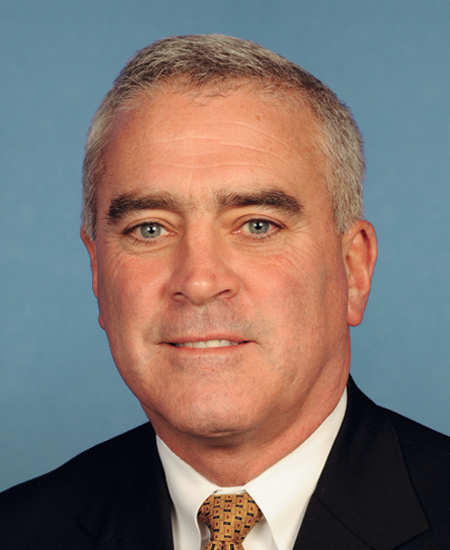
Rep. Brad R. Wenstrup
Sponsored bills
Non-Opioids Prevent Addiction In the Nation Act or the NOPAIN Act This bill temporarily establishes separate payments for certain non-opioid treatments under the Medicare prospective payment system for hospital outpatient department services and the payment system for ambulatory surgical center services. The bill applies to pain management treatments that are able to replace or reduce opioid consumption, as shown through clinical trials or data.
This bill eliminates federal pandemic unemployment compensation on May 31, 2021. Under current law, this supplementary compensation is available to claimants in participating states until September 6, 2021.
COVID-19 Origin Act of 2021 This bill requires the Office of the Director of National Intelligence (ODNI) to declassify all information relating to potential links between the Wuhan Institute of Virology and the origin of COVID-19. The ODNI shall submit to Congress an unclassified report containing such information, with redactions only as necessary to protect sources and methods.
This bill requires the Internal Revenue Service, in collaboration with the Department of Labor, in taxable years beginning in 2020 or 2021, to implement a process to hold harmless taxpayers who are identified as having unreported income if those taxpayers believe they are victims of identity theft, or that fraudulent unemployments benefits were claimed in their name; and require states to report the amount of fraudulent unemployment benefits that are excluded as income from Form 1099-G's issued by the state due to suspected or confirmed fraud.
Combatting Racist Training in the Military Act of 2021 This bill prohibits the Armed Forces and academic institutions of the Department of Defense from promoting specified anti-American and racist theories (e.g., that any race is inherently superior or inferior to any other race). Specifically, the bill prohibits including anti-American and racist theories or materials in curricula, reading lists, seminars, workshops, trainings, or other educational or professional settings in a manner that could appear as sponsorship, approval, or endorsement; contracting with, hiring, or otherwise engaging speakers, consultants, diversity trainers, and other persons for the purpose of advocating anti-American and racist theories; compelling members of the Armed Forces to affirm or profess belief in anti-American and racist theories; and segregating members of the Armed Forces by race in any setting, including educational and training sessions.

Accelerating Kids' Access to Care Act This bill requires state Medicaid programs to establish a process through which qualifying out-of-state providers may enroll as participating providers without undergoing additional screening requirements. Among other things, a qualifying provider must (1) serve minors, or adults whose condition began as a minor; and (2) have previously been screened for Medicare participation or for participation in the Medicaid program of the state in which the provider is located.
This resolution expresses the sense of the House of Representatives that the United States should continue to lead reform efforts and urge member cooperation at the World Trade Organization in order to address barriers to trade, improve living standards across the world, and enhance accountability and dispute settlement mechanisms.
Parity for Non-Traded REITs Act This bill extends exemptions from certain tax and withholding requirement currently allowed to exchange-traded real estate investment trusts (REITs) to publicly-offered, non-traded REITs.
Personal Health Investment Today Act of 2021 or the PHIT Act of 2021 This bill allows a medical care tax deduction for up to $1,000 ($2,000 for a joint return or a head of household) of qualified sports and fitness expenses per year. The bill defines qualified sports and fitness expenses as amounts paid exclusively for participating in a physical activity, including (1) fitness facility memberships, (2) physical exercise or activity programs, or (3) equipment for a physical exercise or activity program.