

Ensuring Patient Access to Critical Breakthrough Products Act of 2021 This bill provides for Medicare coverage of medical devices that are approved under the Food and Drug Administration (FDA) Breakthrough Devices Program. (Under the program, manufacturers work with the FDA to expedite the review and approval of certain medical devices that provide for more effective treatment or diagnosis of life-threatening or irreversibly debilitating human diseases or conditions.) The bill allows designated medical breakthrough devices to be temporarily covered under Medicare during a four-year transitional period. The Centers for Medicare & Medicaid Services (CMS) must assign payment codes for such devices within three months of FDA approval. The CMS must also establish a process to allow for continued coverage after the transitional period has expired, taking into account any additional evidence or data the CMS deems necessary. The CMS must also provide for temporary and, where appropriate, permanent Medicare coverage of breakthrough devices for which there is no existing benefit category (i.e., classification).
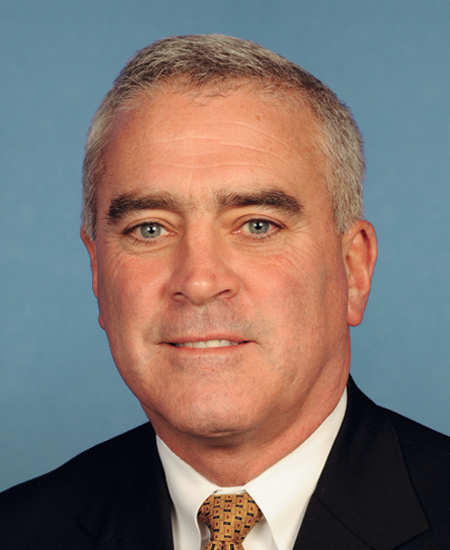
Rep. Brad R. Wenstrup
Sponsored bills
Social Security Child Protection Act of 2021 This bill directs the Social Security Administration to issue a new Social Security number to a child under the age of 14 if the child's Social Security card was stolen while being sent.
Trade Preferences and American Manufacturing Competitiveness Act of 2021 This bill reauthorizes and revises specified U.S. trade programs and provisions. Specifically, the bill extends through January 1, 2027, the Generalized System of Preferences (GSP), which provides duty-free treatment to products imported from designated beneficiary countries. The bill makes various changes to the GSP, including by (1) adding human rights, environmental, and other criteria for designation as a beneficiary developing country; (2) requiring an assessment of how the GSP supports worker and gender rights; and (3) requiring a study on rules of origin and GSP utilization rates. Additionally, the bill provides through December 31, 2023, and retroactively applies to 120 days before this bill's enactment, temporary duty suspensions or reductions to eligible imported products. This authorization is commonly known as the Miscellaneous Tariff Bill (MTB). The last version of the MTB was enacted in September 2018 and the temporary treatment for those products listed in the MTB expired on December 31, 2020. The bill also extends the American Manufacturing Competitiveness Act of 2016 for two future MTB cycles (one in 2022 and one in 2025). This extension allows the U.S. International Trade Commission to conduct the MTB petition, review, and recommendation process for those additional cycles. The bill extends customs user fees through June 21, 2031.
Physician Shortage GME Cap Flex Act of 2021 This bill excludes certain hospitals that establish shortage specialty programs from the cap on full-time equivalent residents that is otherwise applicable, and provides for a new building period, for purposes of graduate medical education payments under Medicare.
Twenty-First Century Nuclear Security Act This bill requires the Department of Energy to report on matters related to global nuclear safety, nuclear security, and nuclear nonproliferation, as well as the risks posed by Russia and China to the global nuclear energy market.
Clean Energy Production Parity Act This bill modifies the tax credit for investments in energy property to make qualified fuel cell property (certain fuel cell power plants) that uses an electromechanical process or includes a linear generator assembly eligible for the credit.
Work Without Worry Act This bill modifies eligibility for Social Security Disability Insurance (SSDI) benefits for individuals who have a disability that began before age 22. Under current law, these individuals may obtain SSDI benefits based on the work record of a retired, disabled, or deceased parent. However, an individual with earnings after age 22 that exceed a specified monetary limit (i.e., constitute substantial gainful activity) permanently loses eligibility for such benefits. This bill allows individuals to retain eligibility for such benefits regardless of the amount of earnings after age 22. Additionally, individuals who apply for SSDI benefits on a parent's record and also independently qualify for Social Security benefits on their own record will receive the larger of the two benefit amounts.
Reopening to address Every COmplete Record request for Devoted Servicemembers Act of 2021 or the RECORDS Act of 2021 This bill directs the Office of the Archivist of the United States to take specified steps to address record request backlogs. Specifically, the office must take actions to ensure that (1) the number of individuals employed by the National Personnel Records Center is equal to or exceeds the number of such individuals employed on March 2, 2020, and (2) the percentage of such individuals regularly reporting to work in person is equal to or exceeds the percentage of such individuals regularly reporting to work in person on that date. The office shall submit to specified congressional committees a report that provides a comprehensive plan to address the record request backlog of the National Personnel Records Center and improve the efficiency and responsiveness of operations at the center, identifies measurable goals with respect to the comprehensive plan and metrics for tracking progress toward such goals, and describes strategies to prevent future record request backlogs.
Coordination, Accountability, Research, and Equity for All Kidneys Act of 2021 or the CARE for All Kidneys Act of 2021 This bill requires multiple agencies to address kidney disease, with a focus on minority, rural, and other underserved populations that are disproportionately affected by the disease. First, the Department of Health and Human Services (HHS) must study patterns of care for kidney disease provided through certain health insurance providers. Second, HHS's Office of the Assistant Secretary for Health must (1) create a plan to address kidney disease, (2) develop a pilot program for best practices to diagnose and manage the disease, and (3) report annually on the impact of a Medicare model that encourages greater use of home dialysis and kidney transplants. Third, the National Institutes of Health must expand research on kidney disease. This includes research on the causes of lower rates of, and interventions to increase, kidney transplants among underserved populations. Fourth, the National Institute of Diabetes and Digestive and Kidney Diseases must conduct an awareness campaign and work with the Centers for Disease Control and Prevention (CDC) to evaluate data collection concerning kidney disease. Fifth, the CDC must award grants for public health interventions to reduce the burden of kidney disease and undertake activities to identify and address environmental and occupational causes of kidney disease. Last, the bill makes kidney disease specialists eligible for the National Health Service Corps (NHSC). The NHSC provides scholarships and student loan repayment awards to health care providers who agree to work in areas with shortages of primary care, mental health, and dental providers.
Toxic Exposure in the American Military Act or the TEAM Act This bill requires the Department of Veterans Affairs (VA) to expand health care, benefits, and resources for veterans with conditions related to exposure to toxic substances. Specifically, the bill expands eligibility for VA hospital care, medical services, and nursing home care to include veterans who (1) were exposed to toxic substances, radiation, or other conditions, and were awarded certain medals (e.g., the Armed Forces Service Medal); (2) are eligible for inclusion in the Airborne Hazards and Open Burn Pit Registry; or (3) have been identified by the Department of Defense to have been possibly exposed during service to an open burn pit, toxic substance, or specified hazardous sites. (A burn pit is an area used for burning solid waste in open air without equipment.) The bill establishes a presumption of service-connection for diseases associated with exposure to certain toxic substances and that become manifest within a certain time period; the VA must specify such diseases and requirements through regulations. Under a presumption of service-connection, specific conditions diagnosed in certain veterans are presumed to have been caused by the circumstances of their military service. Health care benefits and disability compensation may then be awarded. The bill also requires the VA to take specified actions to (1) evaluate scientific evidence regarding associations between diseases and exposure to toxic substances; (2) train its health care personnel on identifying, treating, and assessing illnesses related to such exposure; and (3) provide resources to veterans exposed to toxic substances.