

Burn Pit Registry Enhancement Act This bill authorizes specified individuals to update the Airborne Hazards and Open Burn Pit Registry with the cause of death of a registered individual. The Department of Veterans Affairs established the burn pit registry to allow certain veterans and service members to document their exposures and report health concerns. The registry is for individuals who may have been exposed to toxic airborne chemicals and fumes caused by open burn pits (areas used for burning solid waste in open air without equipment) while deployed in certain locations (e.g., Afghanistan or Iraq). Specifically, the bill authorizes a designee of a registered individual or an immediate family member to update the registry with the cause of death of the individual.
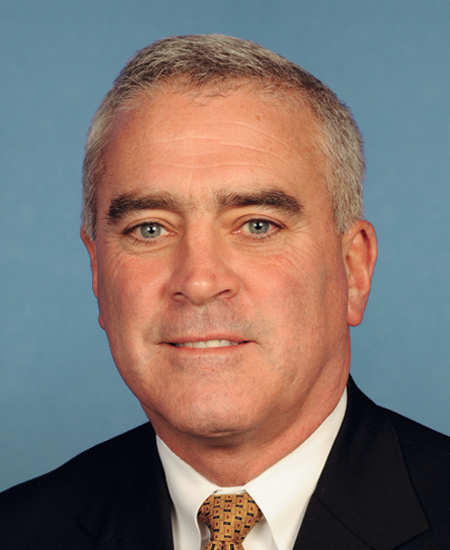
Rep. Brad R. Wenstrup
Sponsored bills
This concurrent resolution declares that Congress should not impose any new performance fee, tax, royalty, or other charge relating to the public performance of sound recordings on a local radio station for broadcasting sound recordings over the air, or on any business for such public performance of sound recordings.
Maddy summaryHRES 386 is a symbolic resolution introduced in the U.S. House of Representatives that expresses support for recognizing "National Police Week" each year. The resolution acknowledges law enforcement officers' sacrifices, particularly during the pandemic, and encourages the public to honor their service. As a non-binding statement, this resolution does not create new law or change policy but serves as a formal expression of support for law enforcement officers across the United States.
Honoring Our Promises through Expedition for Afghan SIVs Act of 2021 or the HOPE for Afghan SIVs Act of 2021 This bill authorizes the Department of State and the Department of Homeland Security (DHS) to postpone the medical exam requirement for qualifying citizens or nationals of Afghanistan seeking entry into the United States as special immigrants. Specifically, this bill applies to an existing program that provides special immigrant status to an individual (or the spouse or child of such an individual) who (1) faithfully performed sensitive and trusted duties for the U.S. government or the International Security Assistance Force in Afghanistan on or after October 7, 2001, and (2) has experienced or is experiencing an ongoing serious threat due to the performance of those duties. Under this bill, the State Department and DHS may jointly issue a blanket waiver of any requirement for such individuals to undergo a medical exam before admission into the United States. DHS shall ensure, to the greatest extent practicable, that individuals admitted under such a waiver undergo medical exams no later than 30 days after admission into the United States. Such an individual shall be admitted as a conditional permanent resident. DHS shall remove the conditions once the individual receives and passes a medical examination.
Stop Vaccine Mandates Act This bill rescinds the executive order titled Ensuring Adequate COVID Safety Protocols for Federal Contractors and the executive order titled Requiring Coronavirus Disease 2019 Vaccination for Federal Employees , both published on September 9, 2021. The bill provides that these executive orders shall have no force or effect.
Equal Treatment of Public Servants Act of 2021 This bill phases in a new funding formula for determining benefit amounts under the windfall elimination provision (WEP). The WEP reduces Social Security retirement and disability benefits for those who receive pensions for certain non-covered employment. The new formula adjusts an individual's total lifetime earnings based on the proportion of those earnings subject to Social Security payroll taxes. It applies to individuals who (1) become eligible for Social Security benefits after 2061, and (2) have earnings from non-covered service performed in a year after 1977. Beneficiaries who become eligible for benefits between 2023 and 2061 receive the higher of their benefit calculated under the existing WEP or the new formula. In addition, certain beneficiaries currently impacted by the WEP receive an additional payment. The Social Security Administration must include non-covered earnings in Social Security account statements and must study the feasibility of partnering with certain pension systems to address data sharing issues related to non-covered pensions.
Outpatient Surgery Quality and Access Act of 2021 This bill establishes and modifies certain requirements relating to Medicare payments for ambulatory surgical center (ASC) services. Specifically, the bill (1) requires the payment system for ASC services to feature certain positive annual adjustments equivalent to those made with respect to hospital outpatient department (OPD) services; (2) revises quality reporting requirements to permit publicly available, side-by-side comparisons of quality measures for ASCs and OPDs in the same geographic area; and (3) requires the Centers for Medicare & Medicaid Services (CMS), when excluding requested procedures from the list of those approved to be performed in ASCs, to cite specified reasons for doing so. With respect to excluding procedures from the approved list for ASCs, the CMS may not cite as a basis for exclusion that a procedure can only be reported using an unlisted surgical procedure code. (Physicians sometimes use unlisted codes when performing new procedures or services if no existing code is adequately descriptive.) The bill also limits the copayment amount for ASC services under Medicare to that of the inpatient hospital deductible.
Maddy summaryHRES 754 is a non-binding resolution expressing the House of Representatives' opposition to proposed "punitive natural gas taxes" on U.S. businesses, families, and workers. It cites claims that such taxes would raise average energy bills by 17%, reduce GDP by $9 billion, and eliminate 90,000 jobs, while disproportionately harming low-income households. The resolution argues that opposing these taxes supports U.S. energy security, national security, and continued leadership in reducing emissions through domestic natural gas production. As a procedural resolution, it does not create law but formally states the House's position against this policy approach.
State, Local, Tribal, and Territorial Fiscal Recovery, Infrastructure, and Disaster Relief Flexibility Act This bill allows states, tribes, territories, and localities to use certain COVID-19 relief funds for new categories of spending, including for natural disasters and infrastructure projects. It also makes changes to expenditure deadlines and other aspects of this funding. Specifically, recipients may use funds for emergency relief from natural disasters and associated negative economic impacts of natural disasters. In addition, recipients may use a portion of their COVID-19 relief funds for designated infrastructure projects, such as nationally significant freight and highway projects. Furthermore, the bill allows recipients to expend COVID-19 relief funds on these types of infrastructure projects until September 30, 2026. Under current law, recipients must expend the funds by December 31, 2024. Other changes in the bill include (1) modifying eligibility and allocation requirements for funding set aside for counties and Indian tribes that are near public lands, (2) allowing Indian tribes an additional year to expend their COVID-19 relief funds, and (3) establishing a process for government entities to decline COVID-19 relief funds and requiring any declined funds to be used to reduce the federal deficit.
Afghanistan Security Through Intelligence Act This bill requires reports concerning the situation in Afghanistan and other specified countries. The National Intelligence Council within the Office of the Director of National Intelligence (ODNI) must submit to Congress a National Intelligence Estimate (a type of intelligence community assessment about a specific issue) on topics including (1) the presence of certain countries, including China, Iran, and Russia in Afghanistan and other specified countries, such as India and the Gulf Cooperation Council countries; (2) any change to threats to the United States as a result of the withdrawal of U.S. Armed Forces from Afghanistan on August 31, 2021; and (3) the political composition and stability of the governing body of Afghanistan. The ODNI must periodically report to Congress on issues such as (1) the intelligence community's collection posture with respect to issues involving Afghanistan, including the detection and prevention of any increased threat to the United States as a result of the U.S. military withdrawal from Afghanistan; (2) any plans or efforts to improve the intelligence collection posture in Afghanistan; and (3) the effect of publicly documenting the Taliban's abuses.