

Maddy summaryThis bill increases tariffs on ferrosilicon imported from Russia and Belarus to 35% of the product's value, targeting ferrosilicon classified under HTS code 7202.21.50. It requires the U.S. Trade Representative to assess within 30 days whether American producers can meet domestic demand if imports decline, with a public comment period on U.S. production capacity. If U.S. producers can scale up, the bill mandates notifying Congress and considering further tariff hikes. The authority to impose these tariffs is extended through 2025.
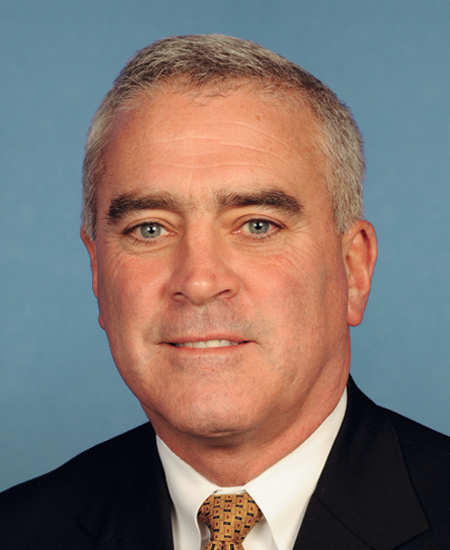
Rep. Brad R. Wenstrup
Sponsored bills
Maddy summaryHR 5777 amends the tax code to clarify that employees using specific on-site clinic services at work are not considered covered by a health plan for health savings account (HSA) eligibility. The bill defines "qualified items and services" to include physical exams, immunizations, preventive care for chronic conditions, drug testing, and hearing/vision screenings provided at employer-operated clinics. This allows employees to access these services without losing their ability to contribute to an HSA. The change applies to taxable years beginning after the bill's enactment.
Maddy summaryHR 5614 extends duty-free treatment for Haitian apparel imports under the Caribbean Basin Economic Recovery Act until September 30, 2035. It modifies the quantitative limit for eligible apparel imports to cap at 1.25% of the U.S. market for the most recent 12-month period, replacing the previous fixed annual period structure. This bill directly affects Haitian apparel exporters and U.S. importers of Haitian-made clothing by maintaining tariff preferences. The extension also requires the President to adjust the Harmonized Tariff Schedule to restore lost benefits for eligible items affected by prior tariff schedule changes.
Maddy summaryHR 5376, the Share the Savings with Seniors Act, changes Medicare Part D drug cost-sharing rules for specific chronic medications starting in 2025. It limits what seniors pay for certain chronic care drugs (like anticoagulants, blood glucose regulators, and respiratory medications) by capping pre-deductible costs at the drug's net price and requiring coinsurance after the deductible to be based on that net price. This directly affects Medicare Part D beneficiaries taking these defined chronic medications. The bill aims to reduce out-of-pocket costs by tying payment limits to the negotiated drug price rather than list price or other benchmarks.
Maddy summaryThis bill simplifies participation in Medicare's Accountable Care Organization (ACO) program by removing distinctions between small and large ACOs and eliminating the requirement for new ACOs to assume financial risk for three years before joining shared savings models. It creates a new "100% shared savings" option where ACOs keep all savings from cost reductions but bear full financial responsibility for losses. The bill also mandates clearer, transparent benchmark calculations for ACO performance, establishes appeal processes for disputed benchmarks, and requires technical assistance for rural and underserved providers. These changes directly affect Medicare ACOs, particularly smaller or newer organizations in rural or safety-net settings, aiming to make value-based care participation more accessible.
Maddy summaryThis bill limits out-of-pocket costs for Medicare Part D prescription drugs. Starting in 2027, it caps the amount seniors pay per month for covered drugs at the "net price" - the average actual price paid after rebates (or the pharmacy's standard cash price, whichever is lower). It directly affects Medicare Part D beneficiaries by reducing their out-of-pocket expenses before reaching the plan's annual out-of-pocket limit. The key provision replaces current cost-sharing rules with this net price cap, aiming to lower drug costs for seniors.
Maddy summaryThis bill creates a presumption that minerals from the Democratic Republic of Congo (DRC) containing cobalt and lithium, mined with child or forced labor, cannot be imported into the United States. It requires the U.S. government to develop an enforcement strategy to identify and block such imports, including monitoring supply chains and working with international partners. The bill mandates diplomatic efforts to address child and forced labor in the DRC's mining sector and establishes sanctions against foreign entities that facilitate or engage in such labor practices. The focus is on minerals critical for electric vehicles and electronics, which are heavily sourced from the DRC and processed in China, with specific attention to Chinese mining companies like China Molybdenum that dominate the DRC's cobalt sector.
Maddy summaryHR 3739, the FAIR TARIFF Act of 2023, requires U.S. Customs to refund overpaid duties for specific imports from European Union countries during two defined periods: October 18-December 17, 2019, and January 12-February 10, 2022. It targets products classified under certain Harmonized Tariff Schedule codes (e.g., 9903.89.10-9903.89.49 for 2019, 9903.89.57-9903.89.59 for 2022) that were incorrectly taxed due to tariff misclassification. Importers must apply for refunds within one year of the law’s enactment, with refunds processed within 180 days of application. The bill also mandates a 60-day advance notice in the Federal Register before implementing new tariff increases under Section 301 of the Trade Act of 1974.
Maddy summaryHR 3611, the Kazakhstan Permanent Normal Trade Relations Act of 2023, makes Kazakhstan's existing "normal trade relations" (NTR) status permanent by removing the need for annual U.S. presidential reviews under the Trade Act of 1974. This bill directly affects U.S. trade policy with Kazakhstan, ending the requirement for the President to annually determine whether Kazakhstan meets emigration freedom standards (which it has satisfied since 1997). The key provision allows the President to formally extend permanent NTR treatment to Kazakhstan's products, eliminating the current annual review process. Once enacted, Kazakhstan would automatically receive the same most-favored-nation tariff rates as other NTR countries, streamlining trade without further congressional action.
Maddy summaryThis bill allows Medicare-only PACE program enrollees (those not on Medicaid) to choose a standalone Medicare Part D prescription drug plan starting in 2025, instead of being limited to their PACE provider's plan. It requires PACE programs to inform members about this option and help them select a "qualified standalone" plan that meets cost criteria (equal or lower out-of-pocket costs and subsidies compared to the PACE plan). PACE programs must monitor drug use and share claims data with the chosen drug plan to coordinate care, and they will no longer receive payment for drug coverage when members enroll in an outside plan. The change applies to PACE enrollees who qualify under Medicare Part D, not Medicaid.