

Infectious Disease Therapies Research and Innovation Act of 2022 This bill exempts from the definition of passive activity , for purposes of the passive loss tax rules, any qualified medical research activity of a specified medical research small business pass-thru entity. The bill defines specified medical research small business pass-thru entity as any domestic pass-thru entity if more than 80% of such entity's expenditures on research are paid or incurred in connection with qualified medical research activities and the gross receipts of such entity for the taxable year are less than $1 million.
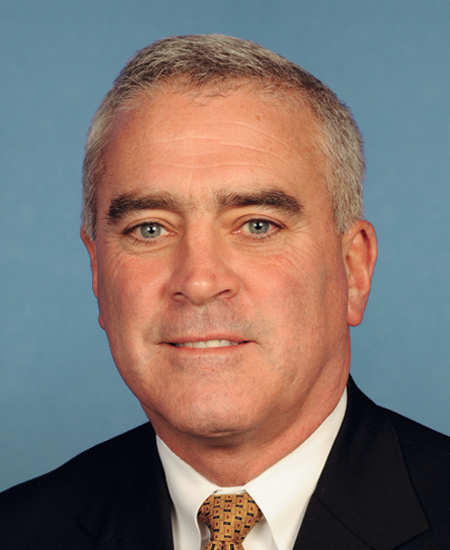
Rep. Brad R. Wenstrup
Sponsored bills
American Innovation Act of 2022 This bill revises the tax treatment of business start-up or organizational expenditures. Specifically, it allows an election to deduct such expenditures in an amount equal to the lesser of the aggregate amount of such expenditures incurred by an active trade of business, or $20,000, reduced by the amount by which such aggregate amount exceeds $120,000. The remaining amount of such expenditures shall be amortized over the 180 month period after the trade or business begins. The bill also revises the tax treatment of partnership syndication fees and start-up net operating losses and tax credits after an ownership change.
This resolution recognizes the importance of enhancing trade and investment relations between the Caribbean and the United States. It also urges the President to prioritize trade engagement with the Caribbean region that promotes sustainable and resilient economic development.
Employee Access to Worksite Health Services Act This bill provides that individuals who are eligible to receive qualified items and services at a worksite health clinic may make pre-tax contributions to a health savings account The bill defines qualified items and services to include primary care items and services, physical examinations, immunizations, drugs and drug testing, tests for infectious diseases, preventive care for chronic conditions, hearing, vision, or dental screenings, and mental and behavioral health services.
Protecting American Innovation Act This bill establishes certain limitations on modifying trade agreements, including those related to the TRIPS Agreement (i.e., the Agreement on Trade-Related Aspects of Intellectual Property Rights). The TRIPS Agreement contains obligations for World Trade Organization members to protect patents and other intellectual property rights. Specifically, the bill prohibits the President (or any U.S. official, employee, or agent) from negotiating or concluding any withdrawal, suspension, or modification to a trade agreement that adversely affects the rights of the United States or U.S. persons under a trade agreement with China or Russia. Additionally, the bill states that a TRIPS waiver to address the COVID-19 pandemic shall not take effect if (1) the President does not submit required reports from the Department of Commerce and the Department of Defense (DOD), (2) the Commerce report concludes that the TRIPS waiver will not result in an increase in global vaccine access, or (3) the DOD report concludes that the TRIPS waiver would adversely impact U.S. national security. Prior to entering into a negotiation with a trading partner concerning a suspension of or modification to a trade agreement, the bill requires (1) the U.S. Trade Representative to publish certain information in the Federal Register and allow for public comment, and (2) the President to provide written notice and consult with Congress. Further, the President shall not enter into any suspension of or modification to a trade agreement unless the President has complied with such consultation requirements and receives congressional approval.
The Real Emergencies Act This bill denies the President authority to declare a national emergency, an emergency or major disaster, or a public health emergency on the premise of climate change.
American Made Medicine Act This bill allows employers tax credits for domestic medical and drug manufacturing expenses and for advanced medical manufacturing equipment. It also provides a tax credit for a percentage of the basis of qualifying medical manufacturing EPA compliance property placed in service before January 1, 2029, or during calendar year 2030. The bill defines qualifying medical manufacturing EPA compliance property as depreciable property used by a taxpayer in the trade or business of manufacturing a drug, device, biological product, or active pharmaceutical ingredient or covered countermeasure (e.g., a qualified pandemic or epidemic product, security countermeasure, or respiratory protective device). The property must meet emissions limits under the Clean Air Act or wastewater standards under the Clean Water Act.
Supply Chain Disruptions Relief Act This bill modifies the treatment of liquidations of new motor vehicle inventory as qualified LIFO (last in first out accounting method) inventory. It allows new motor vehicle dealers to elect to wait until the end of 2025 to replace their inventory for purposes of determining income attributable to the sale of such inventory during 2020 and 2021.
Stop Fentanyl Border Crossings Act This bill authorizes the Department of Health and Human Services (HHS) to restrict migration and imports from foreign countries to prevent the introduction of illicit drugs into the United States. Current law authorizes HHS to restrict migration and imports from foreign countries to prevent the introduction of communicable diseases. Under this bill, HHS may also restrict migration and imports from a country if HHS determines that the existence of substantial illicit drug smuggling from that country poses a risk to public health.
Innocent Landowners Protection Act This bill exempts a person who has an ownership interest in a facility for oil exploration, development, production, or storage but does not participate in managing that facility from certain liability for oil spills and related pollution.