

Maddy summaryHR 800, the "DO NOT Call Act of 2023," amends the Telephone Consumer Protection Act of 1991 to increase penalties for intentional telemarketing violations. It adds criminal penalties of up to one year in prison or fines for willfully and knowingly making unwanted calls, with harsher penalties (up to three years) for severe offenses like sending over 100,000 calls in 24 hours, causing $5,000+ in damages, or committing calls to further a felony. The bill also raises civil penalties for providing false caller identification information from $10,000 to $20,000 per violation. This directly affects telemarketers, debt collectors, and businesses making unsolicited calls, increasing legal consequences for repeated or large-scale violations.
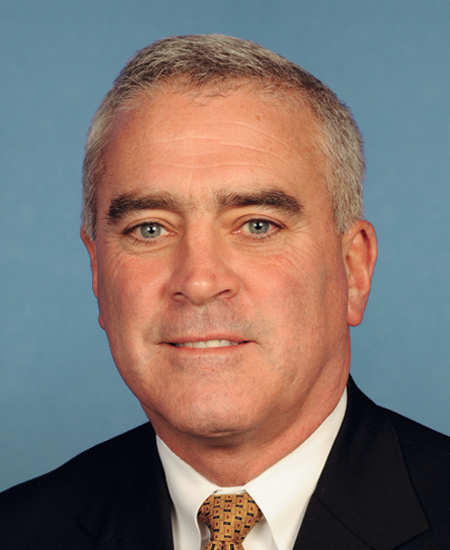
Rep. Brad R. Wenstrup
Sponsored bills
Maddy summaryThis bill requires states receiving Medicaid funds for family planning services to submit standardized abortion data to the CDC annually. Specifically, states must report 10 mandatory data points (including maternal age, gestational age, race, ethnicity, procedure type, and survival status) by December 31 of the prior year, starting two years after enactment. Failure to submit accurate data or submitting false information could result in loss of Medicaid funding for family planning services in the following fiscal year. The law aims to create uniform national abortion data collection, addressing current gaps where some states report no data at all. The CDC will maintain a standardized surveillance system and publish annual reports by the third year following the data year.
Maddy summaryHR 936, the Tanning Tax Repeal Act of 2023, repeals a 10% federal excise tax on indoor tanning services that was originally enacted under the Affordable Care Act. This bill directly affects tanning salons and businesses providing indoor tanning services by eliminating their obligation to pay this tax on customer services. The repeal applies to services performed after the bill's enactment date, removing the tax provision from the Internal Revenue Code. The bill does not create new requirements or alter other tax policies, solely removing this specific tax.
Maddy summaryHR 889, the Broadband Grant Tax Treatment Act, excludes certain federal broadband grants from recipients' taxable income. It specifically applies to grants received under programs like the Infrastructure Investment and Jobs Act's Broadband Equity, Access, and Deployment Program and state digital equity grants. The bill prevents double tax benefits by disallowing deductions or credits for expenses covered by these excluded grants and reduces the adjusted basis of related property. This policy change directly affects broadband providers, local governments, and tribal entities receiving qualifying grants from federal or state sources for broadband infrastructure deployment.
Maddy summaryHCONRES 9 is a symbolic resolution passed by the U.S. House of Representatives that formally denounces socialism as incompatible with American values, citing historical examples of socialist regimes causing widespread suffering and authoritarian rule. It states Congress opposes the implementation of socialist policies in the United States. This resolution has no legal effect, does not change any laws, and serves solely as a non-binding statement of congressional opinion. It directly affects no individuals or policies, as it is purely a declarative position.
Maddy summaryHJRES 31 is a procedural resolution seeking congressional disapproval of a specific rule issued by the Department of Veterans Affairs (VA) concerning reproductive health services. It targets the VA's September 2022 rule (published in the Federal Register as 87 Fed. Reg. 55287), which established policies for reproductive health care access for veterans. If passed, this resolution would nullify the VA rule, preventing it from taking effect under the Congressional Review Act (Chapter 8 of Title 5, U.S. Code). The bill directly affects the VA’s ability to implement its reproductive health services policy for veterans.
This resolution condemns Iranian state-sponsored terrorist attacks against U.S. citizens and officials and Iranian dissidents. The resolution also expresses support for the people of Iran who are legitimately defending their rights for freedom against repression and condemns the killing of Iranian protesters by the Iranian regime.
Dismemberment Abortion Ban Act of 2023 This bill restricts the performance of dismemberment abortions. It defines the term dismemberment abortion . Specifically, the bill prohibits a physician from knowingly performing a dismemberment abortion. It provides an exception for a dismemberment abortion that is necessary to save the life of a mother whose life is endangered by a physical disorder, illness, or condition. The bill establishes criminal penalties—a fine, a prison term of up to two years, or both—for a physician who performs a prohibited dismemberment abortion. It also authorizes civil remedies for a woman or parent of a minor who undergoes a dismemberment abortion. A woman who undergoes a dismemberment abortion may not be prosecuted or held civilly liable.
Maddy summaryHCONRES 13 is a concurrent resolution expressing Congress's support for maintaining the current policy that prohibits imposing new fees on local radio stations for playing music. It states that Congress should not impose any performance fee, tax, royalty, or charge on local radio stations for broadcasting sound recordings over the air, or on businesses like bars and restaurants that play music publicly. The resolution argues that such fees would harm local radio stations - critical sources for emergency information and community programming - and jeopardize the economic model that has supported both radio and the music industry for decades. This resolution does not create new law but formally opposes potential legislative changes to the existing fee structure.
Maddy summaryThis bill helps new car dealers affected by pandemic-era supply chain disruptions by changing tax rules for inventory sales. It allows dealers using LIFO accounting to treat certain sales of unsold vehicles (liquidations) between March 2020 and December 2021 as "qualified" for tax purposes. Dealers can defer recognizing income from these sales and have until 2026 to replace the sold vehicles before potential tax adjustments apply. The provision specifically targets dealers who couldn't replenish inventory during the supply chain crisis.