

Invest to Protect Act of 2022 This bill directs the Office of Community Oriented Policing Services within the Department of Justice to award grants to local and tribal governments that employ fewer than 125 law enforcement officers. Grant funds may be used for various activities, including to provide de-escalation training and improve recruitment and retention.
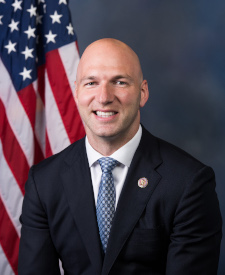
Rep. Anthony Gonzalez
Sponsored bills
VA Zero Suicide Demonstration Project Act of 2021 This bill requires the Department of Veterans Affairs (VA) to establish the Zero Suicide Initiative pilot program for the purpose of improving safety and suicide care for veterans. The program must be implemented at five VA medical centers, including one that serves veterans in rural and remote areas.
Maddy summaryHR 7618 designates the Kol Israel Foundation Holocaust Memorial in Bedford Heights, Ohio, as a national memorial. The bill formally recognizes the memorial's role in preserving the memory of Holocaust victims and honoring survivors who built it. Crucially, the designation does not make the site part of the National Park System and explicitly states no federal funds will be used for the memorial. This is a commemorative measure affecting the memorial's official status, not a policy change with operational requirements.
Improving Seniors' Timely Access to Care Act of 2022 This bill establishes several requirements and standards relating to prior authorization processes under Medicare Advantage (MA) plans. Specifically, MA plans must (1) establish an electronic prior authorization program that meets specified standards, including the ability to provide real-time decisions in response to requests for items and services that are routinely approved; (2) annually publish specified prior authorization information, including the percentage of requests approved and the average response time; and (3) meet other standards, as set by the Centers for Medicare & Medicaid Services, relating to the quality and timeliness of prior authorization determinations.
National Nuclear University Research Infrastructure Reinvestment Act of 2021 This bill reauthorizes through FY2026 and expands the Nuclear Energy University Program within the Department of Energy (DOE) that supports university research and training in nuclear science and engineering. For example, the bill expands the program to provide support to universities for revitalizing and upgrading existing nuclear science and engineering infrastructure that support the development of advanced nuclear technologies and applications. In addition, the bill establishes an Advanced Nuclear Research Infrastructure Enhancement Subprogram under which DOE must establish four new research reactors as well as new nuclear science and engineering facilities.
Harriet Tubman Bicentennial Commemorative Coin Act This bill directs the Department of the Treasury to mint and issue 50,000 $5 gold coins, 400,000 $1 silver coins, and 750,000 half-dollar clad coins emblematic of the legacy of Harriet Tubman as an abolitionist. The Secretary may issue coins under this bill only during the period of January 1, 2024, through December 31, 2024. All surcharges received by Treasury from the sale of such coins must be paid equally to the National Underground Railroad Freedom Center in Cincinnati, Ohio, and The Harriet Tubman Home, Inc. in Auburn, New York, for the purpose of accomplishing and advancing their missions.
National World War II Memorial Commemorative Coin Act This bill directs the Department of the Treasury to mint and issue up to 50,000 $5 coins, 400,000 $1 silver coins, and 750,000 half-dollar clad coins in commemoration of the National World War II Memorial in the District of Columbia. The design of the coins shall be emblematic of the memorial and the service and sacrifice of American soldiers and civilians during World War II. All surcharges received from the sale of such coins shall be paid to the Friends of the National World War II Memorial to support the National Park Service in maintaining and repairing the memorial, and for educational and commemorative programs.
This resolution expresses the sense of the House of Representatives that it is necessary to expand the use of nuclear energy in order to (1) meet the growing energy demands of the United States, and (2) promote American nuclear energy leadership while retaining U.S. economic viability in the worldwide nuclear energy marketplace.
National Strategy to Utilize Microreactors for Natural Disaster Response Efforts Act This bill directs the President to develop a national strategy to utilize microreactors to assist with natural disaster response efforts. A microreactor is a nuclear reactor with at most 20 megawatts of thermal energy generating capacity. Specifically, such strategy must include an assessment of the effectiveness of utilizing diesel generators to assist with natural disaster response efforts; a comprehensive, research-based, and long-term discussion of goals, objectives, and priorities for utilizing microreactors instead of diesel generators to assist with such efforts; a Department of Defense analysis regarding the use of such microreactors to assist with such efforts; recommendations on how the Nuclear Regulatory Commission may expedite the approval of designs for microreactors and issuing licenses; an assessment of the challenges and barriers to deploying microreactors to assist with such efforts and solutions; and recommendations on how to utilize microreactors as charging stations for electric vehicles in the event of a mass evacuation resulting from a natural disaster.
Advancing Telehealth Beyond COVID-19 Act of 2022 This bill modifies the extension of certain Medicare telehealth flexibilities after the end of the COVID-19 public health emergency. Specifically, the bill provides that certain flexibilities continue to apply until December 31, 2024, if the emergency period ends before that date. The bill allows beneficiaries to continue to receive telehealth services at any site, regardless of type or location (e.g., the beneficiary's home); occupational therapists, physical therapists, speech-language pathologists, and audiologists to continue to furnish telehealth services; federally qualified health centers and rural health clinics to continue to serve as the distant site (i.e., the location of the health care practitioner); evaluation and management and behavioral health services to continue to be provided via audio-only technology; and hospice physicians and nurse practitioners to continue to complete certain requirements relating to patient recertifications via telehealth. The bill also delays implementation of certain in-person evaluation requirements for mental health telehealth services until January 1, 2025, or the first day after the end of the emergency period, whichever is later.