

Pain-Capable Unborn Child Protection Act This bill establishes a new criminal offense for performing or attempting to perform an abortion if the probable post-fertilization age of the fetus is 20 weeks or more. A violator is subject to criminal penalties—a fine, a prison term of up to five years, or both. The bill provides exceptions for an abortion (1) that is necessary to save the life of the pregnant woman, or (2) when the pregnancy is the result of rape or incest. A physician who performs or attempts to perform an abortion under an exception must comply with specified requirements. A woman who undergoes a prohibited abortion may not be prosecuted for violating or conspiring to violate the provisions of this bill.
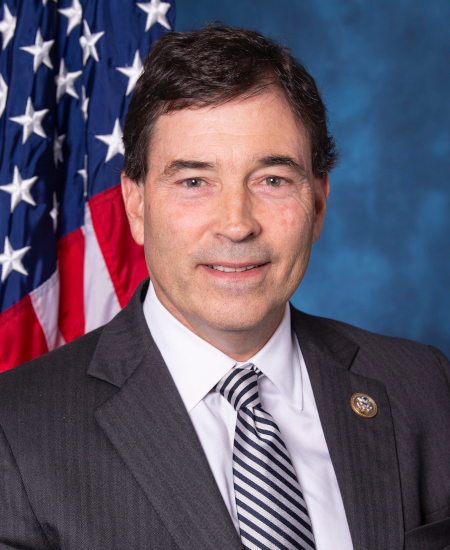
Rep. Troy Balderson
Sponsored bills
Life at Conception Act This bill declares that the right to life guaranteed by the Constitution is vested in each human being at all stages of life, including the moment of fertilization, cloning, or other moment at which an individual comes into being. Nothing in this bill shall be construed to authorize the prosecution of any woman for the death of her unborn child.
No Taxpayer Funding for Abortion and Abortion Insurance Full Disclosure Act of 2021 This bill modifies provisions relating to federal funding for, and health insurance coverage of, abortions. Specifically, the bill prohibits the use of federal funds for abortions or for health coverage that includes abortions. Such restrictions extend to the use of funds in the budget of the District of Columbia. Additionally, abortions may not be provided in a federal health care facility or by a federal employee. Historically, language has been included in annual appropriations bills for the Department of Health and Human Services (HHS) that prohibits the use of federal funds for abortions—such language is commonly referred to as the Hyde Amendment. Similar language is also frequently included in appropriations bills for other federal agencies and the District of Columbia. The bill makes these restrictions permanent and extends the restrictions to all federal funds (rather than specific agencies). The bill's restrictions regarding the use of federal funds do not apply in cases of rape, incest, or where a physical disorder, injury, or illness endangers a woman's life unless an abortion is performed. The Hyde Amendment provides the same exceptions. The bill also prohibits qualified health plans from including coverage for abortions. Currently, qualified health plans may cover abortion, but the portion of the premium attributable to abortion coverage is not eligible for subsidies.
Finish the Wall Act This bill requires the Department of Homeland Security (DHS) to resume activities related to the construction of a barrier system along the U.S.-Mexico border and addresses other border-related issues. DHS must resume all such construction activities that were planned or underway prior to January 20, 2021. DHS must also expend all funds appropriated or explicitly obligated since October 1, 2016, for construction of this barrier system. DHS may not cancel contracts for activities related to such construction entered into on or before January 20, 2021. Furthermore, within 14 days of this bill's enactment, DHS must certify to Congress that U.S. Customs and Border Protection facilities that process adults taken into custody at the border are fully compliant with certain laws related to the collection of DNA. (Among other things, these laws allow for the collection of DNA samples from non-U.S. persons detained under U.S. authority.)
American Workforce Empowerment Act This bill allows tax-preferred college savings plans (529 plans) to fund certain postsecondary certificate programs and apprenticeship programs.
Secure and Fair Enforcement Banking Act of 2021 or the SAFE Banking Act of 2021 This bill generally prohibits a federal banking regulator from penalizing a depository institution for providing banking services to a legitimate cannabis-related business. Prohibited penalties include terminating or limiting the deposit insurance or share insurance of a depository institution solely because the institution provides financial services to a legitimate cannabis-related business and prohibiting or otherwise discouraging a depository institution from offering financial services to such a business. Additionally, proceeds from a transaction involving activities of a legitimate cannabis-related business are not considered proceeds from unlawful activity. Proceeds from unlawful activity are subject to anti-money laundering laws. Furthermore, a depository institution is not, under federal law, liable or subject to asset forfeiture for providing a loan or other financial services to a legitimate cannabis-related business. The bill also provides that a federal banking agency may not request or order a depository institution to terminate a customer account unless (1) the agency has a valid reason for doing so, and (2) that reason is not based solely on reputation risk. Valid reasons for terminating an account include threats to national security and involvement in terrorist financing, including state sponsorship of terrorism. Finally, the bill decreases the cap on the surplus funds of the Federal Reserve banks. (Amounts exceeding this cap are deposited in the general fund of the Treasury.)
Protecting Seniors from Emergency Scams Act This bill requires the Federal Trade Commission to report on, and increase awareness regarding, scams targeting older adults. Specifically, the commission must report on the number and type of scams that target older adults and provide policy recommendations to prevent such scams; revise the commission's web portal with current information about such scams, including contact information for law enforcement and adult protective services agencies; and coordinate with media outlets and law enforcement to disseminate such information.
PPP Second Draw Fairness Act of 2021 This bill allows applicants for second draw loans under the Paycheck Protection Program, established to support small businesses in response to COVID-19 (i.e., coronavirus disease 2019), to select any consecutive 90-day period in 2020 from which to demonstrate a qualifying loss in revenue that makes them eligible for such loans. Currently, this qualification period must align with a corresponding calendar quarter from the previous year.
Concerns Over Nations Funding University Campus Institutes in the United States Act or the CONFUCIUS Act This bill addresses China's influence on postsecondary educational institutions through Confucius Institutes, which are cultural institutes directly or indirectly funded by the Chinese government. Specifically, the bill establishes requirements for postsecondary educational institutions that receive federal funding and that have contracts or agreements with Confucius Institutes. The contracts or agreements must include clear provisions that (1) protect the academic freedom of the institutions; (2) prohibit the application of foreign law on the institutions' campuses; and (3) grant full managerial authority of the institutes to the institutions, including full control over teaching plans, activities, research grants, and employment decisions.
Compressed Gas Cylinder Safety and Oversight Improvements Act of 2021 This bill expands requirements for foreign manufacturers of cylinders used for transporting hazardous materials in the United States (e.g., compressed gas cylinders). Current regulations require foreign manufacturers to apply for authorization from the Pipeline and Hazardous Materials Safety Administration for testing such cylinders outside of the United States. This bill requires that, to obtain an authorization, manufacturers must meet minimum levels of financial responsibility and answer in their applications specified questions, including whether the manufacturer is or has been subject to various civil or criminal penalties. The administration must publish each application in the Federal Register for public comment and must also annually publish a list of authorized manufacturers online. The bill limits an authorization to one year; however, the administration may extend an authorization for five years if the manufacturer (1) complies with applicable requirements for at least three years; and (2) meets conditions regarding the accuracy of its application, sufficiency of its financial responsibility, and other matters. The administration may suspend or terminate an authorization if a manufacturer impedes an inspection or knowingly or intentionally provides inaccurate application information. The administration must also establish a process whereby an interested party may petition for a reevaluation of an authorization if that party has evidence of inaccurate or fraudulent information in the manufacturer's application.