

Maddy summaryHR 683 (PASS Act of 2023) expands the Committee on Foreign Investment in the United States (CFIUS) review process to cover foreign investments in U.S. agriculture businesses, agricultural biotechnology, and private farmland. It mandates that the President block transactions involving foreign entities from China, Russia, Iran, or North Korea that would give them control over U.S. agricultural operations or land used for farming. The bill allows limited presidential waivers for national security reasons but requires a 30-day review period before any waiver. Additionally, it requires the Secretary of Agriculture to submit biannual reports to Congress on risks posed by foreign ownership in U.S. agriculture.
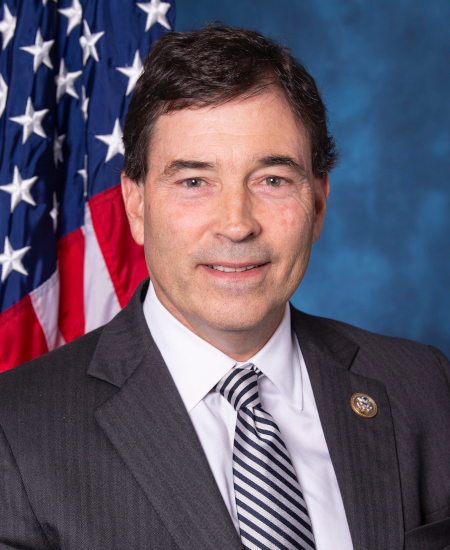
Rep. Troy Balderson
Sponsored bills
Maddy summaryThe Strategic Production Response Act (HR 21) requires the Secretary of Energy to develop a plan increasing oil and gas leasing on federal lands (managed by Interior, Agriculture, Energy, and Defense) by the same percentage as any initial drawdown of petroleum from the Strategic Petroleum Reserve. This plan must be created before the first sale, exchange, or loan of reserve oil, and cannot increase leasing on federal lands by more than 10% overall. The bill mandates consultation with the Secretaries of Agriculture, Interior, and Defense during plan development. It directly affects federal land management agencies and future oil/gas leasing decisions on public lands.
Maddy summaryThe HEAL Act (HR 603) requires the U.S. Holocaust Memorial Museum Director to study how public elementary and secondary schools teach about the Holocaust and related antisemitism. The study will examine curriculum requirements, teaching methods (like project-based learning), instructional materials, and assessment approaches across states and school districts. It specifically analyzes whether Holocaust education is mandatory, optional, or integrated across subjects, and how schools address antisemitism and genocide prevention. The resulting report, due within 180 days of the study or three years after enactment, will inform Congress but does not change current school policies. This is a data-gathering measure, not a policy mandate.
Maddy summaryThis bill would prohibit the FDA from approving new abortion medications or investigational uses of existing ones. It would restrict currently approved abortion drugs to in-person administration only in clinics, hospitals, or medical offices by certified providers who can handle complications like ectopic pregnancy or severe bleeding. The law requires detailed adverse event reporting (excluding patient identifiers) to the FDA by both manufacturers and prescribers, and mandates provider certification covering pregnancy assessment, surgical intervention capabilities, and patient safety documentation. These provisions apply directly to healthcare providers, patients seeking medication abortions, and manufacturers of abortion drugs.
Maddy summaryThis bill prohibits federal funding to Planned Parenthood Federation of America and its affiliates for one year unless they certify they won't perform or fund abortions (with exceptions for rape/incest or life-threatening conditions). It redirects $235 million in existing funding to community health centers for women's health services like contraception, cancer screenings, and prenatal care. The bill explicitly states that redirected funds will continue to support all women's health services previously provided by Planned Parenthood. It also requires repayment of funds if Planned Parenthood violates the certification, and clarifies that overall federal funding for women's health services remains unchanged.
Maddy summaryThe Educational Choice for Children Act creates tax credits for individuals and corporations that contribute to scholarship granting organizations providing education scholarships. Individuals can claim a credit up to $5,000 or 10% of their income, while corporations can claim up to 5% of taxable income. The scholarships are available to students from households with income up to 300% of the area median income, and can be used for private school tuition, tutoring, and other educational expenses at elementary and secondary schools. The bill includes strict requirements for scholarship organizations to verify income, conduct audits, and prevent misuse of funds, while also prohibiting government control over these organizations and protecting private and religious schools from discrimination in the program. It establishes a $10 billion annual cap on the total tax credits available.
Maddy summaryHR 509, the Debt Cancellation Accountability Act of 2023, prohibits the federal government from canceling student loan debt for groups of borrowers (e.g., all teachers or all borrowers in a specific state) without explicit congressional approval. It directly affects borrowers with federal student loans under parts B, D, or E of the Higher Education Act by requiring the Education Secretary to submit detailed requests to Congress before any "class-based" cancellation exceeding $1 million total. The bill mandates that Congress must specifically appropriate funds for such programs, and the Secretary must justify the need, legal authority, and why group cancellation is used instead of individual reviews. Existing targeted programs (like those for specific professions) remain exempt if they assess eligibility on a case-by-case basis.
Maddy summaryThis bill requires healthcare providers to give the same medical care to infants born alive during abortions as they would to any newborn, and to immediately admit such infants to a hospital. It mandates reporting of non-compliance to law enforcement and imposes penalties including up to 5 years in prison for violations. Women who undergo abortions can file civil lawsuits seeking money damages for injuries, three times the abortion cost, and punitive damages if care standards are not met. The bill also clarifies that abortion includes intentionally killing an unborn child or terminating pregnancy without specific exceptions (e.g., after viability to preserve life or removing a dead fetus).
Maddy summaryHR 23, the Family and Small Business Taxpayer Protection Act, rescinds unobligated funds previously allocated to the Internal Revenue Service (IRS) under the Inflation Reduction Act of 2022. Specifically, it cancels unused balances from certain IRS funding provisions (sections 10301(1)(A)(ii), (iii), (B), (2), (3), (4), and (5)) of the Inflation Reduction Act. This bill does not change tax laws or directly affect taxpayers; it only redirects unspent IRS budget authority. The provision applies solely to funds that were not obligated by the IRS as of the bill’s enactment date.
Maddy summaryHR 22, the *Protecting America’s Strategic Petroleum Reserve from China Act*, blocks the U.S. government from selling petroleum from the Strategic Petroleum Reserve to entities under Chinese Communist Party control or unless sellers guarantee the oil won’t be exported to China. It directly affects the Department of Energy’s management of the reserve and any foreign entities seeking to purchase reserve petroleum. The key mechanism requires the Secretary of Energy to prohibit sales to China-linked entities or impose strict export restrictions on any sale. This policy change aims to prevent strategic petroleum resources from reaching entities tied to China’s government.