

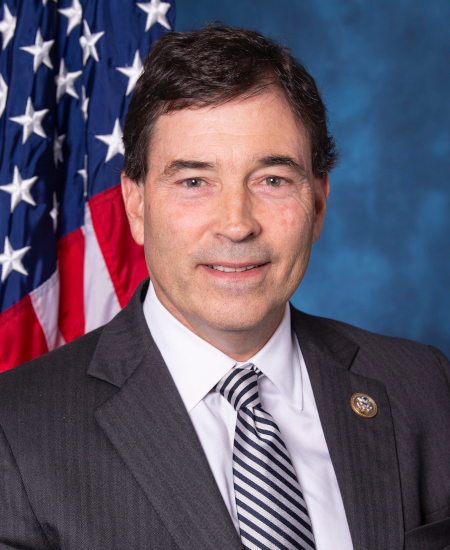
Photo of Troy Balderson
R United States House · District 12 · Ohio On the 2026 ballot

Rep. Troy Balderson

Compare
Total votes
2,837
all sessions
Attendance
99%
20 missed
Near the chamber average
With party
97%
of cast votes
Higher than 75% of chamber peers
Bipartisan score
2%
crosses aisle rarely
Lower than 76% of chamber peers
Sponsored
804
bills & resolutions
Near the chamber average
Committees
4
assignments
804 bills and resolutions

Sponsored bills

Total
804
Primary
54
Co-sponsor
750
This page
804
matching current filters
Co-sponsor HR 1740
In committee · United States House · Co-sponsor
To amend the Water Infrastructure Finance and Innovation Act of 2014 to establish payment and performance security requirements for projects, and for other purposes.

Maddy summaryHR 1740 amends the Water Infrastructure Finance and Innovation Act (WIFIA) to require payment and performance security for projects receiving WIFIA assistance. It directly affects water infrastructure projects funded through WIFIA loans or grants by mandating that construction must have security covering at least 50% of the contract value, or accept equivalent state/local requirements. The bill specifies that if state or local law already requires such security, it may be used instead, but the amount must still meet the 50% minimum. This adds a new financial safeguard to ensure project completion without requiring new funding or changing WIFIA’s core structure.

In committee Mar 31, 2023 1 co-sponsor
Co-sponsor HR 1671
In committee · United States House · Co-sponsor
Increasing Access to Dental Insurance Act

Maddy summaryThis bill amends the Affordable Care Act to allow individuals to enroll in standalone dental plans through health insurance Exchanges without needing to also have a separate health insurance plan. It directly affects consumers seeking dental coverage who may not qualify for or prefer not to enroll in a comprehensive health plan. The key provision removes a federal restriction that previously prevented enrollment in these dental plans solely based on lack of separate health insurance. This change makes it easier for people to access dental insurance options through the same marketplaces used for health coverage.

In committee Mar 31, 2023 1 co-sponsor
Co-sponsor HR 1
Passed · United States House · Co-sponsor
Lower Energy Costs Act

Maddy summary# Summary of the TAPP American Resources Act This comprehensive legislation, titled the "TAPP American Resources Act" (or "Transparency, Accountability, and Permitting Process for American Resources Act"), is a major overhaul of federal energy and natural resource permitting processes. The key provisions include: 1. **Streamlined Permitting Processes**: - Creates a 50-year term limit for pipeline rights-of-way - Allows oil and gas exploration on non-Federal surface estate without Federal permits - Reduces royalty rates for oil and gas leases from 16.67% to 12.5% - Limits judicial review of permits to cases involving "imminent and substantial environmental harm" 2. **NEPA Reforms**: - Expands categorical exclusions for certain energy projects - Allows use of previously completed environmental assessments for similar projects - Limits environmental reviews to areas directly affected by the proposed action - Reduces consideration of downstream effects of oil and gas consumption 3. **Mining and Mineral Development**: - Designates mining as a "covered sector" for permitting improvement - Creates a memorandum of agreement process for mining projects - Requires mineral resource assessments before land withdrawals - Ensures uranium is considered a critical mineral 4. **Revenue Sharing**: - Changes distribution of Gulf of Mexico revenue to states (37.5% to Gulf states, 62.5% to general fund) - Creates parity in offshore wind revenue sharing with offshore oil and gas - Eliminates administrative fees under the Mineral Leasing Act 5. **Water Quality Certification**: - Limits certification requirements to specific provisions of Clean Water Act sections - Requires states to publish certification requirements within 30 days - Sets 90-day timeline for states to identify additional materials needed The legislation represents a significant shift toward expediting domestic energy production while reducing regulatory burdens, with a focus on oil, gas, and mineral development on federal lands. It includes numerous amendments to existing laws including the National Environmental Policy Act, Mineral Leasing Act, Outer Continental Shelf Lands Act, and Clean Water Act.

Passed Mar 30, 2023 1 co-sponsor
Co-sponsor HR 5
Passed · United States House · Co-sponsor
Parents Bill of Rights Act

Maddy summaryHR 5, the Parents Bill of Rights Act, would require public schools receiving federal funding to provide parents with greater access to educational information. The bill mandates that schools post curricula online or widely distribute it to parents, include school budgets in report cards, and provide specific information about school activities including violent incidents and plans to eliminate gifted programs. It also guarantees parents the right to meet with teachers twice a year, review library materials, and address school boards. These requirements would apply to all local educational agencies and schools covered by the Elementary and Secondary Education Act. The bill amends existing education laws to strengthen parental transparency and involvement in their children's education.

Passed Mar 27, 2023 1 co-sponsor
Co-sponsor HR 1777
In committee · United States House · Co-sponsor
United States-Israel Future of Warfare Act of 2023

Maddy summaryHR 1777 establishes a $50 million annual fund (2024-2028) for collaborative defense research between the U.S. and Israel in emerging technologies like artificial intelligence, cybersecurity, directed energy, and automation. The bill directly supports U.S. and Israeli military forces by enabling joint development of new warfare capabilities to address current and future defense challenges. Key provisions include authorizing $50 million per year for collaborative projects, building on existing U.S.-Israel defense partnerships like counter-tunnel and counter-drone systems. This funding aims to strengthen bilateral defense innovation without altering existing military aid structures.

In committee Mar 24, 2023 1 co-sponsor
Primary HR 1341
In committee · United States House · Lead sponsor
Spectrum Coordination Act

Maddy summaryThe Spectrum Coordination Act (HR 1341) requires the National Telecommunications and Information Administration (NTIA) and Federal Communications Commission (FCC) to improve coordination when managing radio spectrum, directly affecting federal agencies that rely on spectrum for operations (like military, emergency services, and scientific uses). It mandates that NTIA publicly share details about spectrum actions - including impacted federal entities and any technical or policy concerns raised - before FCC decisions. The FCC must also publish an interagency summary with final rules, explaining how concerns were addressed. The bill updates the existing FCC-NTIA coordination agreement every three to four years to reflect technological changes, ensuring federal input is systematically considered in spectrum management.

In committee Mar 24, 2023 0 co-sponsors
Co-sponsor HCONRES 28
In committee · United States House · Co-sponsor
Expressing the sense of Congress that tax-exempt fraternal benefit societies have historically provided and continue to provide critical benefits to the people and communities of the United States.

Maddy summaryHCONRES 28 is a symbolic resolution expressing Congress's view that tax-exempt fraternal benefit societies - organizations providing life, health, and accident benefits to members - have long delivered critical community support. It states these societies, with about 7 million members nationwide, generate significant annual value through charitable work and volunteer activities (estimated at over $3.8 billion yearly). The resolution affirms that their tax-exempt status under Section 501(c)(8) of the tax code is essential for sustaining their volunteer-driven model and relieving pressure on government safety programs. As a non-binding expression of congressional sentiment, it does not alter existing laws or create new obligations.

In committee Mar 23, 2023 1 co-sponsor
Co-sponsor HCONRES 17
In committee · United States House · Co-sponsor
Expressing the sense of Congress that the Federal Government should not impose any restrictions on the export of crude oil or other petroleum products.

Maddy summaryHCONRES 17 is a non-binding congressional resolution expressing that the U.S. Congress believes the federal government should not impose restrictions on crude oil or petroleum product exports. It cites the 2015 repeal of export bans, U.S. growth as a top oil producer, and 2019 status as a net petroleum exporter as reasons for this position. The resolution specifically urges against overly restrictive regulations on energy production and any export restrictions under the Energy Policy and Conservation Act. It does not change existing law but formally states congressional sentiment on this policy matter.

In committee Mar 23, 2023 1 co-sponsor
Co-sponsor HCONRES 14
In committee · United States House · Co-sponsor
Expressing disapproval of the revocation by President Biden of the Presidential permit for the Keystone XL pipeline.

Maddy summaryHCONRES 14 is a concurrent resolution expressing Congress's disapproval of President Biden's 2021 revocation of the Presidential permit for the Keystone XL pipeline, which had been granted in 2019 to TransCanada (now TC Energy). The resolution has no legal effect but formally states the House's opposition to the executive action that canceled the pipeline project's permit. Introduced on February 7, 2023, it serves as a symbolic statement without altering any policy or affecting any entity.

In committee Mar 23, 2023 1 co-sponsor
Co-sponsor HJRES 30
Vetoed · United States House · Co-sponsor
Providing for congressional disapproval under chapter 8 of title 5, United States Code, of the rule submitted by the Department of Labor relating to "Prudence and Loyalty in Selecting Plan Investments and Exercising Shareholder Rights".

Maddy summaryH.J. Res. 30 seeks to block a Department of Labor rule that would have required retirement plan managers (like those handling 401(k)s) to follow strict "prudence and loyalty" standards when selecting investments and voting on company matters. The rule, published in December 2022, aimed to protect retirement savings by ensuring fiduciaries prioritize participants' interests. This resolution, if passed, would prevent the rule from taking effect, avoiding new compliance requirements for retirement plan managers and sponsors. It directly affects retirement plan administrators and the millions of participants in these plans.

Vetoed Mar 23, 2023 1 co-sponsor
Showing 451 to 460 of 804 bills
Previous 1 … 45 46 47 … 81 Next